

5 Medline Collagen Wound Dressing Options: Puracol Guide
Collagen dressings have become a go-to option for clinicians managing chronic and complex wounds, and for good reason. They support the body’s natural repair process by providing a scaffold for new tissue growth, making them particularly useful for stalled or non-healing wounds. Among the available products, the Medline collagen wound dressing lineup, sold under the Puracol brand, offers several formulations designed for different wound types and clinical scenarios.
At Philadelphia Wound Care, our physician-led mobile practice treats diabetic ulcers, pressure injuries, venous ulcers, and post-surgical wounds across the Philadelphia region. We see firsthand how the right dressing choice affects healing outcomes, especially for patients recovering at home or in skilled nursing facilities. Collagen-based products like Puracol are part of the broader toolkit we rely on when standard wound care isn’t getting the job done.
This guide breaks down five Medline Puracol collagen dressing options, including silver-impregnated and powder forms, so you can understand what each one does, how they differ, and which clinical situations call for each. Whether you’re a caregiver, facility administrator, or referring clinician, this overview will help you make a more informed decision.
1. Puracol Collagen Wound Dressings
The base Puracol dressing is the foundation of Medline’s collagen lineup. It’s a 100% native collagen sheet derived from bovine sources, engineered to provide a biological scaffold that promotes tissue regeneration in wounds that have stopped progressing. This is where the Medline collagen wound dressing range starts before branching into more specialized formulations.
What it is and how it supports healing
Puracol delivers native bovine collagen directly to the wound bed, which stimulates fibroblast activity and encourages the formation of new granulation tissue. Because it retains its natural protein structure, it interacts more effectively with growth factors already present at the wound site than processed or chemically modified collagens tend to.
Native collagen dressings are most effective when a wound has stalled in the inflammatory phase and needs a biological signal to resume progression toward healing.
Best uses and wound types
This dressing works best on chronic, non-healing wounds that have a moist wound bed but show minimal tissue growth over several weeks. You should consider it for wounds where standard moisture-retentive dressings alone have not produced results. Target wound types include:
- Diabetic foot ulcers
- Stage III and IV pressure injuries
- Venous and arterial leg ulcers
- Delayed post-surgical wounds
How to apply, cover, and change it
Clean the wound thoroughly and debride any necrotic or sloughed tissue before placing Puracol directly against the wound bed. You should then cover it with a secondary dressing, such as a foam or hydrocolloid, to maintain the moisture balance the collagen requires to function. Change the dressing every 2 to 7 days based on exudate levels, and replace it sooner if it becomes saturated.
Where to buy and typical pricing
Puracol is available through medical supply distributors and major online retail platforms. Amazon Business carries multiple sizes, and pricing typically falls between $8 and $20 per sheet depending on the dimensions and pack quantity you select.
2. Puracol Plus Collagen Wound Dressings
Puracol Plus is part of the broader Medline collagen wound dressing lineup and builds on the base Puracol formula with a thicker, denser matrix that improves performance in wounds with higher drainage levels.
What it is and how it differs from Puracol
The formula uses the same 100% native bovine collagen base but delivers a more structured sheet that handles moderate to heavy exudate more reliably than standard Puracol. This makes it the better choice when wound drainage would compromise a thinner dressing’s contact with the wound bed before the next scheduled change.
Choose Puracol Plus when exudate levels are high enough that a standard collagen sheet would lose contact with the wound bed too quickly.
Best uses and wound types
This dressing suits wounds with active but manageable drainage, particularly deeper ulcers or wounds with undermining. It performs well on diabetic foot ulcers, stage III and IV pressure injuries, and venous leg ulcers with elevated exudate.
How to apply, cover, and change it
Apply Puracol Plus directly to a clean, debrided wound bed and cover it with an absorbent secondary dressing. Change it every 3 to 7 days based on your drainage assessment.
Where to buy and typical pricing
Puracol Plus is available through medical distributors and Amazon Business, with pricing typically ranging from $12 to $25 per sheet depending on size and pack quantity.
3. Puracol Plus Ag+ Silver Collagen Dressings
Puracol Plus Ag+ adds ionic silver to Medline’s collagen matrix, building on the same Medline collagen wound dressing foundation but with built-in antimicrobial action for infected or critically colonized wounds.
What it is and when silver makes sense
This dressing pairs 100% native bovine collagen with ionic silver, so it supports tissue regeneration and fights wound bioburden at the same time. It handles moderate to heavy exudate, just like Puracol Plus.
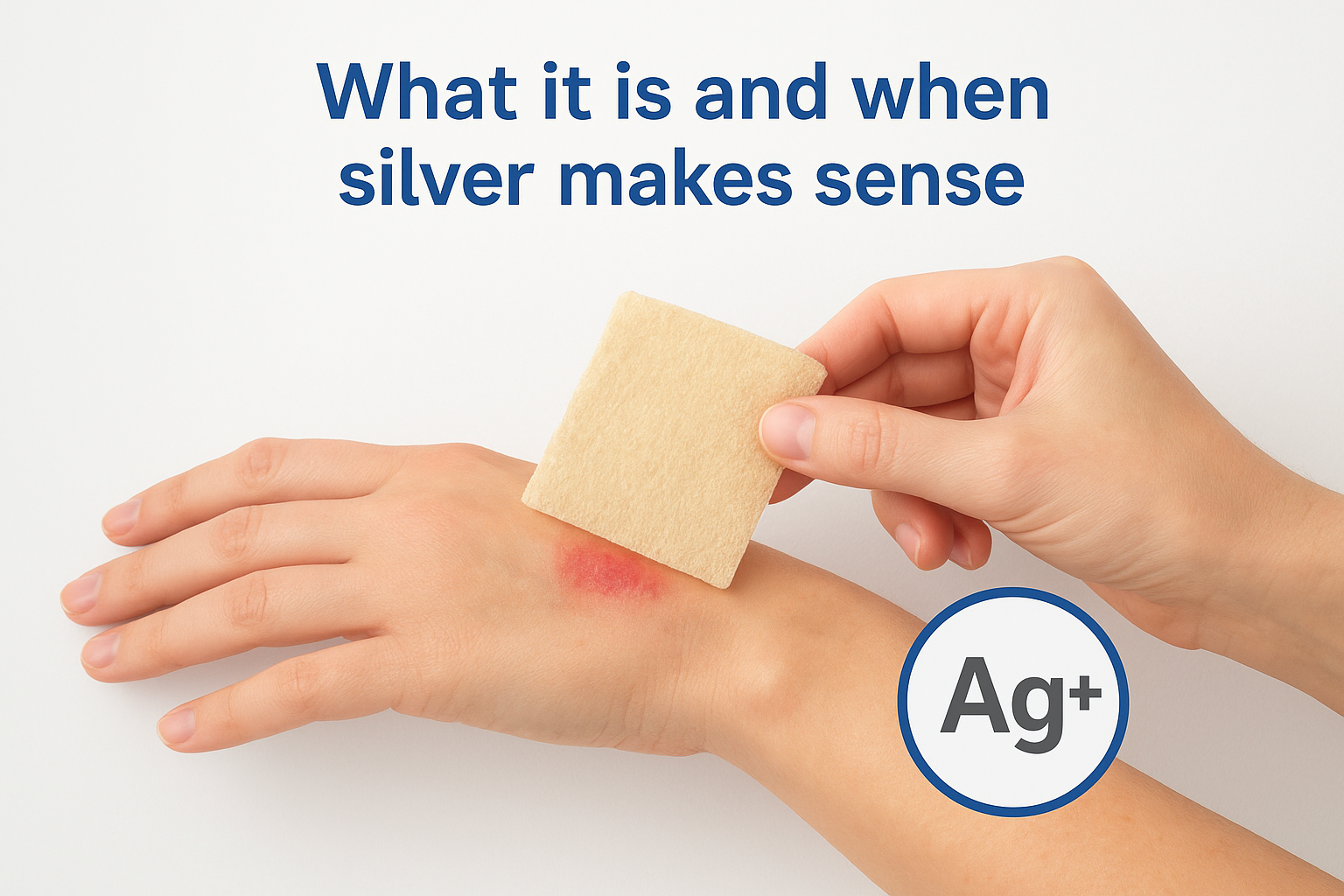
Reserve silver dressings for wounds with confirmed or strongly suspected bioburden, not as a routine starting point.
You should use this formulation when the wound shows signs of critical colonization, including persistent odor, increasing drainage, or stalled granulation tissue formation.
Best uses and wound types
Puracol Plus Ag+ suits wounds with active infection concerns and elevated bioburden, including:
- Heavily colonized diabetic foot ulcers
- Infected stage III and IV pressure injuries
- Venous leg ulcers with persistent odor or elevated drainage
How to apply, cover, and change it
Apply the dressing directly to a clean, debrided wound bed and cover it with an absorbent secondary dressing. Change it every 3 to 7 days, or sooner if exudate saturates the outer layer.
Silver depletes with use, so you should apply a fresh sheet at every change to maintain antimicrobial effectiveness.
Where to buy and typical pricing
Puracol Plus Ag+ is available through medical distributors and Amazon Business, with prices typically ranging from $15 to $30 per sheet depending on size and pack quantity.
4. Puracol Ultra ECM Collagen Wound Dressings
Puracol Ultra ECM represents the most advanced sheet dressing in the Medline collagen wound dressing lineup. It moves beyond a single-protein approach by incorporating an extracellular matrix structure designed to more closely replicate the biological environment that healthy tissue requires to regenerate.
What it is and what "ECM" adds
Standard Puracol delivers collagen alone. Puracol Ultra ECM adds native extracellular matrix components, including proteins and glycosaminoglycans, that together create a richer biological scaffold for cell migration and tissue remodeling. This makes it the strongest option in the sheet format when wounds have shown little or no response to earlier collagen treatments.
Use Puracol Ultra ECM when a wound has failed to respond to standard or Plus formulations and needs a more complex biological signal to restart the healing process.
Best uses and wound types
This dressing suits treatment-resistant chronic wounds, particularly deep diabetic ulcers, non-healing pressure injuries, and wounds with significant tissue loss.
How to apply, cover, and change it
Apply it to a clean, debrided wound bed and cover with an appropriate secondary dressing. Change every 3 to 7 days based on exudate output.
Where to buy and typical pricing
Puracol Ultra ECM is available through medical distributors, with pricing typically ranging from $20 to $40 per sheet depending on size.
5. Puracol Ultra Powder Collagen Wound Dressings
Puracol Ultra powder is the final option in the Medline collagen wound dressing lineup and solves a problem that sheet formats cannot: filling the irregular contours of deep or tunneling wounds where flat sheets fail to maintain consistent contact with the wound bed.
What it is and when powder works better
This formulation delivers native bovine collagen in loose powder form, allowing it to conform to cavities, tunnels, and uneven wound surfaces that sheet dressings cannot reliably cover. You should reach for this option when a wound’s geometry is preventing tissue contact from any sheet-based product.
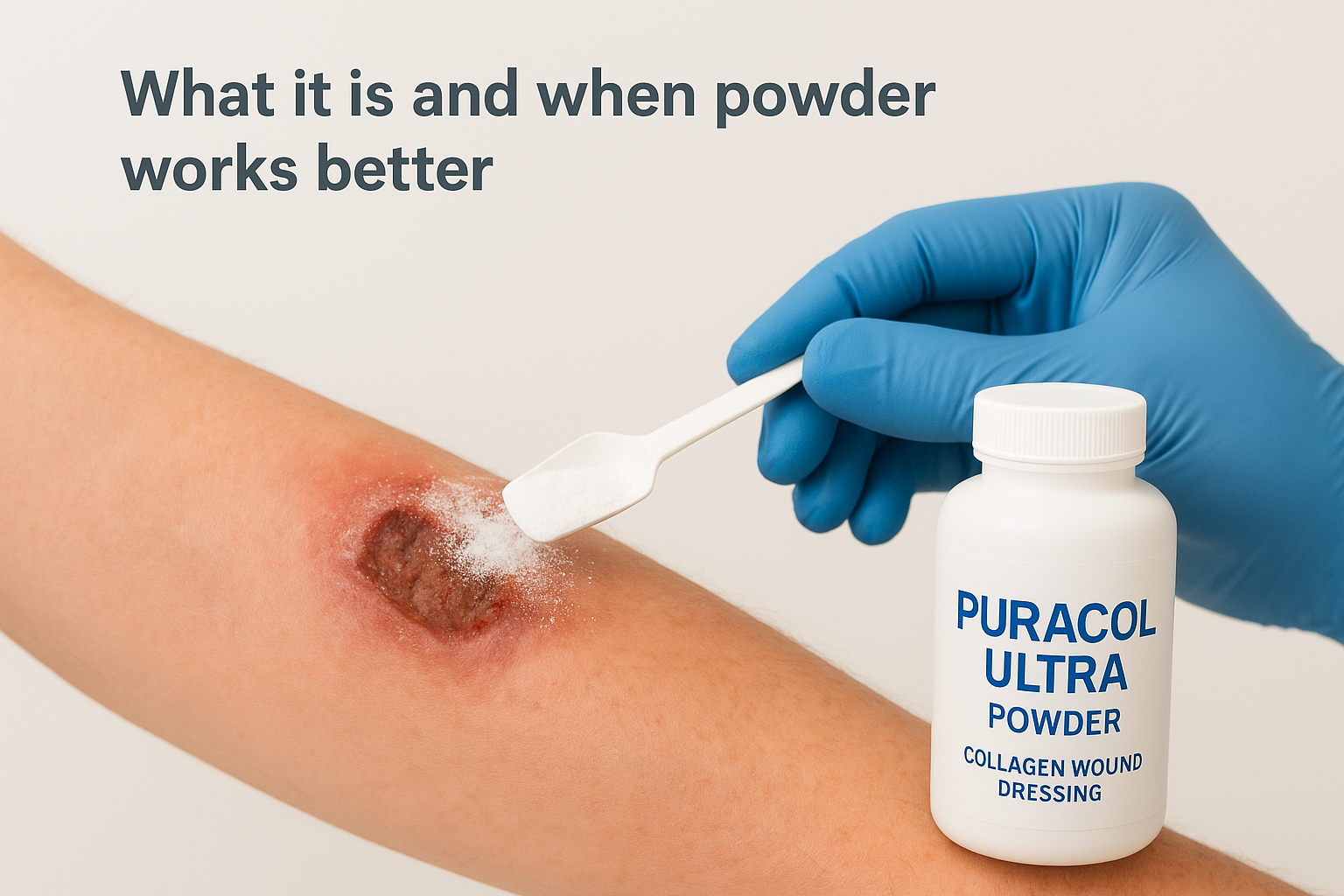
Powder collagen is the right choice when wound geometry, not wound severity, is the limiting factor in healing.
Best uses and wound types
Puracol Ultra powder works best on wounds where full wound bed contact is otherwise difficult to achieve, including:
- Deep diabetic ulcers
- Undermined pressure injuries
- Tunneling or sinus-tract wounds
How to apply, cover, and change it
Apply a thin, even layer of powder directly to the wound bed, then cover with an absorbent secondary dressing to maintain the moisture the collagen needs. Change it every 3 to 7 days based on exudate output and wound response.
Where to buy and typical pricing
Purchase this product through medical distributors, with pricing typically ranging from $15 to $35 per unit depending on pack size and quantity.
Next Steps for Safer Wound Healing
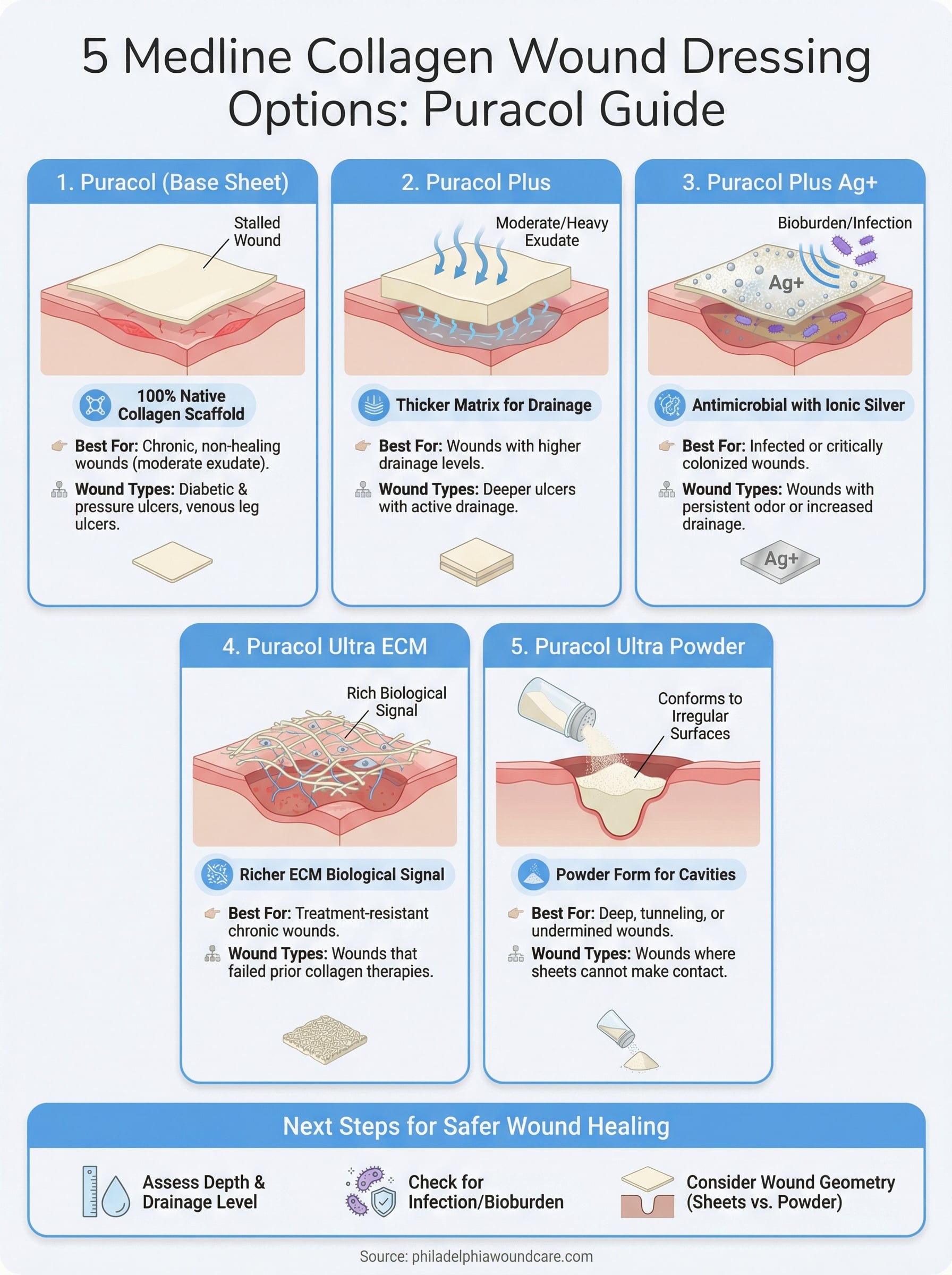
Choosing the right Medline collagen wound dressing from the Puracol lineup comes down to three things: your wound’s depth, its drainage level, and whether infection is a concern. Standard Puracol works for most chronic, stalled wounds with moderate moisture. Puracol Plus handles heavier drainage. Ag+ addresses bioburden. Ultra ECM steps in when previous collagen treatments have failed. Powder fills what sheets cannot reach.
That said, selecting the right product is only part of the equation. Wound assessment, proper debridement, and clinical oversight matter just as much as the dressing you choose. Without those, even the best collagen product will underperform. If your wound has not progressed in several weeks, or if you are managing a complex case at home or in a care facility in the Philadelphia area, connect with our mobile wound care team for a physician-led evaluation at your location.