

Hospital Discharge Wound Care Philadelphia: What To Do Next
You’re home from the hospital, but the wound isn’t healed yet. Maybe you received a stack of discharge papers, a few wound care supplies, and a vague instruction to "follow up with your doctor." That gap between hospital discharge wound care Philadelphia patients face and the actual recovery process is where complications often begin, infections, delayed healing, or wounds that quietly get worse before anyone notices.
The truth is, leaving the hospital doesn’t mean the hard part is over. For many patients dealing with surgical wounds, pressure ulcers, or diabetic foot wounds, it’s just the start of a new phase that demands consistent clinical attention. At Philadelphia Wound Care, we see this firsthand every day through our physician-led mobile practice, bringing advanced wound management directly to patients across the Philadelphia area, at home, in skilled nursing facilities, or wherever recovery is happening.
This article breaks down exactly what you or your loved one should do after hospital discharge to protect the wound, avoid setbacks, and get the right care in place from day one.
What hospital discharge wound care includes
Complete hospital discharge wound care in Philadelphia goes well beyond swapping out a bandage once a day. A proper care plan combines regular professional assessments, targeted clinical treatments, and a clear protocol to catch problems before they become serious. Understanding what that actually looks like helps you and your caregiver ask the right questions and make sure nothing gets missed during recovery.
Wound assessments and dressing changes
A trained clinician should evaluate your wound at scheduled intervals, not just when something looks visibly wrong. During each visit, the provider checks for signs of infection such as increasing redness, warmth, unusual drainage, or odor, measures the wound’s size, and documents changes in tissue quality over time. Dressing changes are performed using materials matched to your specific wound type, whether that’s a moisture-retentive dressing, antimicrobial gauze, or a compression wrap for venous wounds.
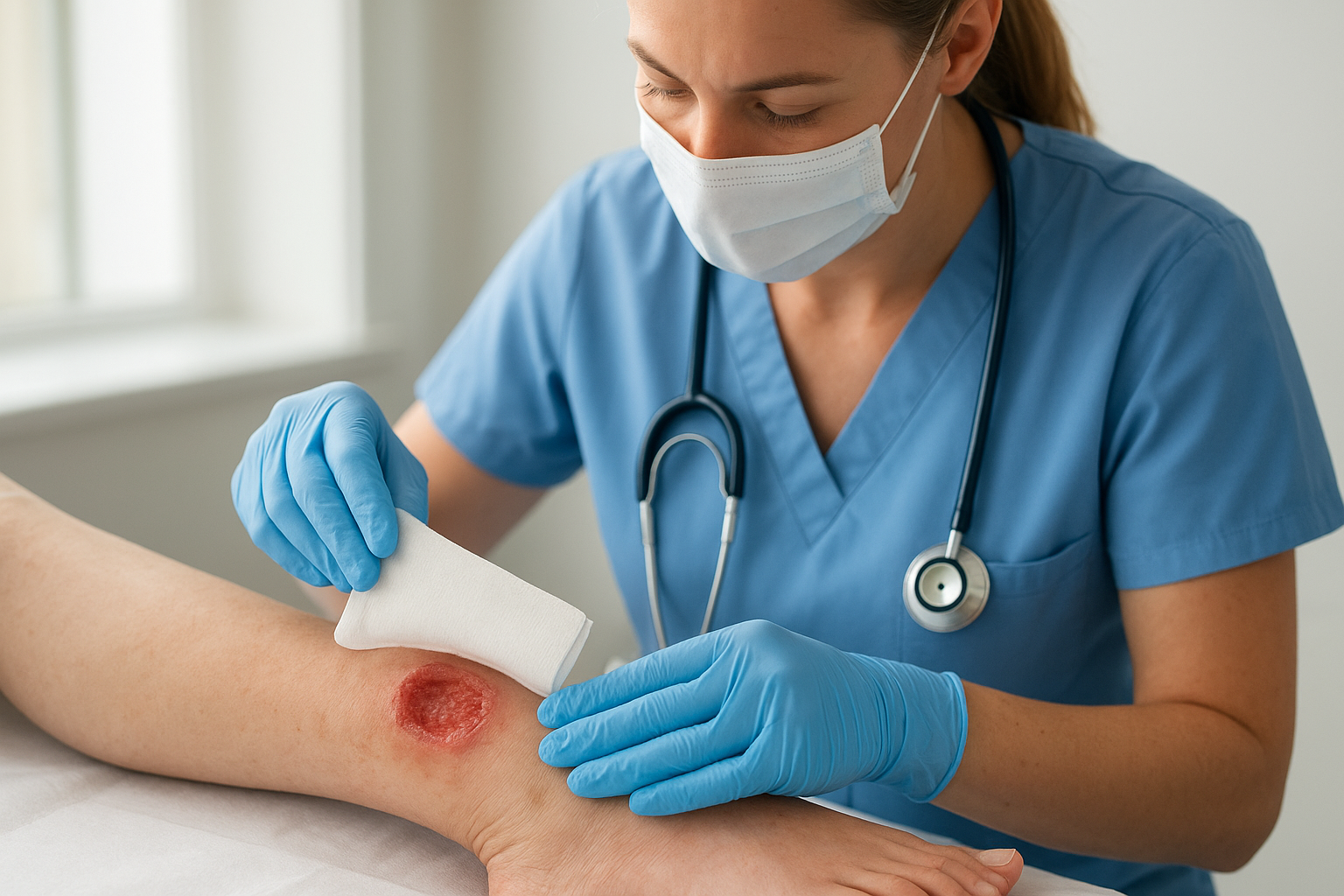
A wound that looks fine to an untrained eye can still be stalling beneath the surface, which is exactly why professional evaluation matters at every stage of recovery.
Dressing frequency depends on how much the wound drains and what treatment protocol your provider is using. Your care team should give you a written schedule and clear instructions for any at-home steps required between clinical visits.
Advanced therapies for non-healing wounds
Some wounds do not respond to standard dressings and need a higher level of intervention. Allograft therapy uses donor tissue to stimulate the body’s own healing response in wounds that have stalled over weeks or months. Regenerative cellular and tissue-based products are now covered under Medicare Part B, which means patients can access these treatments outside of a hospital setting without facing major out-of-pocket costs. These therapies are a core part of what physician-led mobile wound care makes available to patients recovering at home.
Why early follow-up matters after discharge
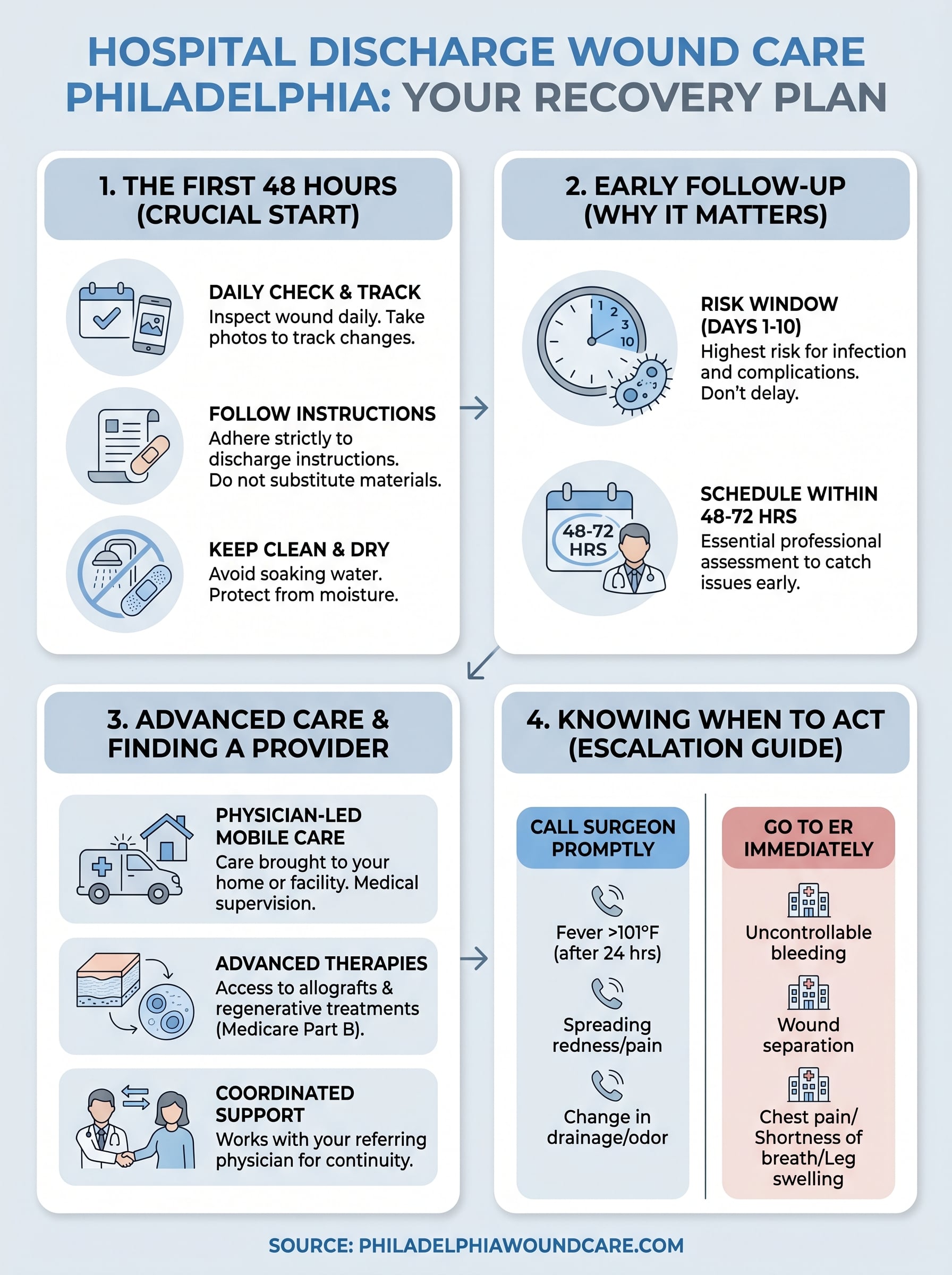
The first week at home is when wound complications most commonly appear. Tissue that looked stable at discharge can shift quickly once you leave a monitored clinical environment. For patients navigating hospital discharge wound care Philadelphia options, most providers recommend scheduling a professional follow-up within 48 to 72 hours of arriving home, not two weeks later when damage may already be done.
The risk window after leaving the hospital
Most wound infections develop within the first seven to ten days after a procedure or discharge. During that window, bacterial colonization can take hold fast, especially in wounds closed with sutures, staples, or complex dressings. Without a trained clinician checking for early warning signs, minor problems become major setbacks that can send you back to the emergency room.
Missing even one scheduled wound assessment during this period can set recovery back by weeks.
Delayed follow-up also creates problems for wound documentation. Insurance providers, including Medicare, require ongoing clinical records to justify continued wound care coverage. Gaps in that documentation can interrupt your access to the treatments required to keep healing moving forward.
What to do in the first 48 hours at home
The first two days after leaving the hospital set the tone for your entire recovery. For patients managing hospital discharge wound care Philadelphia transitions from home, these 48 hours are when your most important habits need to take hold. Your clinical team gave you discharge instructions for a reason, and following them precisely matters more now than at any other point in your recovery.
Check the wound and track changes
Look at your wound at least once each day and note anything that shifts. Increased redness, swelling, or drainage soaking through your dressing faster than expected are early warning signs worth acting on immediately.
A daily photo log gives your clinician a clear visual record of how the wound progresses between professional assessments.
Taking a photo each day with your phone creates a simple comparison tool your care provider can review at your next visit or over a telehealth check-in.
Keep the wound clean and protected
Follow the specific dressing instructions from your discharge paperwork exactly, and do not substitute materials without your provider’s direct approval. Avoid submerging the wound in water, including baths or pools, until your clinician confirms the tissue is sufficiently closed to handle moisture. If your dressing slips or becomes soaked, call your wound care provider rather than guessing at a replacement on your own.
When to call your surgeon or go to the ER
Knowing when to escalate is one of the most critical skills you develop during recovery. Many patients managing hospital discharge wound care Philadelphia follow-up hesitate to call their provider because they worry about overreacting, but waiting too long on a genuine warning sign consistently leads to worse outcomes and longer recovery times.
Calling your surgeon early almost always results in a faster solution than waiting for a scheduled visit.
Signs that require a call to your surgeon
Contact your surgeon or wound care provider promptly if you notice any of the following early warning signs:
- Fever above 101°F that appears or persists beyond the first 24 hours at home
- Redness spreading outward from the wound edges
- Drainage that changes color, thickens, or develops an odor
- Pain that increases rather than gradually improves
These symptoms point to a possible infection that needs clinical evaluation within 24 hours, not at your next routine appointment.
Signs that require an ER visit
Some situations cannot wait for a phone call. Go directly to the emergency room if your wound is bleeding actively and does not stop with firm, sustained pressure, or if the wound separates along a suture line. Chest tightness, sudden shortness of breath, or a leg that becomes swollen and tender alongside your wound symptoms also require immediate emergency care.

How to find the right wound care in Philadelphia
Not all wound care providers offer the same level of clinical oversight. When you’re searching for hospital discharge wound care Philadelphia options, the single most important factor is whether a physician is leading your care rather than a nurse or aide operating without direct medical supervision. Physician-led care means someone with the training to prescribe advanced therapies, adjust your treatment protocol, and identify complications that require a higher level of response.
Choosing a provider who brings care directly to your location removes the transportation barrier that stops many patients from getting consistent follow-up after discharge.
What to look for in a provider
Your provider should offer scheduled clinical visits at your location, whether that’s your home, a skilled nursing facility, or an assisted living community. Confirm that they accept Medicare or Medicare Advantage and can bill directly for advanced therapies like allograft treatments without sending you an unexpected bill. Ask whether they actively coordinate with your referring physician to maintain continuity across your care team, and verify their response time for urgent wound concerns. Philadelphia Wound Care meets all of these criteria and serves patients across Philadelphia and the surrounding Pennsylvania region.
A clear plan for what to do next
Recovery after hospital discharge doesn’t have to feel uncertain. The steps are straightforward: track your wound daily, follow your dressing instructions exactly, schedule a professional follow-up within 48 to 72 hours, and know when to call your surgeon versus when to head to the ER. Every patient navigating hospital discharge wound care Philadelphia recovery needs consistent clinical attention during those first critical weeks, not a single follow-up appointment scheduled months down the road. Acting early on each of these steps is what separates a smooth recovery from one that stalls.
Philadelphia Wound Care brings physician-led wound management directly to your home, skilled nursing facility, or assisted living community across the Philadelphia region. You get the same advanced treatments available in a clinical setting without the burden of transportation or long waits. If you’re ready to get a care plan in place, schedule mobile wound care in Philadelphia and we’ll respond within 24 hours.