
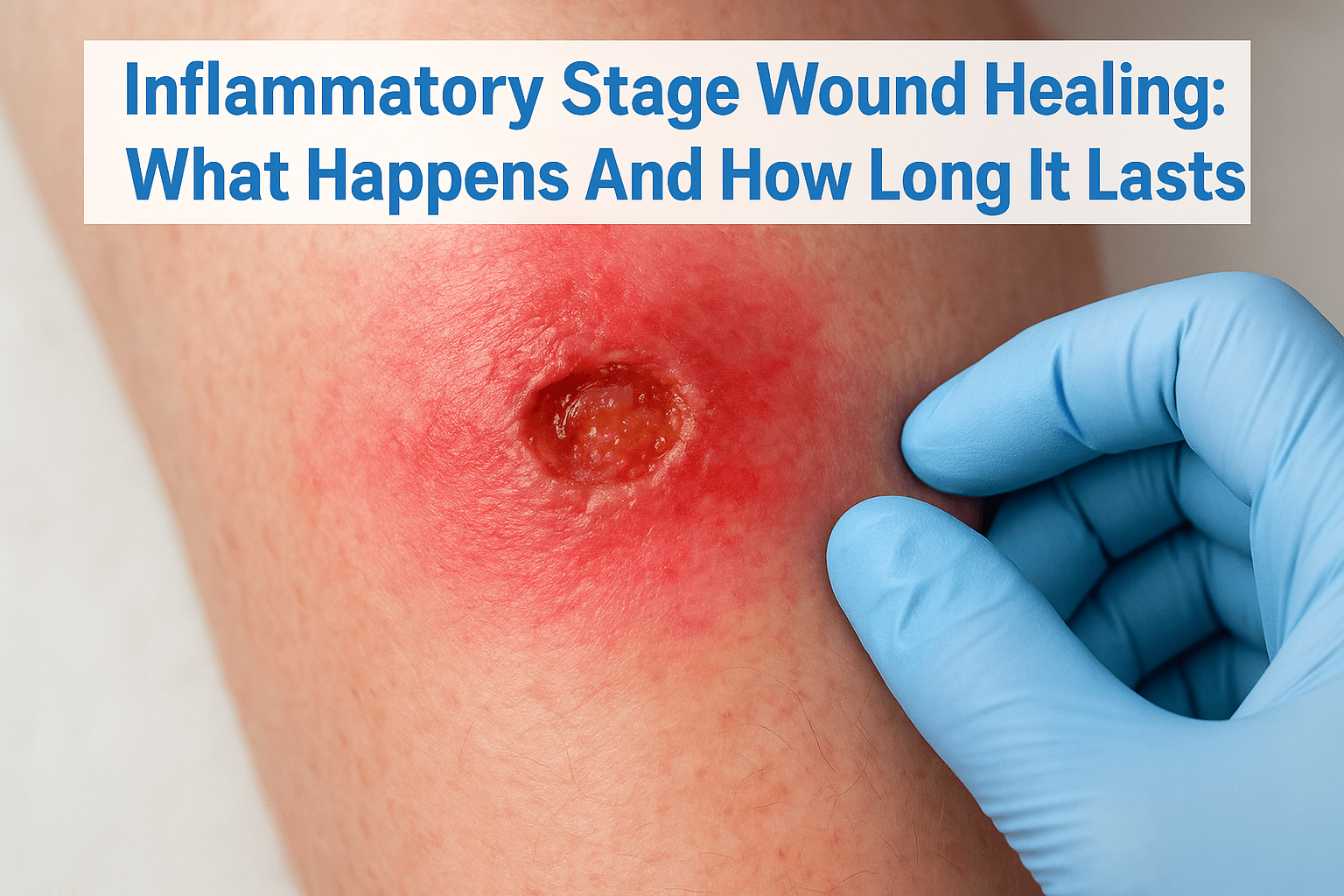
Inflammatory Stage Wound Healing: What Happens And How Long It Lasts
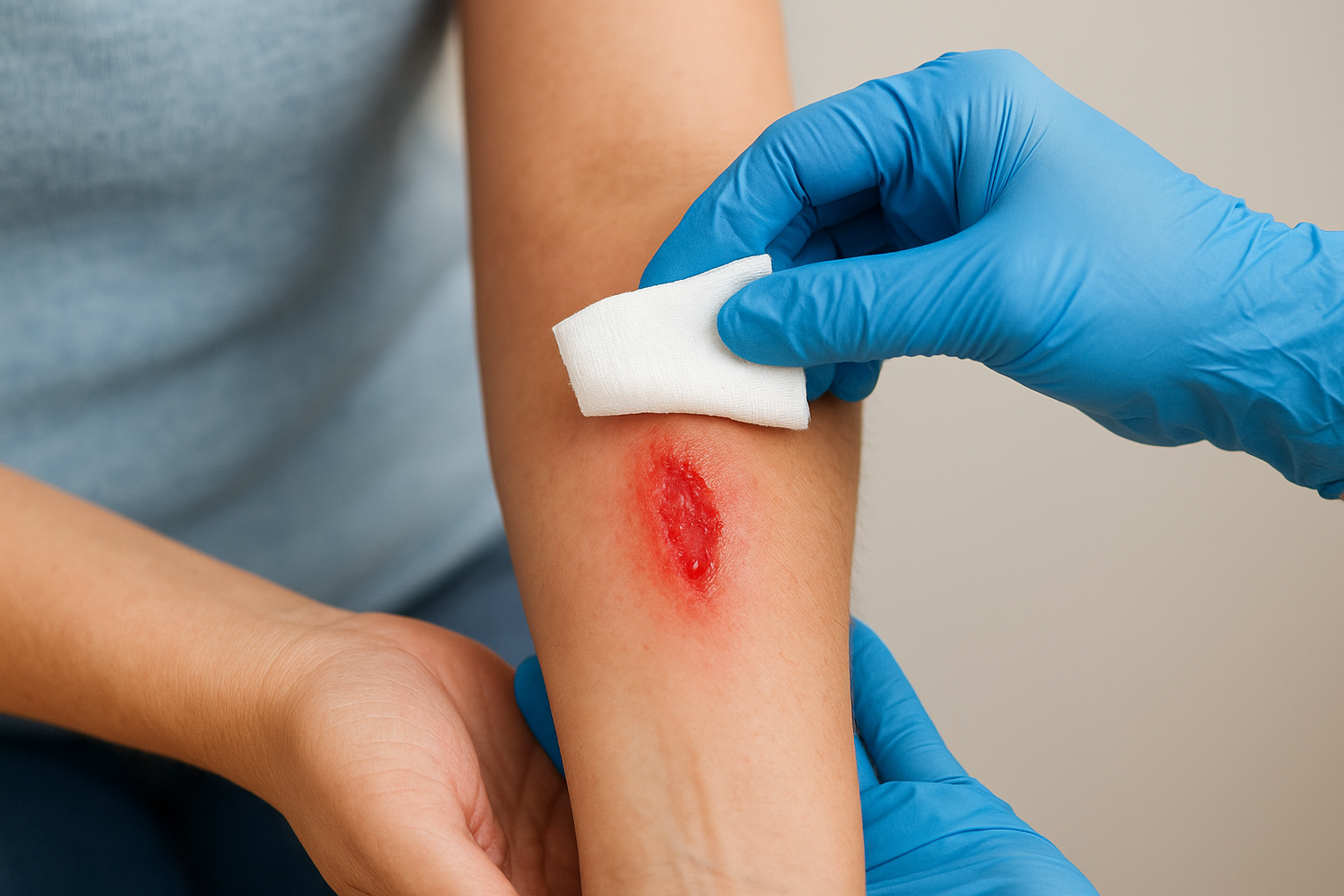
If a wound looks red, swollen, and warm days after it happened, you’re probably watching inflammatory stage wound healing in action, and that’s not automatically a bad sign. It only becomes worrying when this stage drags on past the normal window, which is exactly what we see in many diabetic ulcers, pressure sores, and post-surgical wounds that stall instead of progressing.
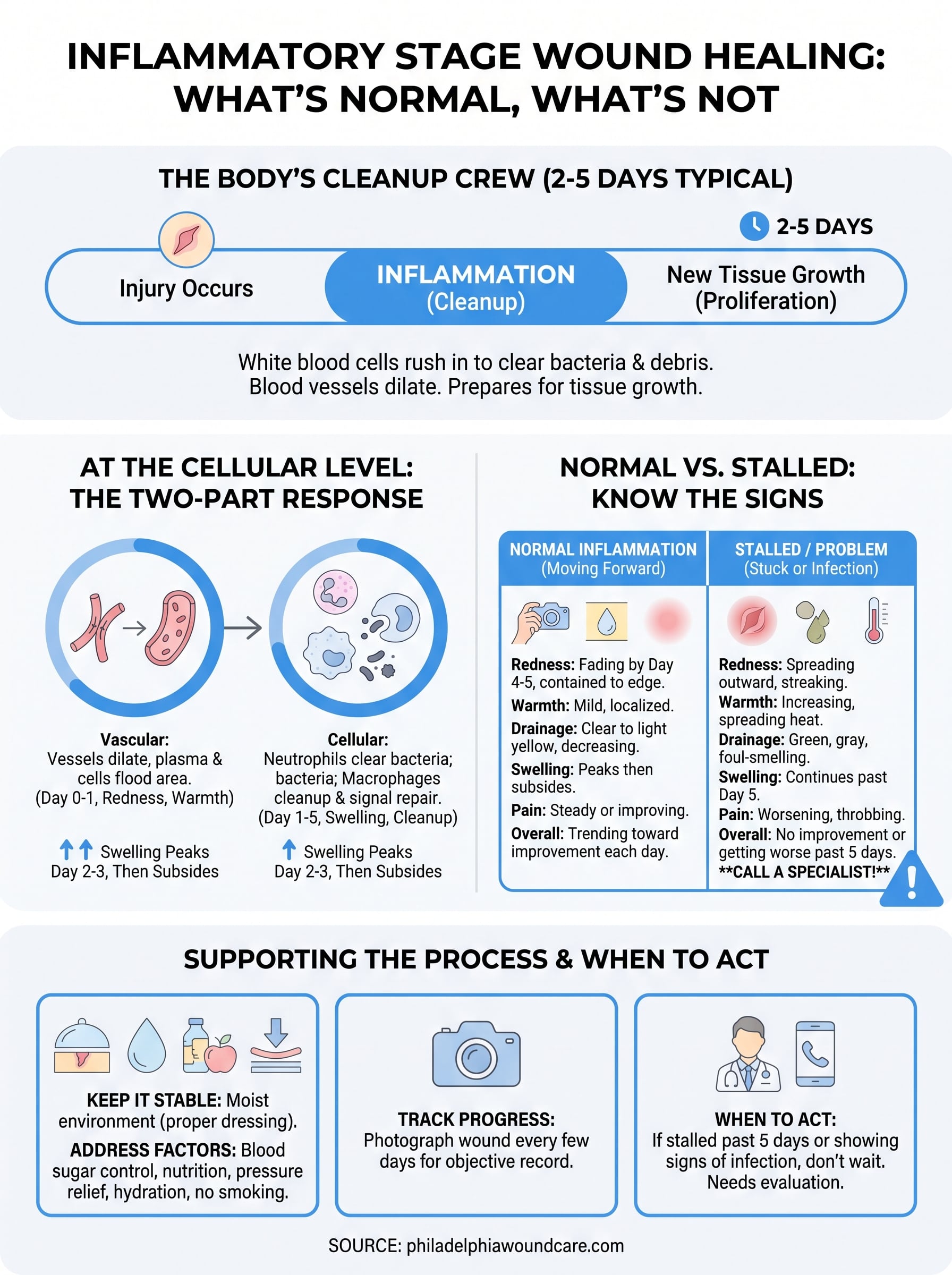
This phase is the body’s cleanup crew at work. White blood cells rush in to clear bacteria and dead tissue, blood vessels dilate, and the wound bed prepares itself for new tissue growth. For a typical wound, this cleanup phase lasts roughly two to five days before the body moves into the proliferative stage. Chronic wounds, though, can get stuck here for weeks or months, which is often the first clue that specialist intervention is needed.
Below, we break down what’s actually happening at the cellular level, the signs that tell you the process is on track, and how long each part of this wound healing timeline should reasonably take. We’ll also cover the warning signs that suggest a wound has stalled and needs a physician’s evaluation rather than more time.
Why the inflammatory stage matters for wound healing
Inflammation gets a bad reputation because people associate it with infection or something going wrong. In wound care, though, it’s the opposite. Inflammatory stage wound healing is the body’s way of sealing off damage, flushing out debris, and setting the stage for actual tissue repair. Skip this step or rush it artificially, and you end up with a wound that looks closed on the surface but fails underneath, which is exactly what happens when patients or caregivers try to shortcut the process with the wrong dressing or premature closure attempts.
The two-part response your body runs automatically
Underneath the redness, two separate processes are running in sequence. The vascular response happens first: blood vessels at the injury site constrict briefly to limit blood loss, then dilate to let plasma and immune cells flood the area. This is why a fresh wound looks red and feels warm. The cellular response follows within hours, as neutrophils and then macrophages arrive to consume bacteria, dead cells, and foreign material. Macrophages do double duty here. They clean the wound and also release growth factors that signal the next phase to begin.
| Response | Timing | What’s happening | Visible signs |
|---|---|---|---|
| Vascular | 0-1 day | Vessels dilate, plasma leaks into tissue | Redness, warmth, mild swelling |
| Cellular (early) | Day 1-3 | Neutrophils clear bacteria and debris | Swelling peaks, some drainage |
| Cellular (late) | Day 3-5 | Macrophages clean up and signal repair | Swelling starts to subside |
Why timing here predicts what happens next
The length of this phase is a direct predictor of how the rest of healing will go. A wound that moves through cellular cleanup in the expected two to five days transitions smoothly into building new tissue. A wound that stays inflamed past that window usually means the immune system is still fighting something, whether that’s ongoing bacterial contamination, dead tissue that hasn’t been debrided, or a systemic issue like poorly controlled blood sugar that keeps immune cells from doing their job efficiently. This is precisely why diabetic ulcers and pressure injuries so often stall right here instead of progressing on schedule.
A wound that lingers in the inflammatory stage isn’t healing slowly, it’s stuck, and stuck wounds need a different kind of help than time alone.
The clinical consequence of a stalled inflammatory phase
Once inflammation runs long, the wound bed accumulates excess enzymes and inflammatory byproducts that actually break down new collagen as fast as it forms. Clinicians sometimes call this a wound stuck in a biochemical loop, where the tissue can’t advance to the next stage because the environment itself is hostile to new growth. Over time, that produces the crusted, weepy, or slow-draining wounds that families bring to us months after the original injury or surgery, often after multiple dressing changes at home haven’t produced visible progress.
Recognizing this pattern early matters because it changes the entire care plan. A wound in normal inflammation needs supportive dressing changes and patience. A wound stuck in prolonged inflammation needs debridement, infection control, and sometimes advanced therapies like allograft treatment to interrupt the cycle and push the tissue back onto a healing track. The Centers for Disease Control and Prevention notes that chronic wounds affect millions of Americans annually and are strongly linked to underlying conditions like diabetes and vascular disease, which is exactly the population where stalled inflammation shows up most often. Understanding this stage isn’t just academic. It’s the difference between watching a wound and knowing when to call in a specialist.
How to support your body through the inflammatory phase
Supporting the inflammatory stage isn’t about stopping it, it’s about giving your body the conditions it needs to move through it efficiently. Caregivers often reach for antibacterial ointments or try to dry out a wound faster, assuming that will speed things along. In reality, the immune cells doing the cleanup work need a moist, protected environment to function well. Proper wound care at this stage means keeping the wound clean, covered, and undisturbed rather than constantly poked at during dressing changes.
Keep the wound environment stable
Dressing choice matters more than most people realize during this phase. A dressing that’s changed too often disrupts the cellular activity happening at the wound bed, while one left on too long can trap bacteria and prolong inflammation unnecessarily. The goal is a moist wound environment that supports neutrophil and macrophage activity without letting fluid build up to the point of maceration. The National Institute on Aging notes that proper wound cleaning and dressing changes are among the most effective steps caregivers can take to reduce complications in older adults.
Wounds heal on the body’s schedule, not the calendar’s, and the best thing you can do is remove obstacles rather than force progress.
Address the factors that slow immune response
Several everyday factors can either speed up or stall this phase, and most of them are within a caregiver’s control:
- Blood sugar control: Elevated glucose impairs white blood cell function, which is why diabetic patients so often see prolonged inflammation.
- Nutrition: Adequate protein and vitamin C intake support collagen production once the wound is ready to move forward.
- Pressure relief: Repositioning patients with pressure ulcers every two hours prevents new tissue damage that restarts the inflammatory clock.
- Hydration: Dehydrated tissue heals slower and is more prone to breakdown at the wound edges.
- Smoking cessation: Nicotine constricts blood vessels, directly working against the vascular response this phase depends on.
Know when observation isn’t enough
Caregivers can manage plenty of this at home, but tracking progress matters just as much as the care itself. Photographing the wound every few days gives you an objective record instead of relying on memory, and it’s often what tips a family off that something isn’t progressing the way it should. If swelling, redness, or drainage hasn’t started improving within that five-day window, that’s your signal to stop waiting and start asking for a professional evaluation.
Normal inflammation versus signs of a problem
Telling normal inflammatory stage wound healing apart from a wound that’s turning into a problem comes down to pattern and timing, not just appearance on any single day. Redness, swelling, and warmth are expected in the first few days, but the direction those symptoms move matters more than their presence. A wound trending toward improvement each day looks different from one that’s holding steady or getting worse, even if both look similarly irritated at first glance.
What healthy inflammation looks like day to day
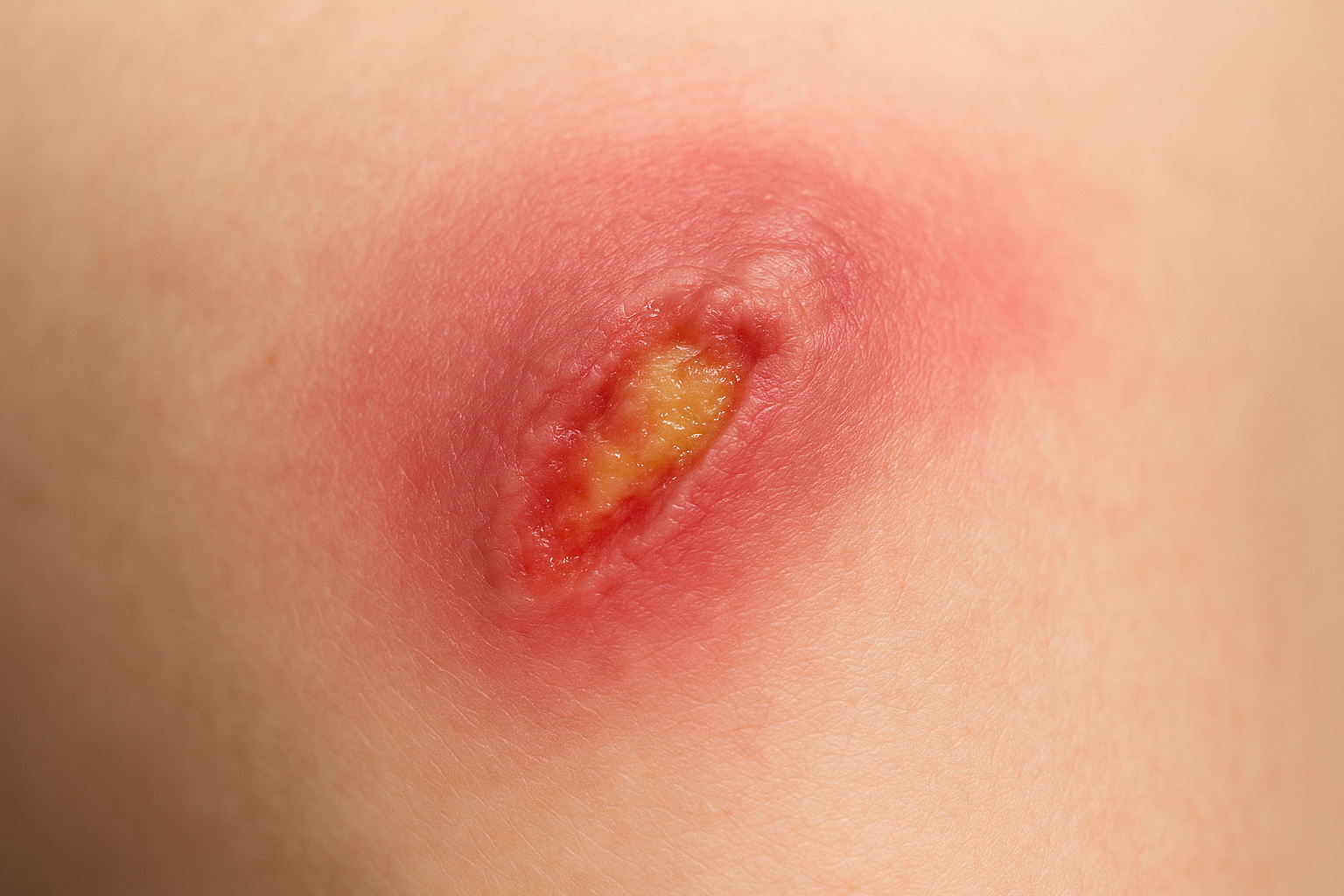
Expect peak swelling and redness around day two or three, then a gradual step-down as macrophages finish their cleanup work. Drainage during this window is usually clear or slightly yellow and decreases in volume over time. The skin around the wound edge stays intact rather than breaking down further, and pain, while present, shouldn’t be escalating day over day. Odor should be minimal to none.
Signs that inflammation has gone off track
If a wound is getting worse on day six instead of better, that’s not a slow version of normal, it’s a different problem entirely.
Once a wound passes the five-day mark without visible improvement, start watching for the signs below rather than assuming more time will fix it:
| Sign | Normal inflammation | Signs of a problem |
|---|---|---|
| Redness | Contained to wound edge, fading by day 4-5 | Spreading outward, streaking |
| Warmth | Mild, localized | Increasing, spreading heat |
| Drainage | Clear to light yellow, decreasing | Green, gray, or foul-smelling |
| Swelling | Peaks day 2-3, then subsides | Continues rising past day 5 |
| Pain | Steady or improving | Worsening, throbbing |
| Fever | Absent | Present, especially over 101°F |
Fever, spreading redness, or a foul odor are the fastest indicators that infection has entered the picture and the wound needs medical attention rather than another dressing change. The Mayo Clinic notes that these signs often mean bacteria have overwhelmed the body’s local response, which changes treatment entirely.
Why the distinction changes the treatment plan
Getting this distinction right avoids two common mistakes we see often: families who panic over normal day-two swelling, and families who wait too long on a wound that’s clearly gone past normal inflammation into infection or stalled healing. Neither extreme serves the patient well, and knowing what to expect at each point in the timeline is what makes the difference.
What comes after inflammation in the healing timeline
Once inflammatory stage wound healing wraps up on schedule, the wound doesn’t just sit there. It moves into a completely different biological process focused on rebuilding rather than cleanup. Recognizing this shift matters because the care a wound needs changes too. Dressings that kept a wound moist during inflammation may need to support new tissue growth instead, and the signs of progress you’re watching for change from "is drainage decreasing" to "is new tissue filling in."
The proliferative stage builds new tissue
Granulation tissue starts forming almost immediately after macrophages finish their work, filling the wound bed with a pink, bumpy texture that looks fragile but is actually a good sign. Fibroblasts lay down collagen, new blood vessels form through a process called angiogenesis, and the wound edges begin pulling inward through contraction. This stage typically runs anywhere from four days to several weeks depending on wound size and depth, which is far longer than the inflammatory phase that came before it. Nutrition becomes especially important here, since collagen production depends heavily on adequate protein and vitamin C intake.
Once granulation tissue appears, the wound has crossed the hardest threshold, everything after that is building, not fighting.
The maturation stage strengthens what’s been built
Maturation, sometimes called remodeling, is the longest stage by far, often continuing for months or even up to two years after the original injury. Collagen fibers reorganize and strengthen during this window, and the scar tissue that forms is typically only about 80% as strong as the original skin. This is why healed wounds remain more vulnerable to reinjury long after they look closed.
| Stage | Typical duration | Main activity |
|---|---|---|
| Inflammatory | 2-5 days | Cleanup, immune response |
| Proliferative | 4 days to several weeks | New tissue and vessel formation |
| Maturation | Weeks to 2 years | Collagen remodeling, strengthening |
Each stage depends on the one before it finishing properly. A wound that stalls in inflammation can’t build strong granulation tissue, and weak granulation tissue produces a scar that never fully matures, which is exactly why catching problems early in the timeline protects the entire healing process downstream.
When healing doesn’t go as expected
Most wounds move through inflammation, proliferation, and maturation without needing outside help. But stalled wounds don’t fix themselves just because more time passes, and pressing pause on treatment while you wait usually makes things harder to reverse. If you’ve tracked a wound past that five-day inflammatory window and nothing’s improving, or you’re seeing spreading redness, fever, or foul drainage, that’s your cue to stop watching and start acting.
Our physician-led team evaluates stuck and non-healing wounds at the bedside, whether that’s a private home, a skilled nursing facility, or hospice, and we bring the same advanced therapies you’d find in a hospital wound clinic directly to the patient. If someone you’re caring for has a wound that’s not tracking the way this article describes, reach out through our mobile wound care services in Philadelphia page and let’s get eyes on it before it gets harder to treat.