

Jefferson Wound Care Clinic Philadelphia: Locations & Phone
If you’re searching for a jefferson wound care clinic philadelphia location, you’re likely dealing with a chronic or non-healing wound that needs specialist attention. Jefferson Health operates several wound care and hyperbaric medicine centers across the Philadelphia region, each staffed with clinicians who treat diabetic ulcers, venous wounds, pressure injuries, and post-surgical complications. Knowing exactly where to go, and who to call, can save you valuable time when healing is on the line.
That said, getting to a clinic isn’t always simple. Many wound care patients are elderly, homebound, or recovering in skilled nursing facilities where transportation is a real barrier. At Philadelphia Wound Care, we work alongside hospital-based programs like Jefferson’s by providing physician-led mobile wound care directly at the patient’s bedside. For patients who can’t make the trip, or who need continued care after discharge, a house-call model fills a critical gap.
This guide breaks down Jefferson’s wound care clinic locations in Philadelphia, including addresses, phone numbers, and the types of treatments available at each site. Whether you’re a patient, a family caregiver, or a referring provider coordinating post-acute care, you’ll find everything you need to take the next step toward getting the right wound treatment in place.
1. Philadelphia Wound Care mobile doctor visits
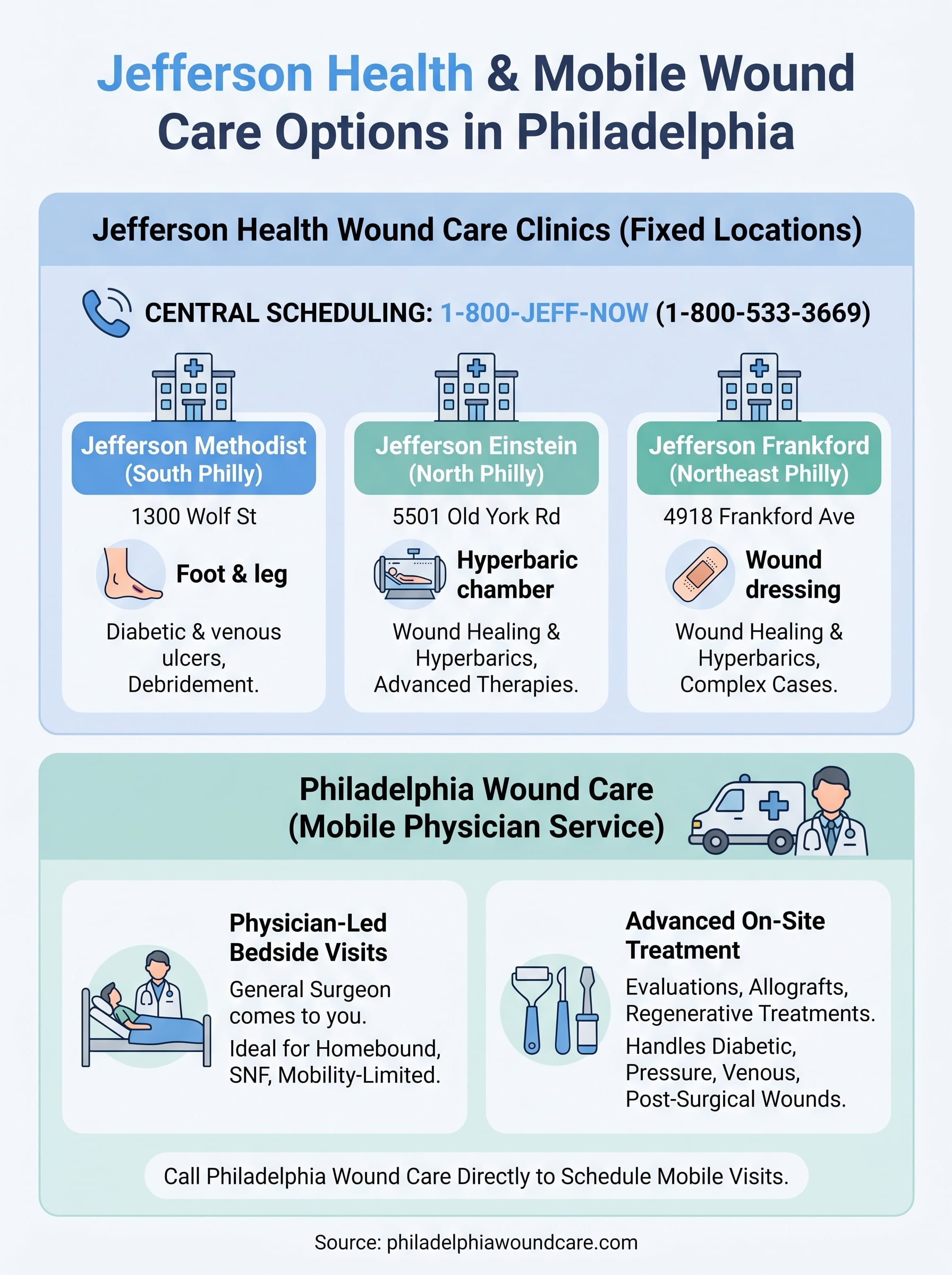
Philadelphia Wound Care brings a licensed General Surgeon directly to patients who cannot easily travel to a clinic. Unlike a fixed jefferson wound care clinic Philadelphia location, this service operates on a house-call basis, handling complete wound evaluations, treatments, and care coordination without requiring you to leave your home or facility.
What this option is
This practice is a physician-led mobile service that performs clinical wound assessments and treatment at the bedside. It functions as a bridge between hospital discharge and long-term recovery, handling wounds that require more than standard nursing care.
For patients who need specialist-level intervention but face real barriers getting to a clinic, a mobile physician visit removes that obstacle entirely.
Who this option fits best
This option works best for elderly or mobility-limited patients, residents of skilled nursing facilities, and anyone recently discharged from a hospital with an open or non-healing wound. Family caregivers coordinating care for a loved one also benefit from the direct physician communication this model provides.
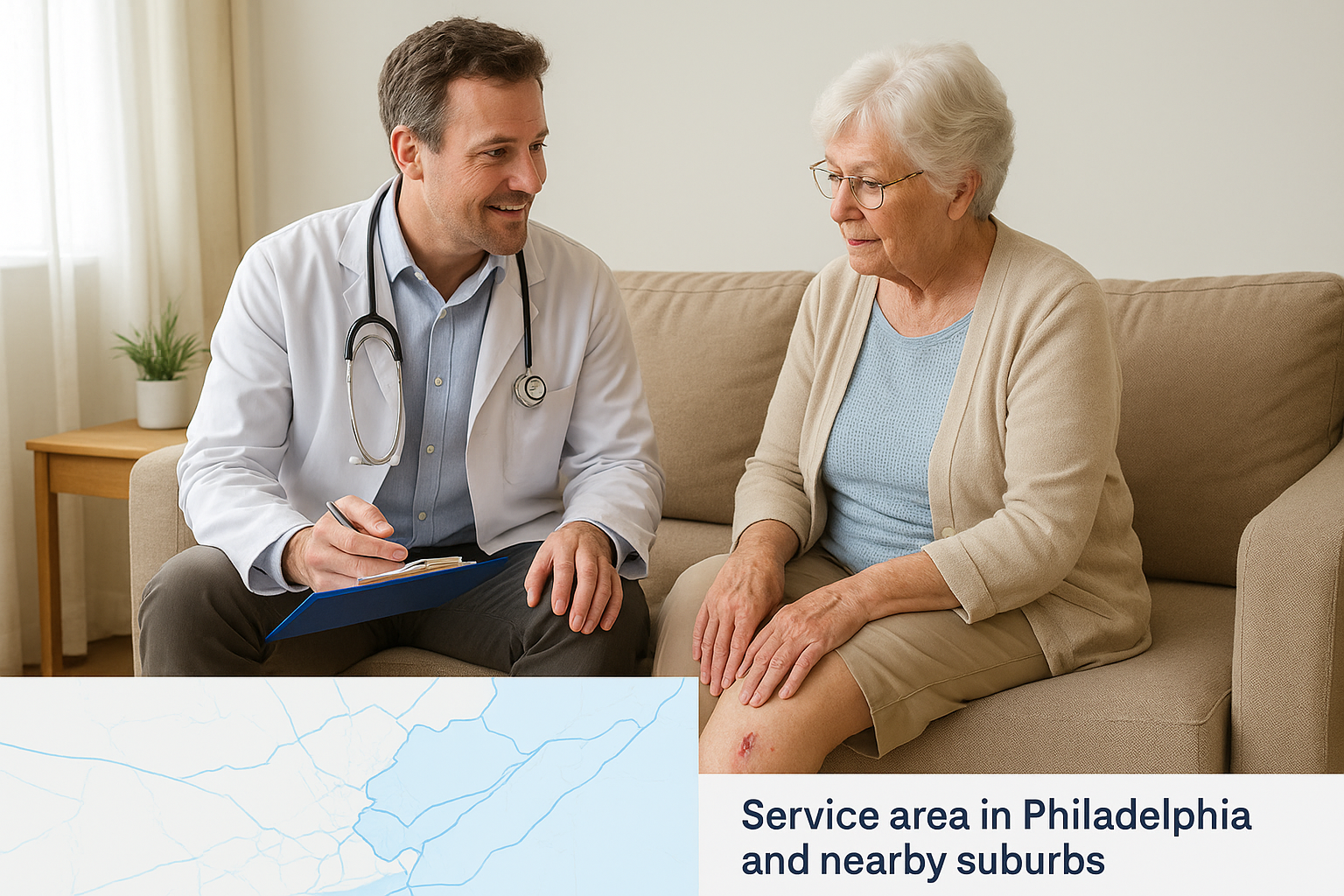
Service area in Philadelphia and nearby suburbs
Philadelphia Wound Care serves patients across Philadelphia and surrounding Pennsylvania communities, including individuals in assisted living and hospice settings. Call ahead to confirm whether your specific address or facility falls within the current coverage area.
How to schedule and what information you need
To book a visit, call Philadelphia Wound Care directly. Have your insurance card and wound history on hand before you dial:
- Patient name, address, and date of birth
- Current insurance information (Medicare, Medicare Advantage, or commercial)
- A brief description of the wound and how long it has been present
- Referring physician contact details, if applicable
Wounds and treatments commonly handled at the bedside
The practice treats diabetic ulcers, pressure injuries, and venous wounds, along with post-surgical complications. Advanced therapies including allograft and regenerative treatments can be administered at the bedside without a clinic visit.
Insurance and billing basics
Medicare Part B and Medicare Advantage plans typically cover physician-led mobile wound care visits. Philadelphia Wound Care also works with major commercial insurance carriers and handles billing coordination directly, reducing the administrative burden on patients and families.
2. Jefferson Methodist wound care at 1300 Wolf Street
Jefferson Methodist Hospital sits in South Philadelphia and houses one of the more accessible jefferson wound care clinic philadelphia options for patients in that part of the city. The wound care center is located at 1300 Wolf Street, Philadelphia, PA 19148, close to public transit lines and with parking available on-site.
Where it is and how to get there
The facility is reachable by the Broad Street Line with a short walk from the Snyder Station stop. If you drive, street parking and a hospital lot are both options. Confirm parking details when you call, as availability can change.
Main phone and scheduling options
Call Jefferson Health’s central scheduling line at 1-800-JEFF-NOW (1-800-533-3669) to book an appointment at this location. You can also schedule through the MyJeffersonHealth patient portal if you already have an account.
Calling ahead to confirm the wound care clinic’s specific hours at this campus saves you an unnecessary trip.
What services patients typically receive
This location handles debridement, infection management, and advanced wound dressings for chronic and non-healing wounds. Patients with diabetic foot ulcers and venous leg ulcers are commonly treated here.
What to ask when you call
Ask specifically about wait times for new patients and whether a physician referral is required before your first visit.
What to bring to your first visit
Bring your insurance card, a photo ID, and any recent wound care records or discharge summaries. A list of your current medications also helps the care team plan your treatment from the start.
3. Jefferson Einstein Philadelphia wound healing and hyperbarics
Jefferson Einstein Medical Center sits at 5501 Old York Road, Philadelphia, PA 19141, in the Logan/Olney neighborhood in North Philadelphia. This campus runs a dedicated wound healing and hyperbaric medicine program, making it one of the more comprehensive jefferson wound care clinic philadelphia options for patients who need both standard wound care and advanced oxygen therapy under one roof.
Location overview and typical patient flow
Patients generally start with an initial evaluation where a wound care specialist reviews their wound history and overall medical picture. From there, the team builds a treatment plan that may include weekly visits for dressings, debridement, or a scheduled course of hyperbaric sessions.
Main phone and scheduling options
Call 1-800-JEFF-NOW (1-800-533-3669) to book at this location. You can also request an appointment through the MyJeffersonHealth patient portal if you already have an active account.
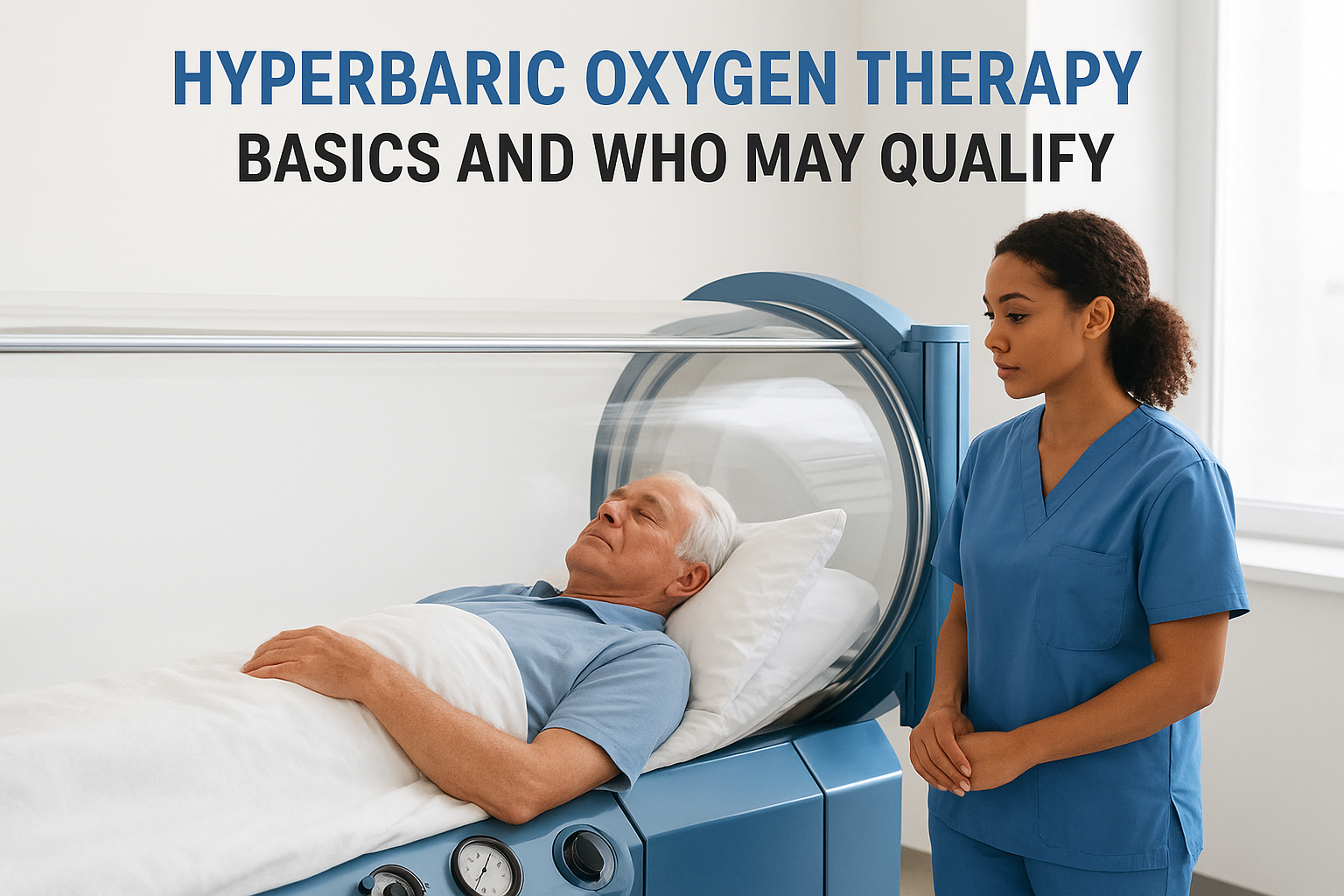
Hyperbaric oxygen therapy basics and who may qualify
HBOT involves breathing pure oxygen inside a pressurized chamber, which raises oxygen levels in the bloodstream and supports tissue repair. Patients with diabetic foot ulcers, radiation tissue damage, or compromised skin grafts are among the most common candidates for this therapy.
Confirm with your referring physician whether HBOT fits your diagnosis before scheduling, since not every wound type qualifies for coverage.
Other common wound clinic treatments
This location also handles debridement, infection control, and advanced wound dressings for chronic venous and arterial ulcers that have not responded to standard care.
Referral and records checklist
Bring your physician referral and insurance card to your first appointment. A summary of prior wound treatments and your current medication list helps the care team move forward without repeating steps already taken.
4. Jefferson Frankford wound healing and hyperbarics
Jefferson Frankford Campus runs a wound healing and hyperbaric medicine program in Northeast Philadelphia. For patients on that side of the city, this location reduces the travel burden that often delays care for those managing chronic or non-healing wounds.
Where it is and who it serves
The campus is located at 4918 Frankford Avenue, Philadelphia, PA 19124, making it a practical choice for patients in Frankford, Mayfair, Holmesburg, and surrounding neighborhoods. It handles both outpatient wound evaluations and ongoing treatment plans for complex cases.
Main phone and scheduling options
Call 1-800-JEFF-NOW (1-800-533-3669) to reach Jefferson’s central scheduling line and request an appointment at this campus. You can also book through the MyJeffersonHealth patient portal if you already have an active account and prefer to schedule online.
What care teams usually treat here
Staff at this location manage diabetic ulcers, venous leg wounds, pressure injuries, and post-surgical complications that have not responded to basic wound care. Hyperbaric oxygen therapy may also be available for qualifying wound diagnoses, so ask specifically about that when you call.
When to consider this location vs another Jefferson site
Choose this campus if you live in Northeast Philadelphia and want to limit travel time. If you have already been evaluated at another Jefferson wound care clinic Philadelphia location, ask your referring physician before switching to avoid repeating diagnostic steps already completed.
Confirming this campus offers the specific therapy your wound requires before your first visit prevents an unnecessary trip across the city.
Questions to ask about follow-ups and at-home care
Ask the care team about between-visit dressing protocols and whether a home health referral is available to support you between appointments. Also confirm how frequently follow-up visits are typically scheduled for your wound type so you can plan your calendar accordingly.
5. Jefferson Health scheduling and triage options
Booking care at any jefferson wound care clinic philadelphia location follows a consistent process through Jefferson’s central system. Knowing the right steps before you call keeps things moving quickly.
Fastest ways to book an appointment
Call 1-800-JEFF-NOW (1-800-533-3669) or log into the MyJeffersonHealth patient portal to request an appointment online. Both options connect you to the same scheduling team, so choose whichever fits your schedule.
What to do if you need help after hours
For urgent but non-emergency wound concerns, contact your primary care physician’s after-hours line first. If your wound shows signs of spreading infection, fever, or significant tissue changes, go to the nearest emergency room rather than waiting for a clinic slot.
Waiting overnight on a wound that shows red streaking or rapid swelling can turn a manageable problem into a hospital admission.
What information speeds up scheduling
Have your insurance card, referring physician’s contact information, and a brief wound history ready when you call. Knowing how long the wound has been present and what treatments you have already tried helps the scheduler route you to the right provider.
Signs you should go to the ER instead of a clinic
Seek emergency care if you notice fever above 101°F, rapid wound expansion, or visible bone and tendon. These signs point to a condition that requires immediate medical attention beyond what an outpatient clinic provides.
How to coordinate care with your PCP, SNF, or hospital team
Ask your wound care specialist to send visit notes directly to your primary care physician or facility nursing staff after each appointment. Consistent record-sharing between providers prevents duplicate testing and keeps your entire care team aligned on your treatment plan.
What to do next
You now have a clear picture of every jefferson wound care clinic philadelphia location, the phone numbers to call, and what to prepare before your first appointment. Each Jefferson campus handles chronic and complex wounds, but the right fit depends on where you live and what treatments your wound requires. If travel is a barrier or your wound needs immediate physician attention outside of a clinic setting, a mobile service removes that obstacle entirely.
For patients who are homebound, recovering in a skilled nursing facility, or simply unable to make the trip to a clinic, Philadelphia Wound Care brings physician-led wound treatment directly to you. A licensed General Surgeon evaluates and treats your wound at the bedside, coordinating with your existing care team throughout the process. Request a mobile wound care visit to get started, or visit the contact page to reach the team directly.