

Long Term Care Wound Specialist Philadelphia: 5 Options
Finding a long term care wound specialist in Philadelphia can feel overwhelming, especially when a loved one or patient is dealing with a chronic wound that refuses to heal. Pressure ulcers, diabetic foot wounds, and vascular ulcers demand more than routine care, they require physician-level expertise delivered consistently and close to the patient.
The challenge is that not every provider operates the same way. Some are facility-based clinics, others send nurses for home visits, and a few, like our team at Philadelphia Wound Care, bring board-certified surgical specialists directly to the bedside in skilled nursing facilities, assisted living communities, and private homes. The right fit depends on the patient’s condition, location, and insurance coverage.
This article breaks down five wound care options available across the Philadelphia area for patients in long-term care settings. We’ll cover what each type of provider offers, who they serve, and what to consider before making a referral or choosing a specialist.
1. Philadelphia Wound Care
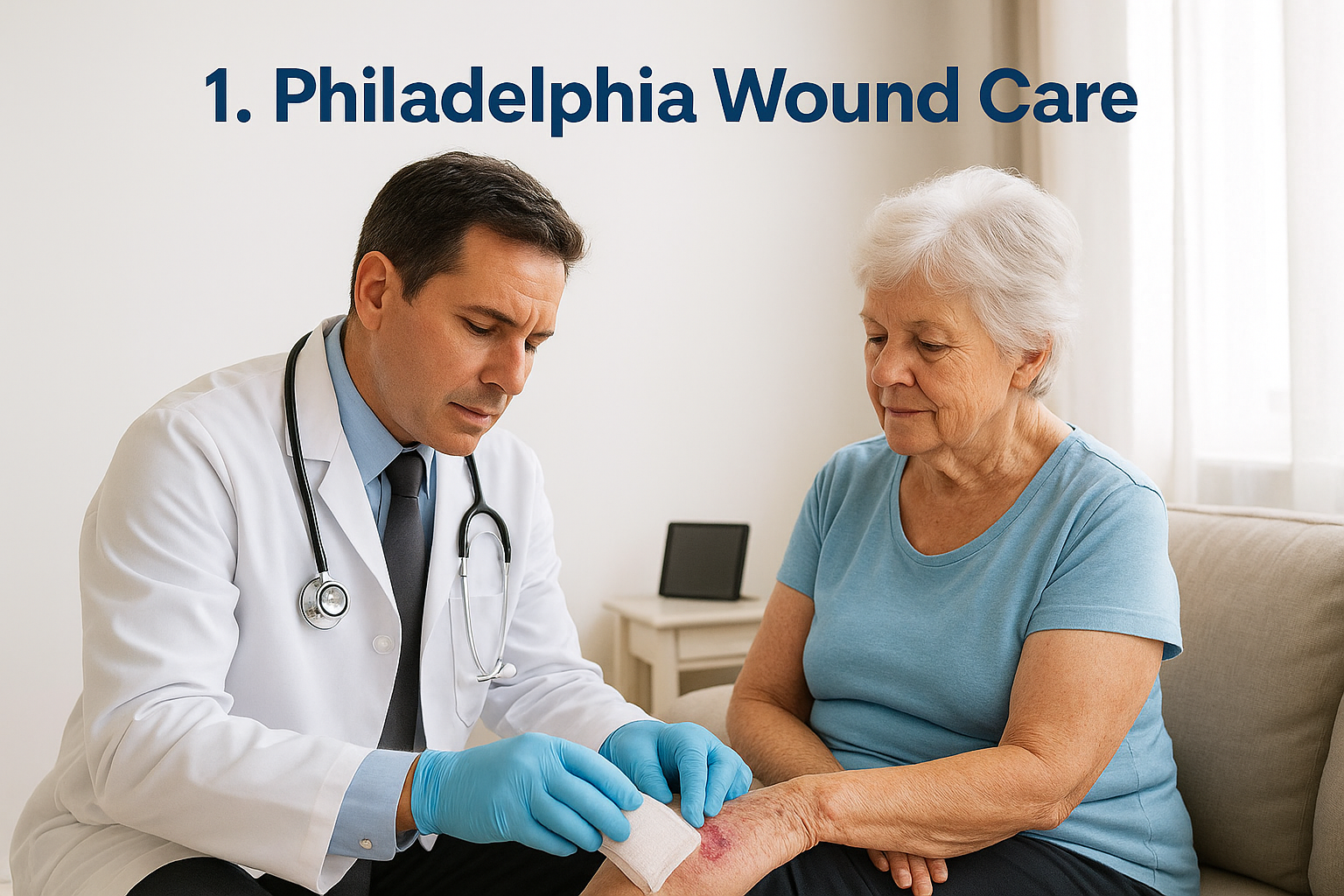
Philadelphia Wound Care is a physician-led mobile practice that brings specialist-level wound care directly to patients across the Philadelphia region. Unlike clinic-based programs, the entire service comes to the patient’s location rather than requiring them to travel.
What it is and how it works
The practice sends a board-certified General Surgeon to patients in skilled nursing facilities, assisted living communities, hospice settings, and private homes. No transportation is required, which removes one of the biggest obstacles for patients in long-term care.
Every visit is conducted by a physician, not a nurse or technician. This distinction matters when wounds are complex, infected, or non-healing, since physician oversight changes both the diagnostic approach and the treatment options available on-site.
Best fit for long-term care patients and facilities
If you are searching for a long term care wound specialist Philadelphia families and facility administrators can count on, this practice was built specifically for that patient population. It serves individuals who cannot safely or realistically travel to an outpatient clinic.
This model works especially well for skilled nursing facilities and assisted living communities that need reliable specialist coverage without coordinating outside transport.
Wounds and treatments they handle
The practice manages a range of chronic and complex wounds, including:
- Diabetic foot ulcers
- Pressure ulcers (bedsores)
- Venous and vascular ulcers
- Post-surgical wounds
For wounds that stop responding to standard care, the practice also provides allograft and regenerative therapies to restart the healing process.
What the first visit and follow-ups look like
The first visit includes a complete wound assessment and an on-site treatment plan developed by the surgeon. Follow-up visits are scheduled around wound severity, and the practice commits to a 24-hour response time for urgent situations.
Referral, scheduling, and coverage area
You can submit a referral through the website or by phone. The practice covers Philadelphia and surrounding Pennsylvania communities, and the process is designed to be simple for both family caregivers and facility case managers.
Insurance and costs to ask about
Philadelphia Wound Care accepts Medicare, Medicare Advantage, and major commercial insurance. Allograft therapy is covered under Medicare Part B, so confirm that specific coverage when you reach out.
2. Jefferson Health wound care and hyperbaric services
Jefferson Health runs outpatient wound care centers tied to its hospital network across Philadelphia and surrounding areas. The program combines wound specialists and hyperbaric oxygen therapy under one coordinated system.
What it is and how it works
Patients visit one of Jefferson’s clinic locations for physician-directed wound evaluations and treatment. Staff includes wound care physicians and nurses who manage both routine and complex cases.
Best fit for long-term care patients and facilities
This option works for long-term care patients who can travel to a clinic with some assistance. Facility case managers often refer here when a patient needs structured outpatient follow-up after a hospital discharge.
Jefferson’s hyperbaric program adds a specialized option for wounds that have stalled despite standard treatment.
Wounds and treatments they handle
Jefferson treats diabetic ulcers, venous ulcers, pressure injuries, and non-healing surgical wounds. The program also offers hyperbaric oxygen therapy for qualifying wound types.
What the first visit and follow-ups look like
The intake visit includes a full wound assessment and a documented care plan. Follow-up frequency is based on wound complexity and treatment response.
Referral, scheduling, and locations to consider
Referring physicians contact Jefferson through its network referral system. Multiple clinic sites operate across Philadelphia and South Jersey.
Insurance and costs to ask about
Jefferson accepts Medicare and most commercial insurance. Confirm whether hyperbaric therapy falls under your patient’s specific plan before the first visit.
3. Penn Medicine wound care and hyperbaric medicine
Penn Medicine operates outpatient wound care and hyperbaric medicine programs connected to its hospital network across Philadelphia. The program brings together wound physicians and hyperbaric specialists to manage chronic and complex cases under one coordinated system.
What it is and how it works
Patients are seen at Penn Medicine clinic sites where physicians direct both the wound evaluation and the treatment plan. The program integrates hyperbaric oxygen therapy for wounds that meet clinical criteria alongside standard wound management.
Best fit for long-term care patients and facilities
This option fits patients who can travel to a clinic and need specialist-level medical oversight. If you are coordinating through a long term care wound specialist Philadelphia referral network, Penn Medicine works well for complex cases requiring vascular or hyperbaric input.
Penn’s vascular medicine integration makes it a strong choice when poor circulation is the primary driver behind a stalled wound.
Wounds and treatments they handle
Penn treats diabetic ulcers, venous and arterial ulcers, pressure injuries, and post-surgical wounds. Hyperbaric oxygen therapy is available for qualifying diagnoses.
What the first visit and follow-ups look like
The first appointment includes a physician-led wound assessment and a structured care plan. Follow-up frequency is set based on wound complexity and treatment response.
Referral, scheduling, and locations to consider
Referring providers use Penn’s referral system to schedule patients. Clinics operate across Philadelphia and surrounding Pennsylvania counties.
Insurance and costs to ask about
Penn Medicine accepts Medicare and most major commercial insurance plans. Verify hyperbaric therapy coverage under your patient’s specific policy before the first visit.
4. Temple Health advanced wound care
Temple Health operates outpatient wound care centers across the Philadelphia area, offering specialist-level treatment for chronic and complex wounds within a well-established hospital-affiliated system.
What it is and how it works
Temple’s program assigns wound care physicians and nurses to evaluate and treat patients at dedicated clinic locations. The team builds individualized treatment plans based on wound type and underlying health conditions.
Best fit for long-term care patients and facilities
This option fits ambulatory long-term care patients who can travel to a clinic. When coordinating a long term care wound specialist Philadelphia referral, Temple works well for patients already connected to its hospital network.
Temple’s urban clinic locations make it a practical choice for patients in North and Northeast Philadelphia who need consistent specialist oversight.
Wounds and treatments they handle
Temple manages diabetic ulcers, pressure injuries, venous ulcers, and post-surgical wounds using evidence-based debridement and dressing protocols.
What the first visit and follow-ups look like
The initial visit includes a physician-led wound assessment and a structured care plan. Follow-up appointments are scheduled based on wound severity and treatment response.
Referral, scheduling, and locations to consider
Referring providers access Temple through its network referral process. Clinics serve Philadelphia and surrounding communities across the region.
Insurance and costs to ask about
Temple accepts Medicare and major commercial insurance plans. Confirm specific coverage details directly with the clinic before scheduling the first appointment.
5. Redeemer Health wound care
Redeemer Health offers outpatient wound care through its suburban Philadelphia network, providing specialist-level treatment for patients managing chronic or non-healing wounds close to home.
What it is and how it works
The program runs through dedicated wound care clinic locations where physicians and nursing staff evaluate, document, and treat complex wound cases as part of Redeemer’s broader integrated health system.
Best fit for long-term care patients and facilities
This option suits ambulatory patients in the Philadelphia suburbs who need structured wound management without traveling into the city. If you are coordinating a long term care wound specialist Philadelphia referral for someone in Montgomery County, Redeemer is a practical fit.
Redeemer’s suburban clinic network makes it a natural choice for patients and families based north of Philadelphia who want specialist care near home.
Wounds and treatments they handle
Redeemer manages the most common chronic wound types, including:
- Diabetic foot ulcers
- Pressure injuries and venous ulcers
- Post-surgical and non-healing wounds
What the first visit and follow-ups look like
The first appointment includes a physician-led wound assessment and a written care plan. Follow-up frequency is set based on wound severity and how the wound responds to initial treatment.
Referral, scheduling, and locations to consider
Referring providers connect through Redeemer’s referral system. Clinics serve patients across Montgomery County and nearby communities.
Insurance and costs to ask about
Redeemer accepts Medicare and major commercial insurance plans. Verify specific coverage details directly with the clinic before the first appointment.
Next steps
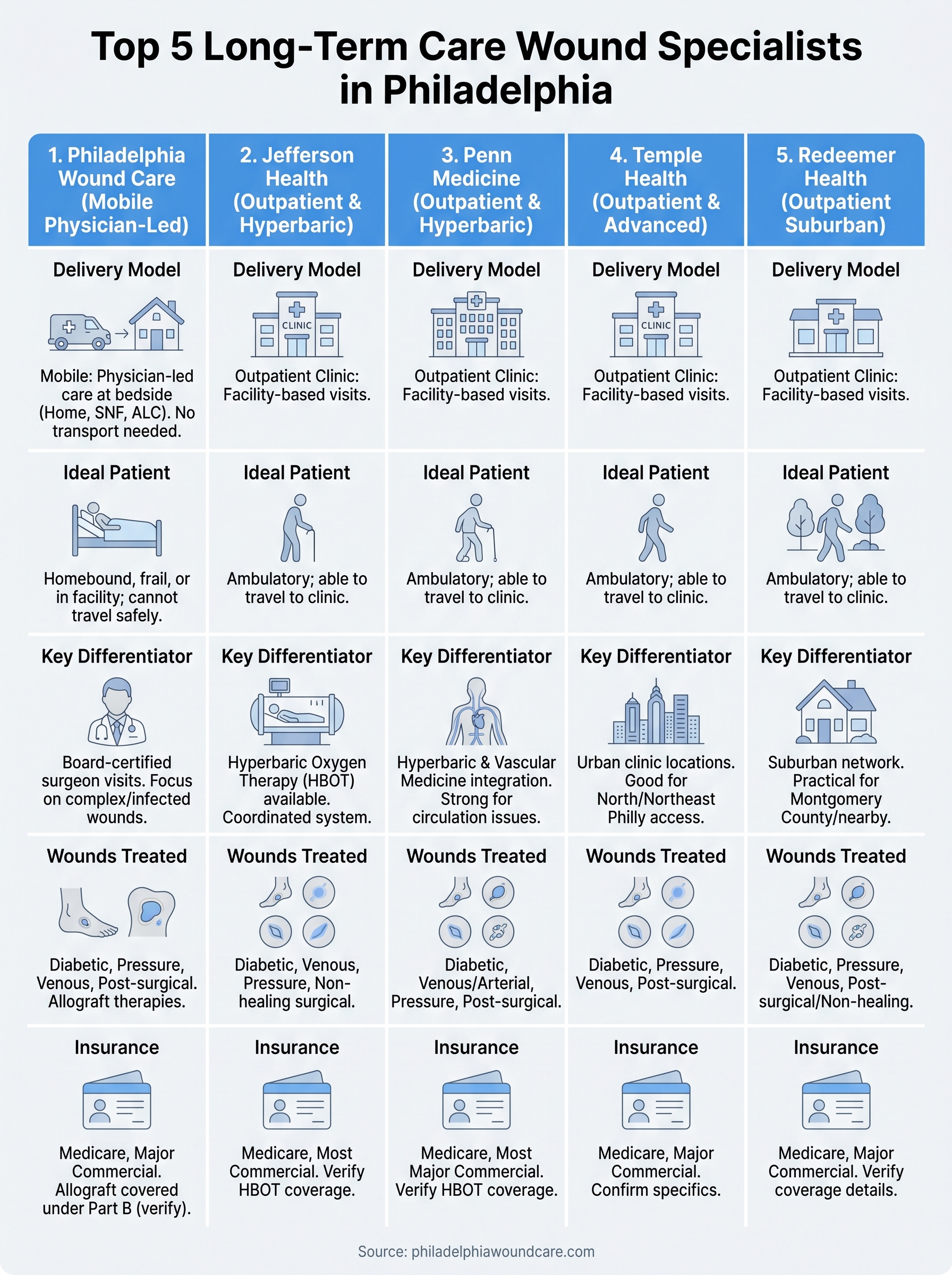
Each option covered here serves a different type of patient and care setting. Philadelphia Wound Care is the right call if your patient or loved one cannot travel to a clinic and needs physician-level care at the bedside. Jefferson, Penn, Temple, and Redeemer all run solid outpatient programs for patients who can get to a clinic location with some coordination.
When you are choosing a long term care wound specialist Philadelphia patients and families can rely on, the most important factors are mobility, wound complexity, and insurance coverage. Confirm what each provider accepts before your first contact to avoid delays in getting treatment started.
If you need a mobile wound specialist who comes directly to the patient, Philadelphia Wound Care is ready to help. You can submit a wound care referral online or reach out through the contact page to discuss your specific situation and coverage.