

Penn Wound Care Clinic Philadelphia: Location, Hours & Care
If you’re searching for the Penn wound care clinic Philadelphia, you’re likely dealing with a wound that needs specialist attention, and you want to know exactly where to go, when they’re open, and what kind of treatments are available. Penn Medicine’s wound care center is one of the most well-known options in the region, offering advanced therapies for chronic and complex wounds under the guidance of experienced clinicians.
This article breaks down the key details you need: the clinic’s location and contact information, its hours of operation, the conditions it treats, and the types of advanced care provided. Whether you’re a patient researching your options or a caregiver coordinating care for a loved one, you’ll find the practical information here to make an informed decision.
Worth noting, a clinic visit isn’t always realistic for every patient. Seniors with limited mobility, residents in skilled nursing facilities, and individuals recovering from surgery often struggle to get to an outpatient center. That’s exactly why Philadelphia Wound Care exists as a mobile alternative, bringing physician-led wound management directly to patients at home, in assisted living, or at bedside in a facility. As you read about what Penn’s clinic offers, keep in mind that similar advanced treatments, including allograft therapy, may also be available without leaving your door.
Why Penn wound care matters in Philadelphia
Philadelphia has a large and aging population, and chronic wound conditions are far more common here than most people realize. Diabetic foot ulcers, pressure injuries, and venous leg ulcers affect hundreds of thousands of Americans every year, and without specialist intervention, these wounds can lead to serious complications including infection, hospitalization, and amputation. The penn wound care clinic philadelphia represents one of the region’s most recognized points of entry for patients who need more than primary care can provide.
The scale of chronic wound problems
Wound care is not a niche specialty. Chronic wounds affect an estimated 8.2 million Medicare beneficiaries in the United States annually, and the costs associated with managing them run into the tens of billions of dollars. In Philadelphia specifically, a high concentration of older adults and individuals living with diabetes or vascular disease means that demand for advanced wound management consistently outpaces general availability.
Specialized wound care can reduce the risk of lower limb amputation by up to 85% when patients receive early, expert intervention.
Accessing this level of care quickly matters. Delays in specialist treatment allow wound edges to deteriorate, increase infection risk, and extend overall recovery time, which is why knowing exactly where to go and what to expect from a dedicated clinic gives you a real clinical advantage.
Why specialist-level care changes outcomes
A general practitioner can clean and dress a wound, but specialist-level intervention involves debridement, biological skin substitutes, compression therapy, vascular assessment, and structured infection control that go well beyond standard wound dressings. When you work with a wound specialist, you receive a treatment plan that tracks healing progress and adjusts therapies based on your response. This ongoing reassessment is what separates a wound that closes from one that stalls for months without improvement.
Location, hours, parking, and accessibility
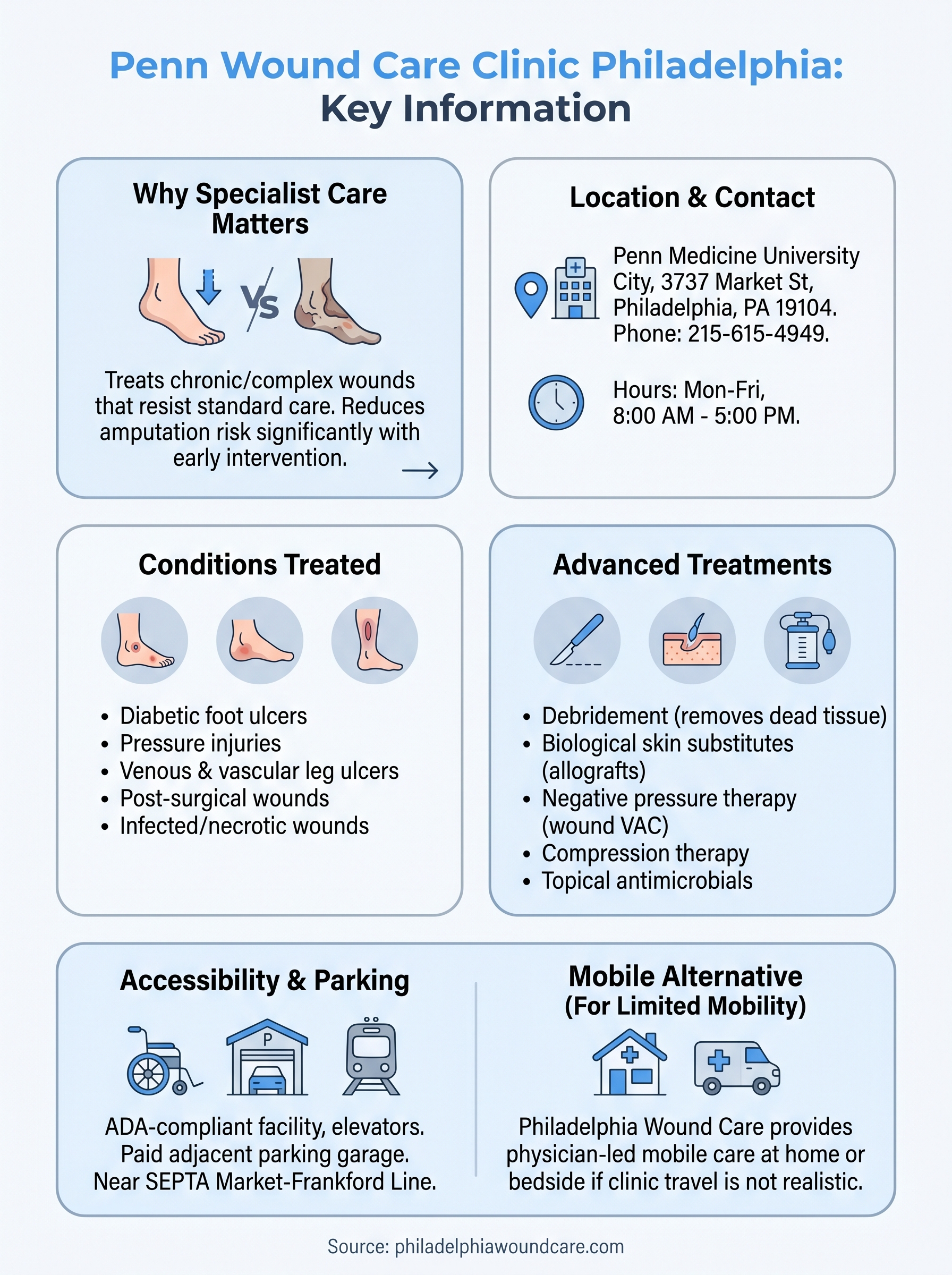
The penn wound care clinic philadelphia at Penn Medicine operates out of Penn Medicine University City, located at 3737 Market Street, Philadelphia, PA 19104. You can reach the clinic directly by calling 215-615-4949. Confirming details before your visit is smart, as hours and specific suite locations can change based on staffing or scheduling updates.
Always call ahead to verify your appointment time and parking options before traveling, especially if you have limited mobility.
Hours of operation
The clinic generally operates Monday through Friday during standard outpatient hours, typically 8:00 AM to 5:00 PM. Weekend and evening appointments are not commonly available, which can create scheduling challenges for caregivers managing work alongside a patient’s care needs. If you have an urgent wound concern outside those hours, contact your referring physician or seek evaluation through Penn’s emergency services.
Parking and accessibility
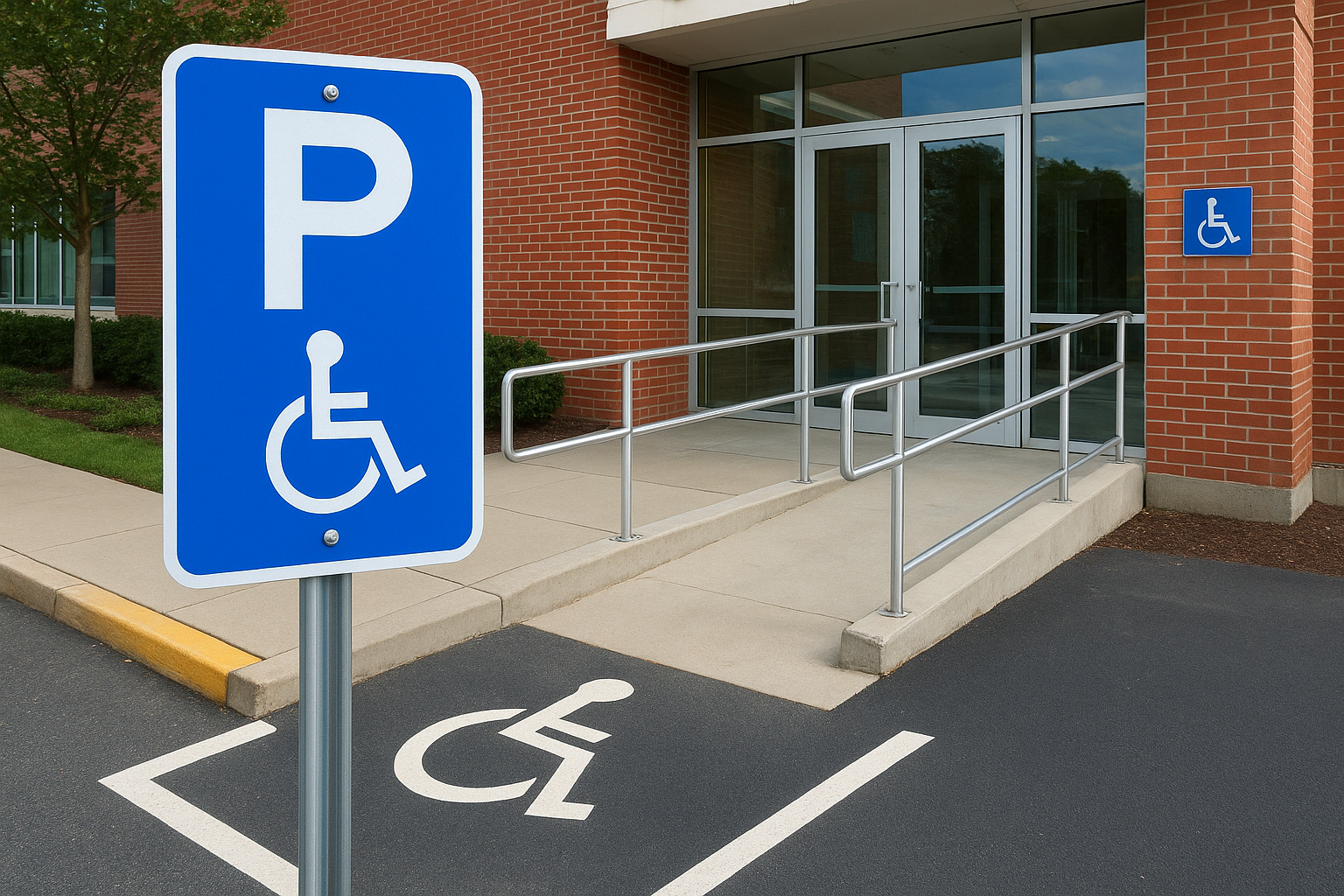
Penn Medicine University City offers paid parking in an adjacent garage, accessible directly from Market Street. The building is ADA-compliant with wheelchair-accessible entrances, elevators, and restrooms throughout the facility. Public transit options include SEPTA’s Market-Frankford Line with a stop nearby. If traveling is physically difficult for you or your family member, this is a real factor worth weighing when deciding on your care setting.
How to make an appointment and what to bring
Getting a referral is typically the first step when accessing the penn wound care clinic philadelphia. Your primary care physician or specialist can submit a referral directly to Penn Medicine’s wound care team. Once the referral is processed, the scheduling staff will contact you to confirm your appointment date, time, and location.
Referrals speed up your access to specialist care, so ask your doctor to submit one as soon as you identify a wound that isn’t healing on its own.
What to bring to your first visit
Your first appointment will move faster if you arrive fully prepared with the right documentation. If a previous provider has already treated the wound, bring those records or imaging results along as well.
Bring the following to every visit:
- Insurance card and a photo ID
- Complete medication list, including any topical wound treatments you’ve been applying
- Prior wound care records or lab results
- List of known allergies
What to expect at check-in
Plan to arrive at least 15 minutes early to complete intake paperwork before your clinician visit. Staff will review your medical history and document the wound’s current condition. Wearing loose-fitting clothing that allows easy access to the wound site will help the appointment run without unnecessary delays.
What conditions and wounds they treat
The penn wound care clinic philadelphia accepts patients dealing with a broad range of chronic and complex wound types. Patients who arrive at this clinic have typically already tried standard wound care through their primary physician without seeing meaningful improvement, which is exactly the point at which specialist evaluation becomes necessary.
If your wound has not shown measurable healing progress after four weeks of standard treatment, a wound care specialist should evaluate it.
Common wound types accepted
The clinic’s team is trained to handle wounds that are difficult to close without advanced clinical support. Diabetic foot ulcers are among the most frequently treated conditions, given the direct link between poor circulation, nerve damage, and delayed healing in patients with diabetes. Vascular and venous leg ulcers are also common, along with pressure injuries that develop in patients who spend extended time in bed or a wheelchair.
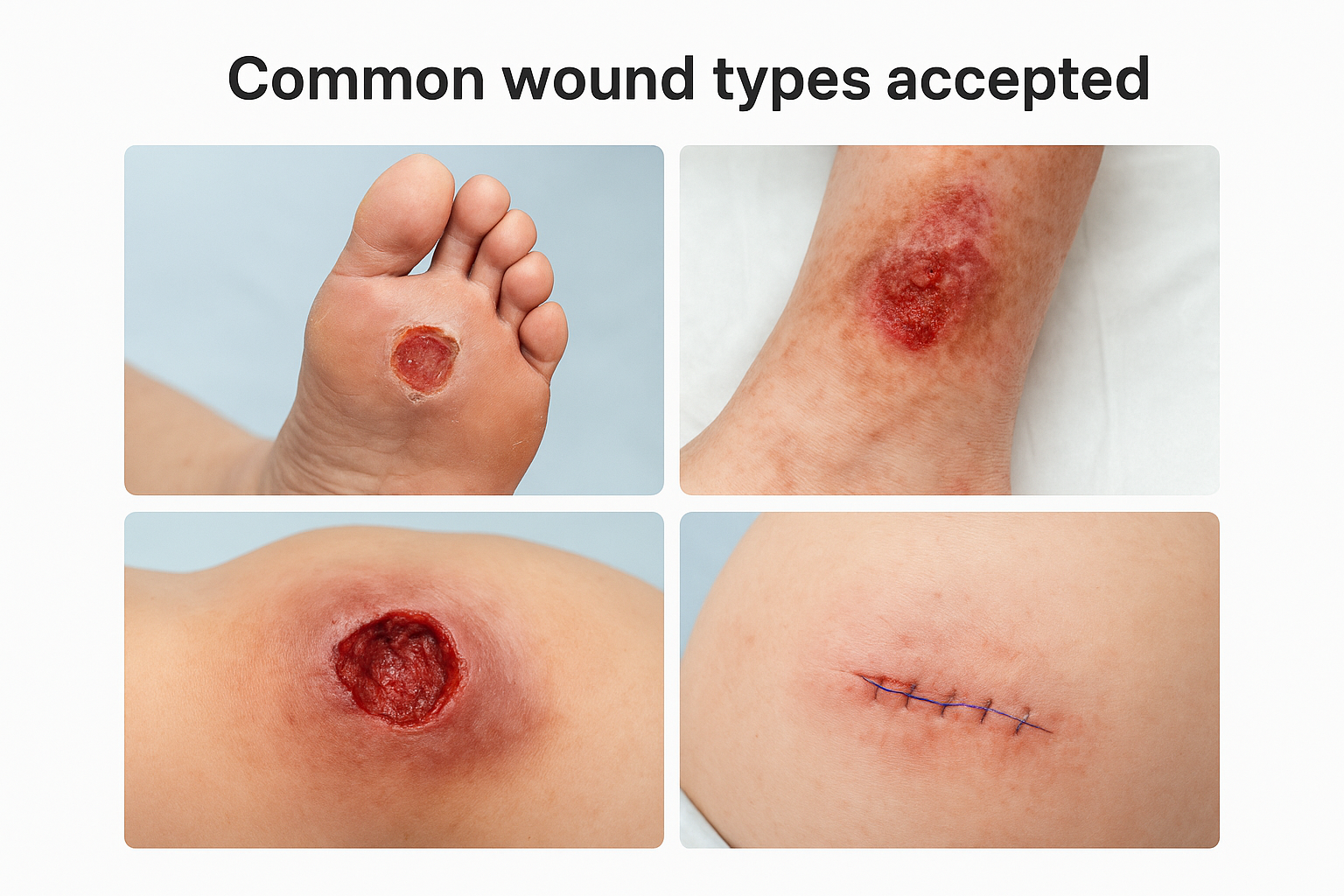
Other conditions the clinic treats include:
- Post-surgical wounds that fail to close after an operation
- Infected or necrotic wounds requiring debridement
- Radiation-induced tissue damage from cancer treatment
- Traumatic wounds that have not healed through standard care
Treatments you may be offered
The penn wound care clinic philadelphia offers a range of evidence-based therapies depending on your wound type and how it has responded to prior treatment. Your clinician will assess the wound’s depth, size, and tissue condition before recommending a specific approach, and your treatment plan will likely combine multiple therapies rather than relying on a single intervention.
The right combination of therapies, applied in the right sequence, typically leads to faster wound closure than any single treatment alone.
Advanced wound therapies
Debridement is one of the most common procedures performed at the clinic. It removes dead or infected tissue from the wound bed to create conditions where healthy tissue can grow. For wounds that still resist closure after debridement, your clinician may introduce allograft or biological skin substitutes, which use donated tissue to stimulate your body’s own healing response.
Other treatments you may receive include:
- Negative pressure wound therapy (wound VAC) to draw out fluid and encourage tissue growth
- Compression therapy for venous ulcers affecting your lower legs
- Topical antimicrobials to control bacterial load within the wound bed
Next steps
You now have a clear picture of what the penn wound care clinic philadelphia offers, from its Market Street location and standard weekday hours to the range of advanced therapies available for chronic and complex wounds. If you can make the trip and your wound needs specialist evaluation, calling 215-615-4949 to request a referral-based appointment is your most direct path forward.
For patients who cannot travel to an outpatient clinic, the picture looks different. Mobility limitations, facility residency, or post-surgical recovery should not prevent you from accessing the same level of physician-led wound care that a clinic provides. Philadelphia Wound Care brings that expertise directly to your bedside, including advanced treatments like allograft therapy covered under Medicare Part B.
If getting to a clinic is not realistic for you or your family member, request mobile wound care services in Philadelphia and find out what treatment looks like on your terms.