

Post-Acute Wound Care Philadelphia: Options After Discharge
Leaving the hospital with an unhealed wound raises an immediate question: who handles the care now? Surgical sites, pressure injuries, and chronic ulcers don’t stop needing attention just because a patient has been discharged. Yet the gap between hospital care and full recovery is exactly where many wounds stall, or worsen. Finding reliable post-acute wound care Philadelphia providers can make the difference between a wound that heals on schedule and one that leads to a readmission.
Post-acute wound care refers to the specialized medical treatment patients receive after leaving an acute care setting like a hospital. It covers everything from routine dressing changes and infection monitoring to advanced therapies such as allografts and regenerative medicine. The challenge for many patients, especially seniors and those with limited mobility, is physically getting to a clinic for these follow-up treatments.
That’s the problem Philadelphia Wound Care was built to solve. As a physician-led mobile practice, we bring General Surgeon-level wound management directly to patients at home, in skilled nursing facilities, assisted living communities, and hospice settings. This article breaks down your options for post-acute wound care in the Philadelphia area, what each setting offers, and how to decide which path fits your situation after discharge.
Why post-acute wound care matters after discharge
Hospitals focus on stabilizing patients. Once you’re discharged, the expectation is that follow-up care will continue in an outpatient or home-based setting. For most routine procedures, that works fine. But for patients with open wounds, surgical incisions, or chronic ulcers, the transition out of the hospital is actually the most vulnerable period in the entire recovery process.
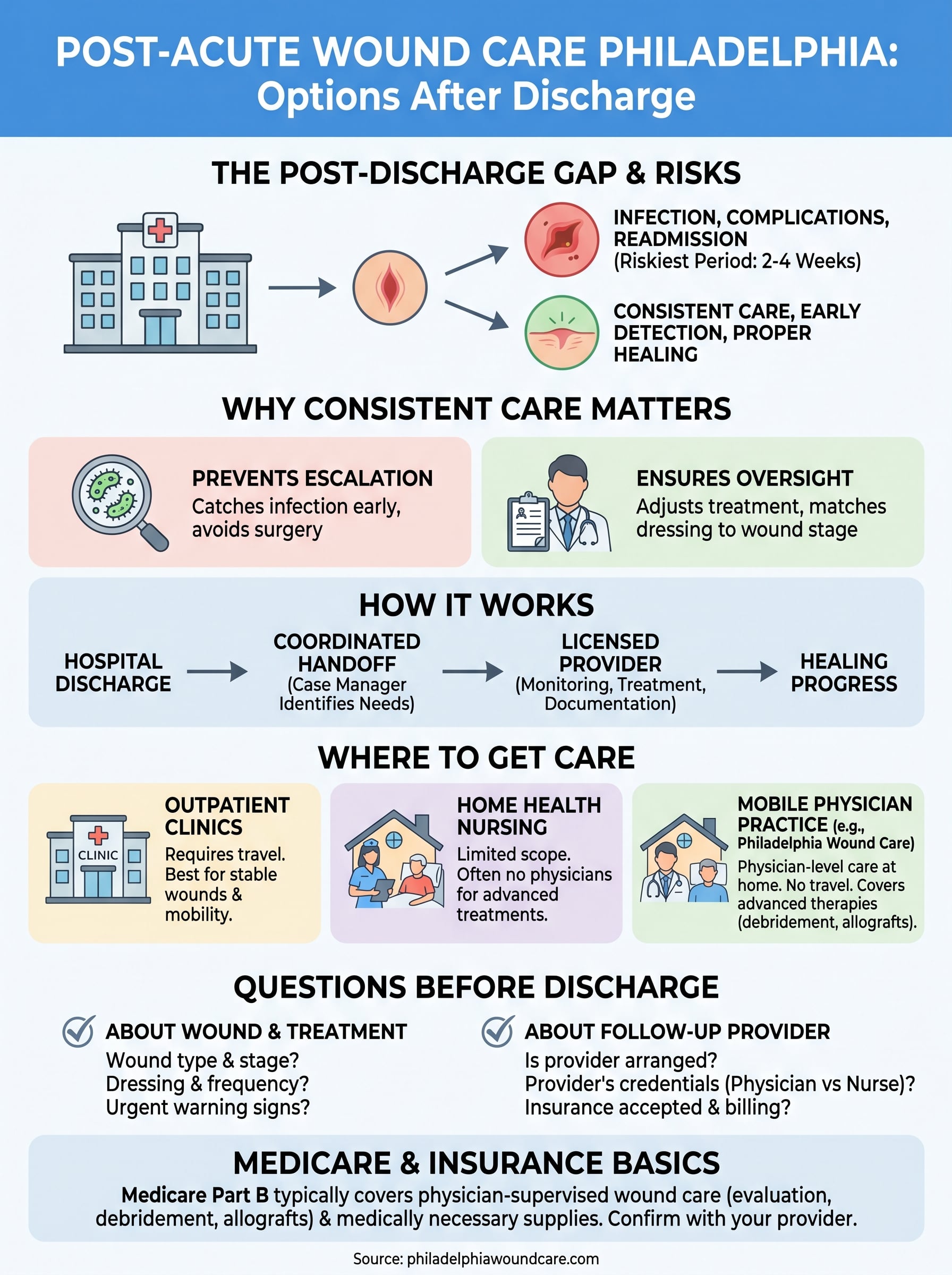
The weeks immediately after discharge carry the highest risk for wound complications, infection, and unplanned readmission.
The risk window right after discharge
Your wound doesn’t pause while you arrange follow-up appointments. Bacteria can colonize an open wound within days, and small changes like increased drainage, swelling, or skin breakdown around the wound edge often signal a larger problem developing underneath. Surgical site infections are among the leading drivers of unplanned hospital readmissions, and most of them occur in the first two to four weeks post-discharge, exactly when patients face the most logistical hurdles in getting to a clinic.
What consistent care prevents
Regular, physician-level monitoring during the post-acute phase does more than change a bandage. It catches early signs of infection before they escalate, adjusts treatment as the wound responds, and ensures that advanced therapies like debridement or allograft application happen at the right time. For patients already managing diabetes, vascular disease, or limited mobility, consistent post-acute wound care Philadelphia providers reduce the risk of complications that can turn a manageable wound into a long-term crisis.
- Infection caught early requires outpatient treatment; caught late may require surgery
- Proper wound monitoring prevents tissue breakdown from spreading to surrounding tissue
- Physician oversight ensures dressings and medications match the wound’s current stage
How post-acute wound care works in Philadelphia
Post-acute wound care in Philadelphia follows a coordinated handoff from your hospital team to an outpatient or mobile provider. Before discharge, a case manager typically identifies your wound’s current stage and recommends the level of ongoing care you’ll need. From there, a licensed provider takes over regular monitoring, dressing changes, treatment adjustments, and clinical documentation, keeping your referring physician informed throughout the recovery process.
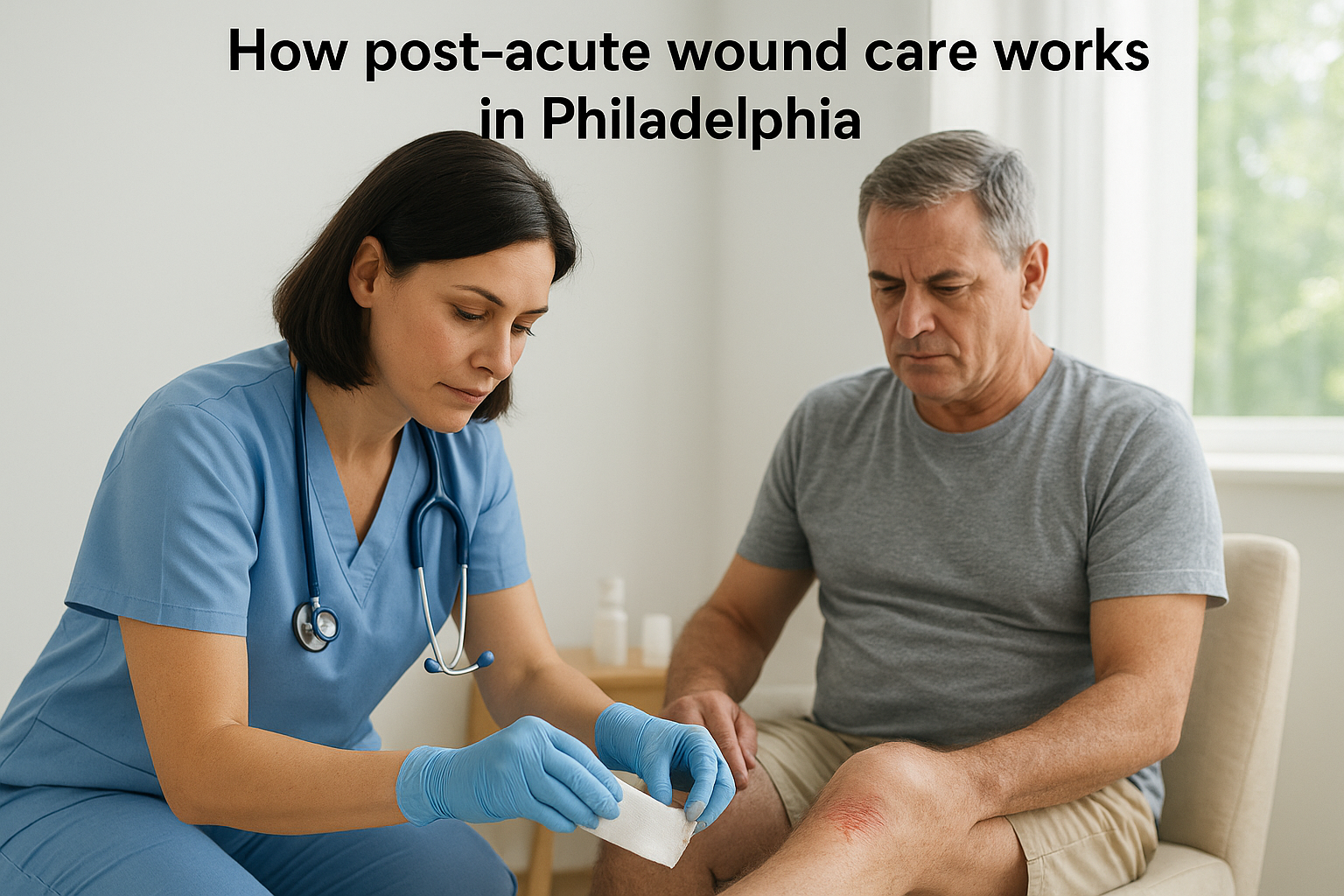
The quality of that handoff determines how quickly your wound moves toward closure.
What a typical visit looks like
Your provider begins each visit by assessing wound size, depth, drainage, and surrounding tissue quality to determine whether the current treatment plan is working. Small changes matter here. Increased drainage, odor, or discoloration can signal a developing problem days before it becomes clinically significant or visible to an untrained eye.
If the wound isn’t progressing, your provider escalates the approach. That might mean debridement, a bioactive dressing change, or allograft application, depending on the wound type and its current stage. For patients receiving post acute wound care Philadelphia services through a mobile practice, every step in this process takes place at your home or care facility, so you don’t lose recovery time to transportation or missed appointments.
Where to get post-discharge wound care
Philadelphia patients typically have three main options after leaving the hospital: outpatient wound care clinics, home health nursing services, and mobile physician practices. Each setting serves a different level of need, and your wound’s complexity, your mobility, and your living situation all factor into which one makes the most sense for you.
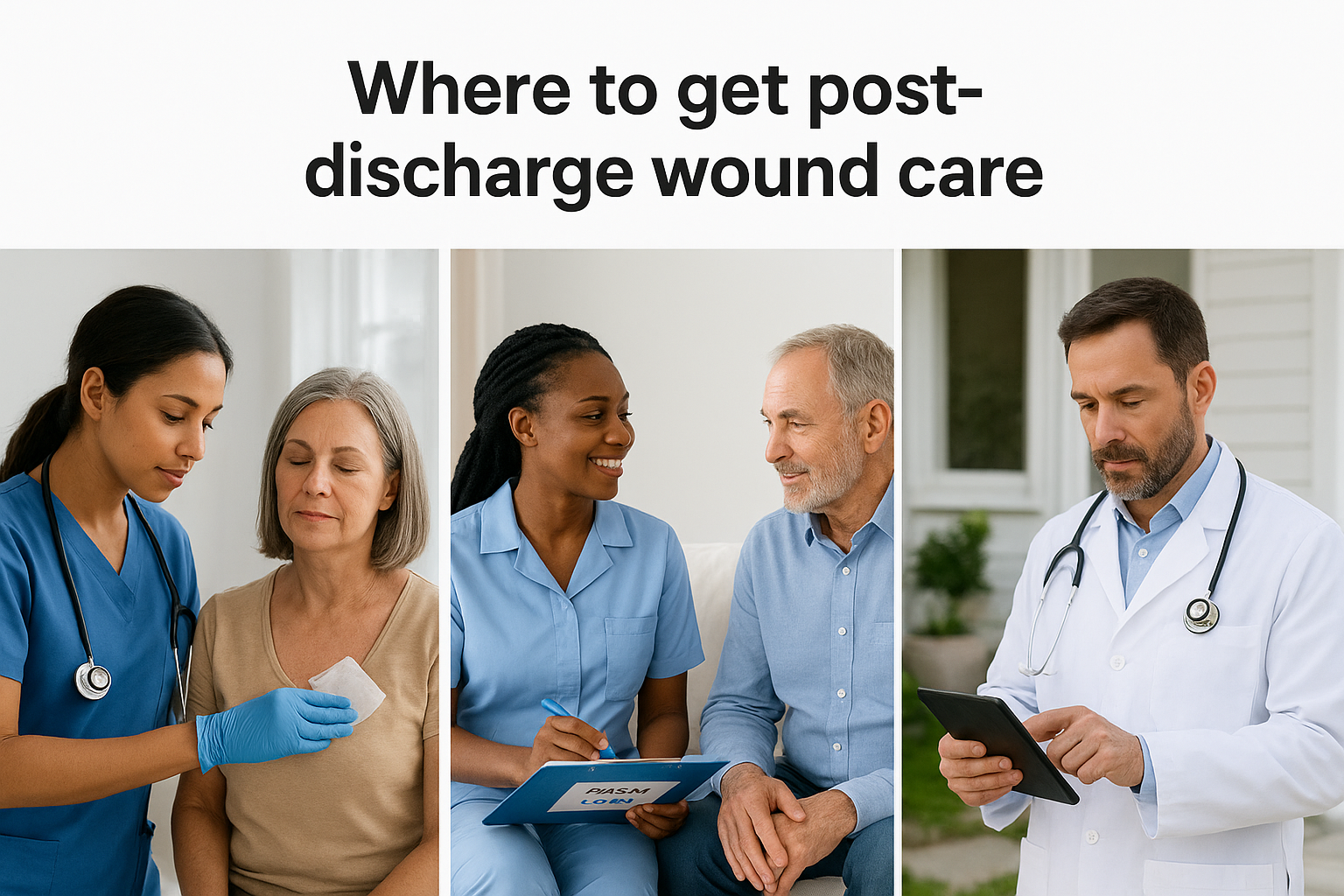
Outpatient clinics and home health nursing
Outpatient clinics work well if you can travel reliably and your wound is stable enough for scheduled appointments every week or two. Home health nursing is a step closer to you, but most home health agencies send nurses rather than physicians, which limits the scope of treatment they can provide. Complex wounds requiring debridement, allografts, or regenerative therapies often fall outside what a home health nurse is authorized to perform.
The level of clinical oversight you receive at home directly affects how fast your wound closes.
Mobile physician practices
Mobile wound care practices fill the gap that clinics and home health agencies leave open. For patients seeking post acute wound care Philadelphia services, a physician-led mobile practice delivers General Surgeon-level assessment and advanced treatment directly to your home or facility. You don’t need to arrange transportation, and you don’t risk setbacks caused by missed appointments.
What to ask before you leave the hospital
Discharge day moves fast. Nurses, paperwork, and discharge instructions all arrive at once, and it’s easy to leave without a clear plan for your wound. Before you walk out, ask your care team specific questions so your post-acute wound care coverage starts immediately, not days later when a complication has already developed.
Getting clear answers before discharge prevents the gaps that set your recovery back.
Questions about your wound and treatment plan
Your care team should tell you what type of wound you have and exactly what stage it’s currently at. Ask which dressing is in place, how often it needs changing, and what warning signs should prompt an immediate call to a provider. Leave with written instructions, not just verbal ones.
- What is the wound type and current healing stage?
- Which dressing is applied and how often does it need to change?
- What symptoms require an urgent call to a provider?
Questions about your follow-up provider
Ask your case manager whether a post acute wound care Philadelphia provider has already been arranged, or whether you need to contact one yourself. Find out what clinical credentials your follow-up provider holds, specifically whether they are a physician or a nurse. That distinction directly affects which treatments they can perform at your home or care facility.
Medicare and insurance basics for wound care
Cost is often the first thing patients ask about when arranging post-acute wound care. Medicare Part B covers physician-supervised wound care services, including advanced treatments like allograft therapy, when they are medically necessary. If you’re arranging post acute wound care Philadelphia services through a mobile physician practice, those visits typically bill under Part B, meaning you don’t need to be homebound to qualify.
Your coverage depends on how your provider bills, so confirm before your first visit that they accept your insurance.
What Medicare typically covers
Medicare Part B pays for physician evaluation visits, wound debridement, and regenerative therapies like allografts when a licensed physician orders and supervises the treatment. Durable medical equipment such as specialized wound dressings may also fall under Part B coverage.
- Physician evaluation and management visits
- Debridement procedures
- Allograft and biological wound therapies
- Wound-related durable medical supplies
What to confirm with your provider
Before scheduling your first visit, ask your provider which insurance plans they accept and whether they bill Medicare or Medicare Advantage directly on your behalf. Knowing your out-of-pocket responsibility upfront removes financial uncertainty and keeps your focus on healing rather than paperwork.
What to do next
You now have a clear picture of what post acute wound care Philadelphia looks like after discharge, where to get it, and what your insurance typically covers. The next step is straightforward: don’t wait for a complication to prompt action. Wounds that receive consistent physician-level care in the first few weeks after discharge heal faster and require fewer interventions down the line.
If you or someone you care for has a wound that needs ongoing management at home or in a care facility, Philadelphia Wound Care brings General Surgeon-level treatment directly to your location. You can schedule a visit, ask clinical questions, or arrange a same-week evaluation without leaving home. Whether you’re a patient, a family caregiver, or a discharge planner coordinating a referral, the process starts with a single conversation. Request mobile wound care services in Philadelphia and get your care plan started today.