

Post Surgical Wound Care Services: What To Expect At Home
Coming home after surgery should feel like a relief, but for many patients, it brings a new concern: how to properly care for the incision site. Without the nurses and monitoring equipment that hospitals provide, managing a healing wound on your own can feel overwhelming. That’s exactly where post surgical wound care services step in, offering skilled medical oversight during the critical weeks after a procedure.
These services exist because surgical wounds don’t stop needing attention once you leave the hospital. Infections, dehiscence (wound reopening), and delayed healing are real risks, especially for older adults or patients managing chronic conditions like diabetes or vascular disease. Having a qualified physician evaluate your wound at home removes the guesswork, and often catches problems before they escalate into emergency room visits. At Philadelphia Wound Care, this is the core of what we do: board-certified surgical care delivered directly to your bedside, whether you’re recovering at home, in a skilled nursing facility, or in an assisted living community.
This article breaks down what post surgical wound care services actually involve, who benefits most from them, and what the process looks like from your first referral through full recovery. If you or a loved one is facing a surgical discharge and wondering what comes next, the information ahead will give you a clear picture of the support available to you.
Why post-surgical wound care matters
Surgery creates a controlled injury. Even when a procedure goes exactly as planned, your body still has to repair tissue, rebuild blood vessels, and fight off potential infection across the days and weeks that follow. Most surgical complications don’t show up in the operating room; they appear after discharge, when you’re home and away from continuous clinical monitoring. That gap between leaving the hospital and full recovery is exactly where skilled wound oversight becomes critical to your outcome.
The healing window is narrow and unforgiving
Surgical wounds move through three overlapping phases: inflammation, proliferation, and remodeling. Each phase depends on the previous one completing correctly, and any disruption, whether from infection, poor nutrition, or mechanical stress on the incision, can push healing off course. The first two weeks carry the highest risk, because the wound is most vulnerable during this period to dehiscence (the edges separating), bacterial infection, and fluid accumulation beneath the skin.
Missing early warning signs during this window is one of the most common reasons patients return to the emergency room within 30 days of discharge.
Wound dehiscence alone affects a significant share of abdominal and orthopedic procedures. When it happens at home without professional support nearby, patients often delay seeking help, allowing a manageable problem to grow into something that requires rehospitalization. Scheduled clinical evaluation during your recovery catches these changes early, when a straightforward dressing adjustment or prescription change is all that stands between you and a serious setback.
Chronic conditions raise the risk significantly
For patients managing diabetes, peripheral vascular disease, or obesity, healing carries added complexity that standard discharge instructions simply don’t address. Diabetes reduces circulation and impairs your immune response, meaning a wound that heals in two weeks for a healthy patient may stall or deteriorate without targeted medical support. Corticosteroids and other commonly prescribed medications also slow the body’s repair process, regardless of your other health factors.
Your recovery requires more than a printed instruction sheet handed to you at discharge. This is exactly the population that benefits most from post surgical wound care services, because ongoing physician-led assessment allows the treatment plan to shift in real time based on how the wound is actually responding. A board-certified surgeon evaluating your incision at home can prescribe advanced wound therapies, debride non-healing tissue, and recognize subtle changes that a routine nursing check would miss entirely. That level of clinical judgment is what separates managed recovery from prolonged complications.
What to expect at home after surgery
The first few days at home set the tone for your entire recovery. Swelling, tenderness, and mild drainage around the incision are normal responses to surgical trauma, but knowing what falls within an expected range helps you stay calm and catch changes that actually matter. Most patients receive discharge paperwork covering basic instructions, but that paperwork rarely prepares you for how hands-on wound management feels when you’re doing it alone.
The first 48 to 72 hours
Your body concentrates most of its initial repair effort within the first three days. Inflammation peaks during this window, which means your incision may look red, feel warm, and show some swelling around the edges. This is your immune system responding appropriately. What you want to watch for is any change that moves outside this expected range: drainage that turns thick or foul-smelling, skin that becomes hot well beyond the immediate wound site, or edges that begin to separate.
Connecting with post surgical wound care services at the start of your recovery, rather than waiting for visible problems, consistently leads to fewer complications and faster closure.
What your activity level and environment will look like
Limiting physical strain on the incision is one of the most important things you can do in the first week. Bending, lifting, and any movement that places direct tension across the wound can delay closure and raise your risk of dehiscence. A visiting clinician can adjust these restrictions based on your specific procedure and incision location as healing progresses.
Keeping the wound area clean and dry matters just as much as what you do physically. Avoid submerging the incision in baths or pools until your clinician confirms it has fully closed. Sleeping position also plays a role: use pillows to offload pressure from the wound site and keep the area protected from friction against bedding or clothing throughout the night.
How to care for a surgical incision day to day
Day-to-day incision care follows a short routine that, when done consistently, makes a real difference in how quickly your wound closes. Washing your hands thoroughly before touching the wound site is the single most important step you take each time. Bacteria transferred from your hands to an open incision are among the most common causes of post-surgical infection, and this one habit reduces that risk significantly.
Cleaning and dressing changes
Start each dressing change by gently removing the old bandage without pulling at the wound edges. Use a clean, damp cloth or saline solution to wipe the incision from the center outward, never back and forth, to avoid dragging contaminants across the healing tissue. Pat the area dry before applying a fresh dressing. Your physician or visiting clinician should specify which dressing type fits your wound, since different stages of healing call for different materials, from simple gauze to absorbent foam pads designed for higher-output wounds.
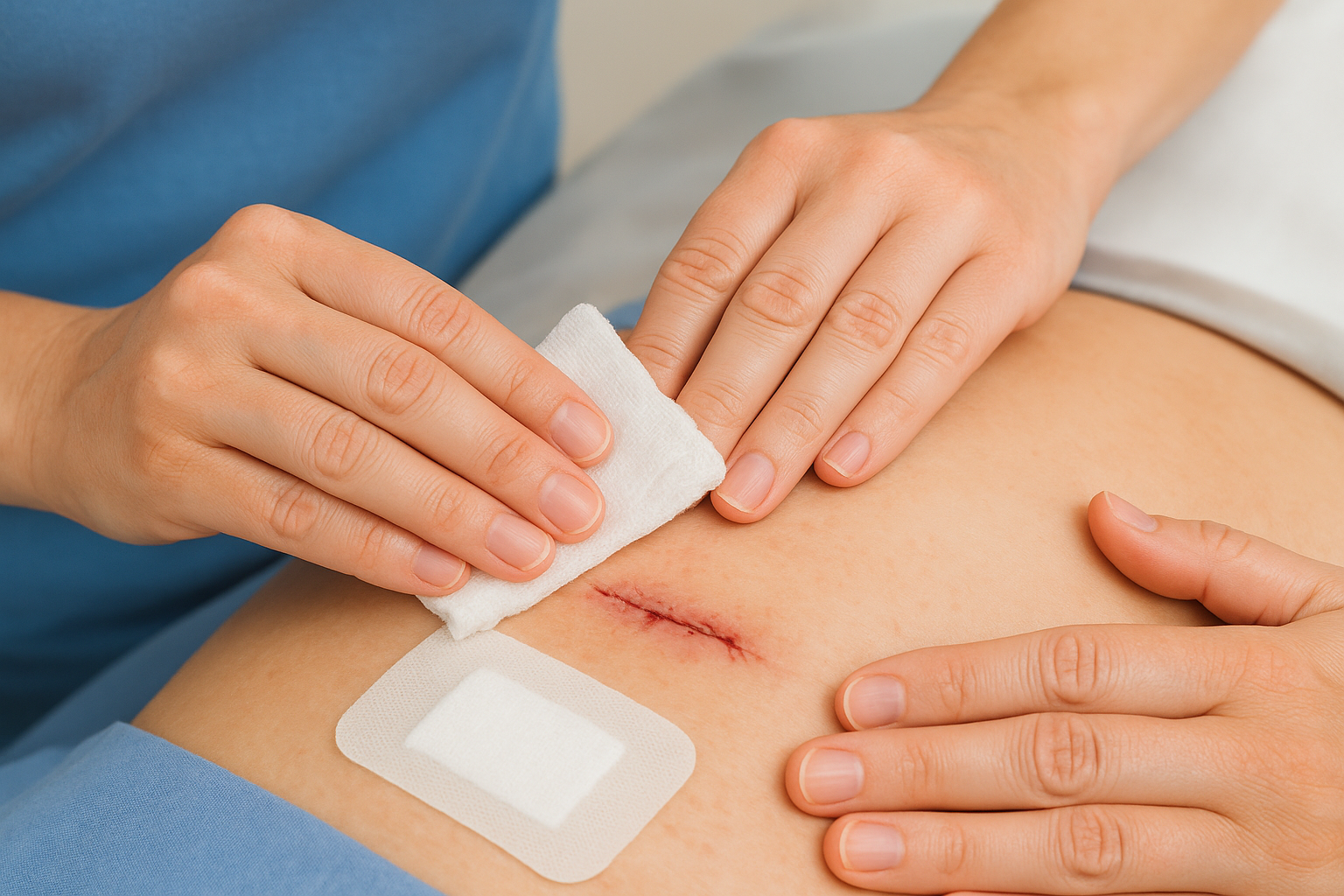
If your dressing sticks to the wound surface, soak it briefly with saline before removing it rather than pulling it free, which can tear fragile new tissue.
Managing drainage and moisture
Some drainage during the first week is expected, but the amount and appearance tell you a lot about what is happening beneath the surface. Clear or light pink fluid in small quantities falls within a normal range, while thick, yellow, or green discharge points to bacterial activity that warrants a clinical review. Keeping the incision dry between dressing changes matters as much as cleaning it properly, since excess moisture softens the surrounding skin and slows the closure process.
Post surgical wound care services can take over dressing management entirely when drainage is heavy or the wound shows signs of stalling. Having a board-certified surgeon assess and dress the wound at home removes the uncertainty that comes with managing a complex incision on your own.
When to call a clinician right away
Knowing when to act versus when to wait is one of the most valuable skills you can develop during recovery. Most minor discomfort, light drainage, and surface-level redness fall within a normal healing range, but certain changes signal that the wound is moving in the wrong direction and needs professional evaluation immediately. Waiting even 24 hours when these signs appear can allow a contained problem to become a serious one.
Signs of infection that cannot wait
Your body gives you clear signals when bacteria have taken hold in a wound. Contact your physician or a post surgical wound care service the same day you notice any of the following:
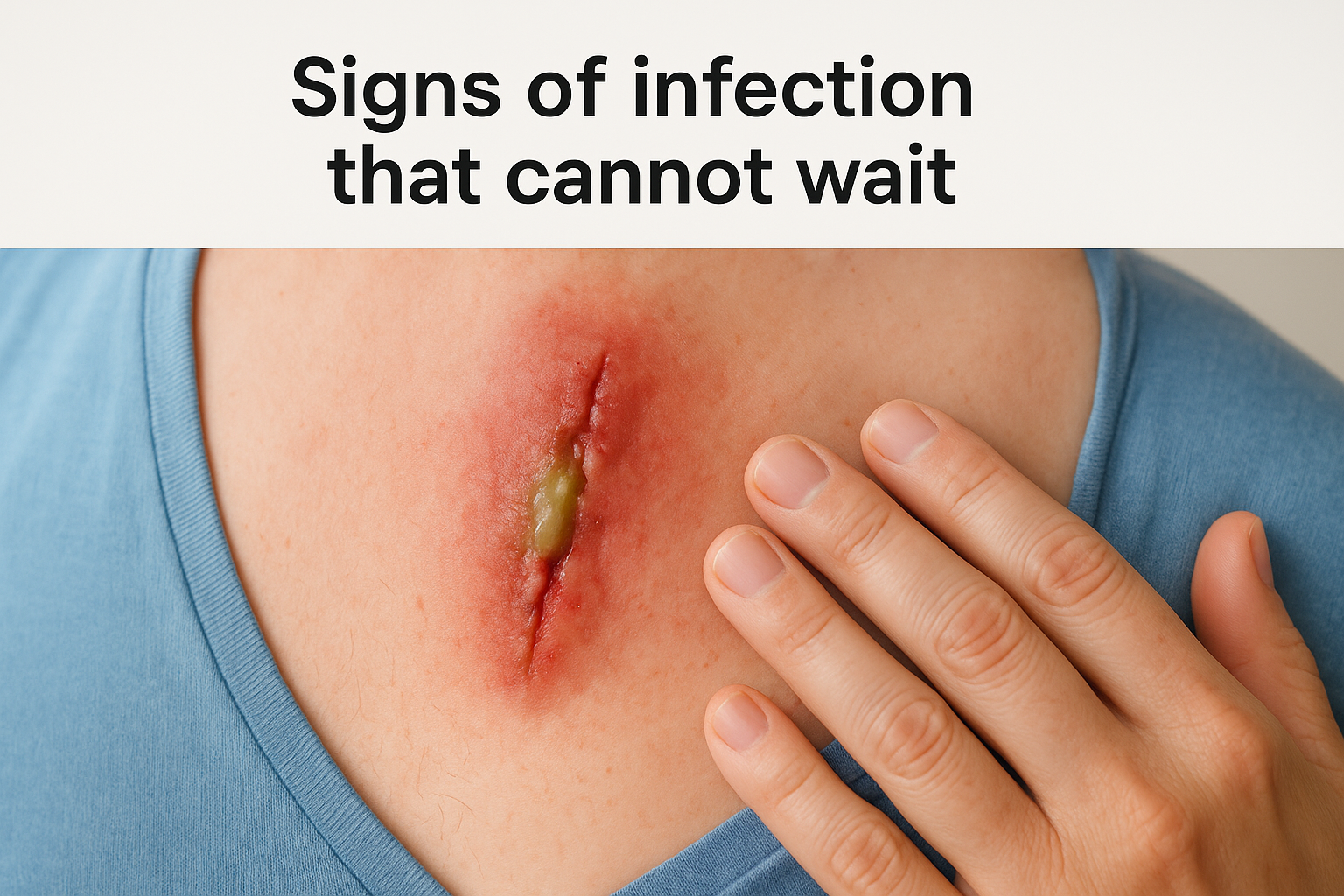
- Discharge that turns thick, yellow, or green with a foul odor
- Skin around the incision that feels significantly hotter than the surrounding area
- A fever above 101°F (38.3°C), which indicates your body is fighting an active infection
- Red streaking that extends outward from the wound edges
- Increasing pain after the first few days instead of gradual improvement
Worsening pain after day three of recovery is a stronger indicator of infection than redness alone, since redness in isolation can reflect normal inflammation.
Infections that begin at the skin surface can spread to deeper tissue layers within 48 hours, a condition called cellulitis that requires prompt antibiotic treatment. Recognizing these signs early and acting on them is what prevents a surface infection from becoming a systemic one.
Signs the wound is failing to close properly
Wound dehiscence, where the incision edges begin to separate, requires immediate clinical attention regardless of whether you see signs of infection. If you notice the wound opening, even slightly, cover it with a clean, dry cloth and call your clinician right away. Do not attempt to reclose the wound yourself or apply tape across separated edges, as this can trap bacteria beneath the surface and worsen the injury. A physician needs to assess the depth of separation and determine the correct course of treatment.
What post-surgical wound care services include
Post surgical wound care services cover more than dressing changes. When a board-certified physician visits your home, they bring clinical capabilities that go well beyond what a standard home health aide provides. Each visit includes a structured wound assessment where the clinician measures wound dimensions, evaluates tissue quality, documents drainage volume and color, and checks for signs of infection or stalled healing. This assessment drives every treatment decision that follows, keeping your care plan current with how your wound is actually progressing.
Clinical treatments delivered at your bedside
A visiting wound care physician can perform several procedures in your home that would otherwise require a clinic or hospital visit. Debridement, the removal of dead or non-viable tissue, is one of the most common interventions and directly accelerates healing by exposing healthy tissue underneath. Negative pressure wound therapy and advanced dressing applications that require clinical training are also within scope, giving you access to hospital-grade care without leaving your residence.
Your clinician can also apply allograft and regenerative tissue therapies for wounds that show no progress with conventional dressings. These treatments, which use processed human or biological tissue to stimulate healing, are covered under Medicare Part B for qualifying patients, removing a significant cost barrier for those on fixed incomes.
Physician-led oversight means your treatment escalates in real time when a wound stalls, rather than waiting for a scheduled clinic appointment weeks away.
Coordination with your broader care team
Wound care physicians don’t work in isolation. They communicate directly with your referring doctor, facility staff, or hospital case manager to keep everyone aligned on your recovery progress. Prescription management, lab orders, and specialist referrals all flow through the same clinical relationship, so you aren’t navigating multiple separate providers on your own.
Connected care like this reduces the risk of treatment gaps that slow healing and increases the likelihood that your wound closes on schedule.
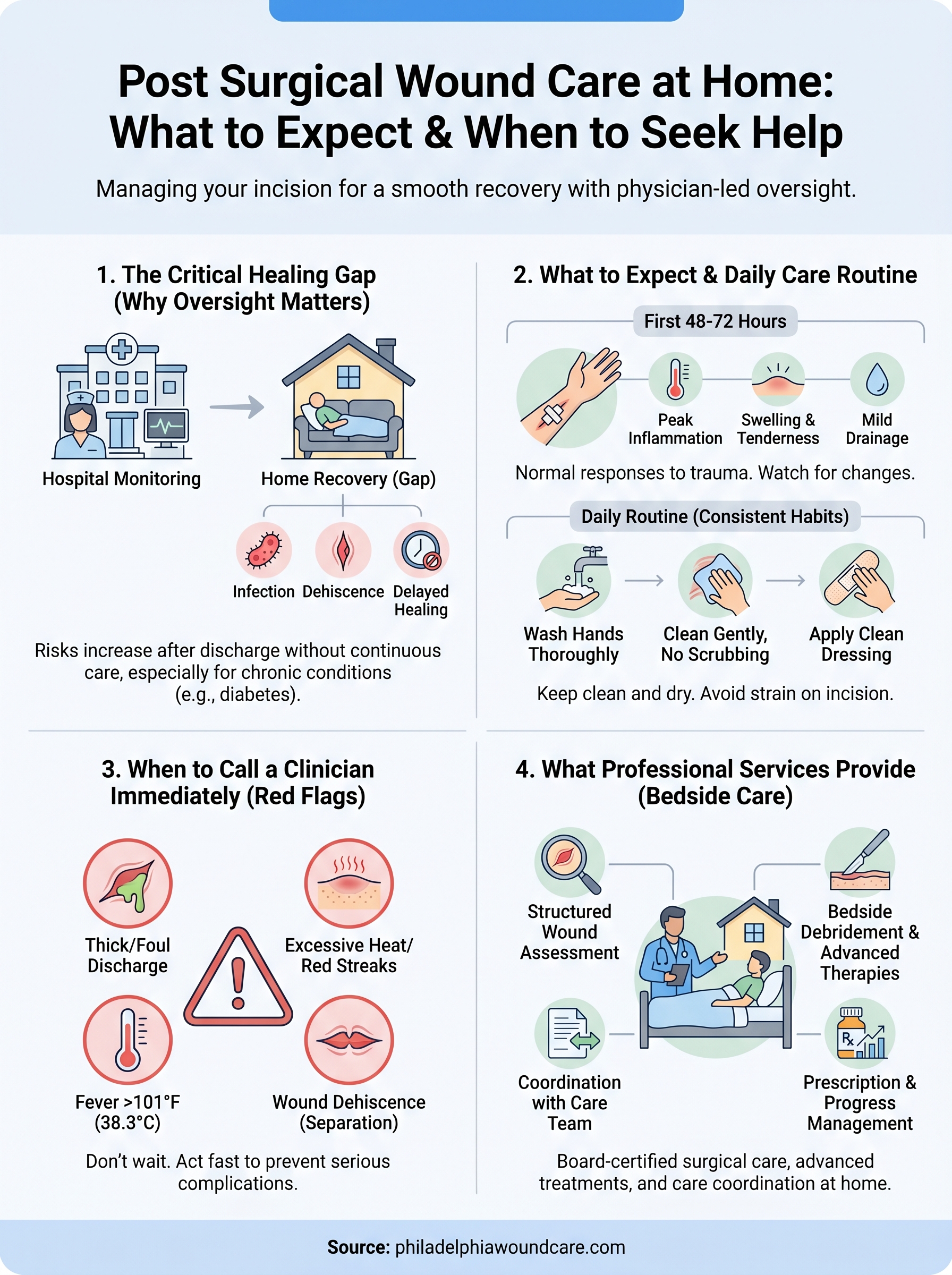
Next steps for a smoother recovery
Recovery after surgery moves faster and with fewer setbacks when you have skilled clinical support involved from the start. If your wound is not progressing as expected, if you are managing a chronic condition like diabetes that complicates healing, or if traveling to a clinic simply is not realistic right now, post surgical wound care services bring the oversight your recovery demands directly to your door. You do not have to choose between convenience and quality care.
Philadelphia Wound Care serves patients recovering at home, in skilled nursing facilities, and in assisted living communities throughout the Philadelphia region. A board-certified surgeon will evaluate your wound, manage your treatment plan, and coordinate with your existing care team so nothing falls through the gaps. Reach out today through our mobile wound care services page to learn how to get started or submit a referral for someone in your care.