

Purulent Exudate: What It Is, Causes, and What It Looks Like
You changed a wound dressing and noticed thick, cloudy fluid that wasn’t there yesterday. Maybe it smells different too, or the color has shifted from clear to yellow or greenish. That change matters, and purulent exudate is usually the reason. It’s one of the clearest signs your body is sending that something in the healing process has gone wrong, and knowing how to read it can save you a trip to the ER or catch an infection before it spreads.
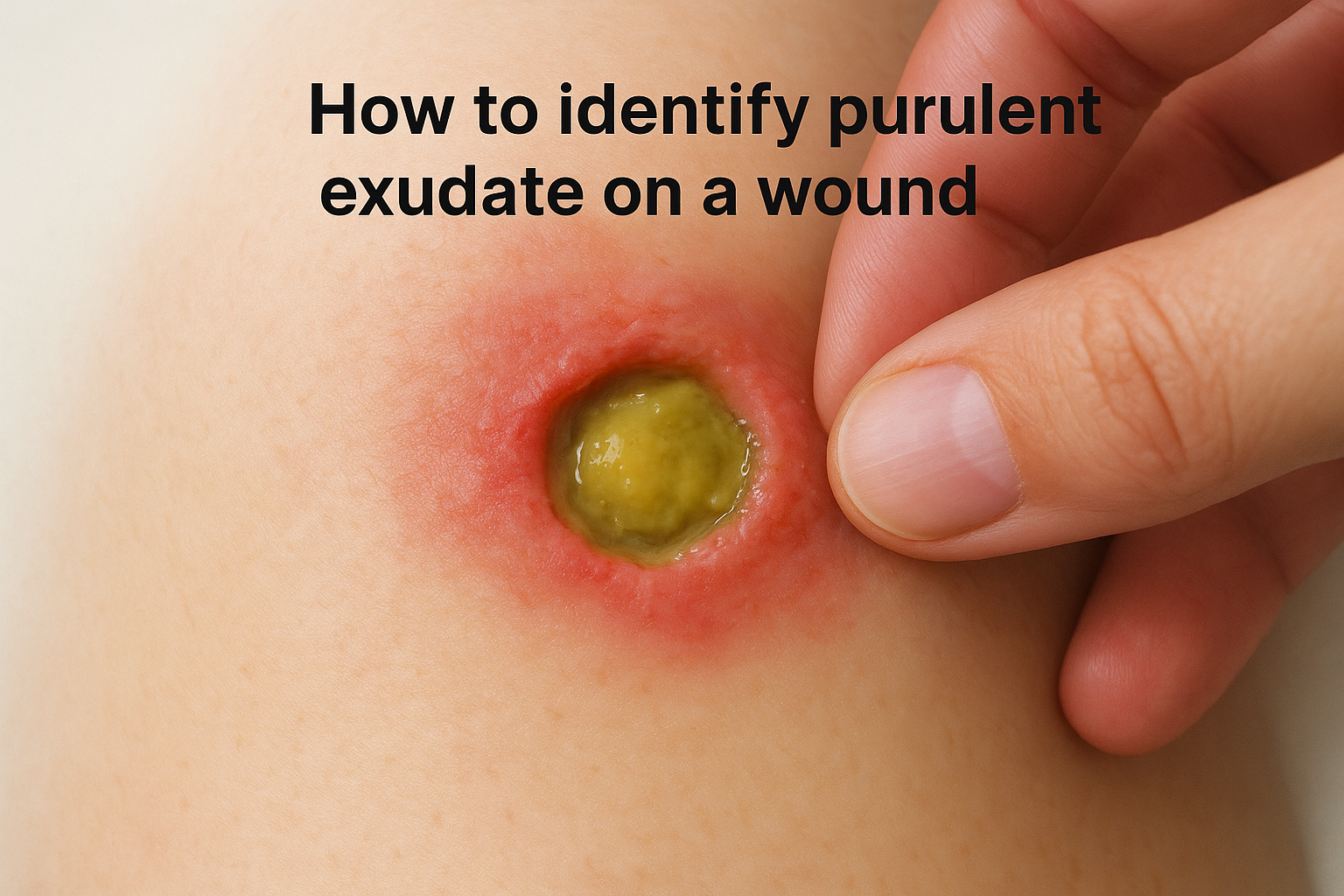
Purulent exudate is thick, opaque wound drainage, often yellow, tan, or green, that signals an active infection. It forms when white blood cells, bacteria, and dead tissue accumulate at the wound site as your immune system fights off invading organisms. Unlike serous drainage, which is thin and watery, or sanguineous drainage, which is blood-tinged, purulent exudate has a distinct consistency and color that trained eyes recognize immediately.
In this article, we’ll break down exactly what purulent exudate looks like, what causes it, and how to tell it apart from normal healing fluid. If you’re caring for a chronic wound or a loved one recovering from surgery, this guide gives you the specifics you need to know when a wound needs professional attention.
Why purulent exudate is a warning sign to take seriously
Bacteria don’t just sit quietly in a wound. Once they establish a colony, your immune system floods the area with neutrophils to fight them off, and that battle produces the thick, cloudy fluid you’re seeing. Purulent exudate is essentially the visible byproduct of that fight: dead white blood cells, bacterial debris, and liquefied tissue mixed together. This isn’t a sign your body is simply "clearing things out." It’s a sign of active infection that, left unchecked, can spread past the wound edges and into deeper tissue or the bloodstream.
Purulent exudate is your immune system waving a flag that says the infection is winning, not losing.
The risk of letting it go untreated
Untreated infection doesn’t stay contained. It can progress to cellulitis, spreading redness and swelling in the surrounding skin, or worse, sepsis, a body-wide inflammatory response that the CDC identifies as a medical emergency. For patients with diabetes, vascular disease, or limited mobility, the timeline from localized infection to a serious systemic problem can move fast, sometimes within 48 to 72 hours. Older adults and anyone with a compromised immune system face even less margin for delay.
Why chronic wound patients face higher stakes
Seniors managing pressure ulcers, diabetic foot ulcers, or post-surgical wounds already have compromised circulation or nerve sensation in many cases. That means they may not feel the pain that would normally signal a worsening infection, so the drainage itself becomes one of the few reliable clues available. Facilities caring for multiple residents face a similar challenge: a wound that looks stable one shift can deteriorate by the next if purulent drainage goes unnoticed or unreported.
What makes this different from normal healing
Healthy wounds often produce some drainage as part of the repair process, and that’s expected. Purulent exudate stands apart because it signals your body is fighting bacteria rather than simply rebuilding tissue. Recognizing that difference early, rather than assuming all drainage is routine, gives you the window to intervene before the infection advances. That’s exactly why understanding the visual and physical characteristics of purulent exudate matters as much as knowing its causes.
How to identify purulent exudate on a wound
Spotting purulent exudate takes more than a quick glance at the dressing. You need to check color, thickness, smell, and how the surrounding skin looks before drawing conclusions. A wound producing this type of drainage rarely looks the same two days in a row, so comparing photos or notes from previous dressing changes helps you catch the shift early.
Color and consistency
Look closely at the fluid itself. Thick, opaque drainage is the biggest tell, and color often points to the type of bacteria involved.
| Drainage Type | Color | Consistency | What It Usually Means |
|—|—|—|
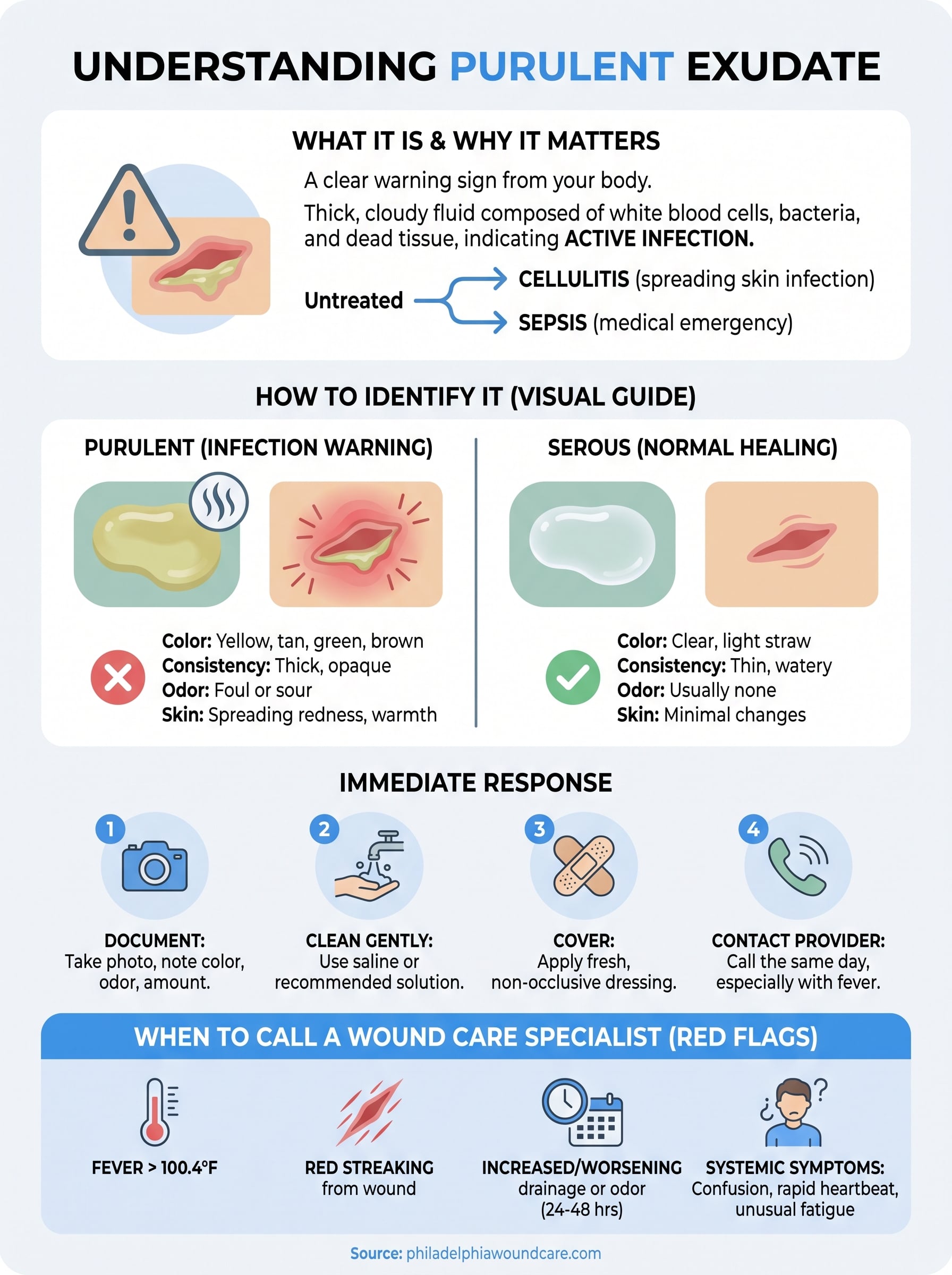
| Purulent | Yellow, tan, green, or brown | Thick, opaque | Active infection |
| Serous | Clear or light straw | Thin, watery | Normal healing |
| Sanguineous | Red | Thin to thick | Fresh bleeding or trauma |
| Serosanguineous | Pink | Thin, watery | Mild healing drainage |
If the drainage is thick and colored rather than clear and thin, treat it as infection until proven otherwise.
Odor and texture
Smell tells you almost as much as color. A foul or sour odor coming from the wound, especially one that wasn’t there before, usually signals bacterial activity rather than normal tissue repair. The texture also matters: purulent drainage often has a sticky or creamy feel, unlike the watery consistency of serous fluid.
Surrounding skin changes
Examine the skin bordering the wound, not just the wound bed. Redness that spreads outward, warmth to the touch, or swelling beyond the original wound margins often accompanies purulent drainage and confirms the infection has moved past the surface.
How to respond when you notice purulent drainage
Finding purulent exudate on a dressing doesn’t mean you need to panic, but it does mean you need to act within hours, not days. Your first move is to protect the wound and gather information your provider will need, rather than guessing at treatment on your own. Home remedies like hydrogen peroxide or over-the-counter ointments won’t clear an established bacterial infection, and delaying professional evaluation only gives it more time to spread.
Take these steps right away
Grab your phone before you touch anything else. A clear photo timestamped against your notes gives your provider real data to work with instead of a verbal description alone.
- Photograph the wound and drainage before cleaning it, using consistent lighting if possible
- Clean gently with saline or the solution your care team already recommended
- Apply a fresh, non-occlusive dressing to avoid trapping bacteria against the skin
- Note the odor, color, and amount of drainage in writing
- Check the patient’s temperature, since fever alongside drainage raises urgency
Document first, treat gently, and call your provider the same day, not the next.
Avoid common mistakes
Skip anything that seals the wound completely, since airtight dressings can worsen bacterial growth in an already infected site. Resist the urge to scrub the wound aggressively too. Vigorous cleaning damages fragile tissue and can push bacteria deeper rather than removing it. If the patient has diabetes or reduced circulation, treat any purulent drainage as urgent rather than waiting to see if it improves overnight, since these patients lose ground faster than healthier ones.
When to call a wound care specialist
Spotting purulent exudate is only half the job. Knowing when a home remedy or a call to your primary care doctor isn’t enough is what actually protects the patient. Wound care specialists have tools and training that general practitioners often don’t, including debridement techniques, culture testing, and access to advanced dressings that pharmacies don’t stock.

A wound that hasn’t improved in 48 hours with drainage present needs specialist eyes, not another day of waiting.
Red flags that mean don’t wait
Certain signs push a situation from "monitor it" to "get help now." Treat any of the following as a reason to call immediately rather than scheduling a routine appointment:
- Fever above 100.4°F alongside drainage, which can indicate the infection has moved beyond the wound site
- Red streaking extending from the wound, a possible sign of spreading infection into the lymphatic system
- Drainage that increases in volume or changes color over 24 to 48 hours despite dressing changes
- A foul odor that intensifies rather than fades after cleaning
- Confusion, rapid heartbeat, or unusual fatigue in the patient, which can point toward sepsis
Why physician-led care matters here
Nursing staff can manage routine dressing changes, but purulent exudate often calls for a physician’s judgment on antibiotics, tissue sampling, or advanced therapies like allografts. Patients recovering from surgery, managing diabetic ulcers, or living with limited mobility benefit from a provider who can evaluate the wound in person, at home, without the delay of transportation or an ER wait.
Getting help for a draining wound
Thick, discolored drainage is never something to wait out. Purulent exudate tells you an infection has taken hold, and every hour you spend hoping it clears on its own gives bacteria more room to spread into deeper tissue or the bloodstream. Now that you know what to look for, from color and odor to the skin changes around the wound, you’re equipped to act fast instead of guessing.
Speed matters most for patients who can’t travel easily to a clinic, and that’s exactly the gap mobile physician care fills. A general surgeon who evaluates the wound bedside can start treatment the same day, order cultures, and access advanced therapies without an ER detour. If you’re caring for someone with a draining wound right now, don’t wait for it to worsen. Reach out to our team today and get a physician to the bedside before infection gets the upper hand.