

What Does an Infected Cut Look Like? 5 Signs to Spot
A small cut can turn serious fast, especially if you’re older, diabetic, or already dealing with poor circulation. You clean it, bandage it, and expect it to fade in a few days. When it doesn’t, or when it starts looking worse instead of better, you need to know what does an infected cut look like before it turns into something that lands you in the hospital.
The short answer: look for spreading redness, swelling that keeps growing, pus or unusual drainage, heat around the wound, and a foul smell. Any one of these on its own is worth watching. Two or more together, especially with fever or increasing pain, means it’s time to get the wound looked at rather than wait it out.
Below, we walk through the five clearest warning signs of an infected cut, what each one actually looks like on skin, and how it differs from normal healing. If you’re caring for a wound that isn’t improving on its own timeline, this list will help you decide whether a bandage change is enough or whether you need a clinician at the bedside.
1. Spreading redness around the wound
What it looks like
Normal healing usually brings a thin pink or reddish border right at the edge of the cut, and it stays put or shrinks day by day. Infected redness behaves differently: it spreads outward from the wound margin, often in an irregular or blotchy pattern, and sometimes forms streaks running up an arm or leg. If you draw a line around the redness with a pen and check it again in a few hours, true infection will have moved past that line. That’s a simple trick many home health nurses use, and it works because advancing redness is one of the most reliable early markers of a wound that’s losing the fight against bacteria.
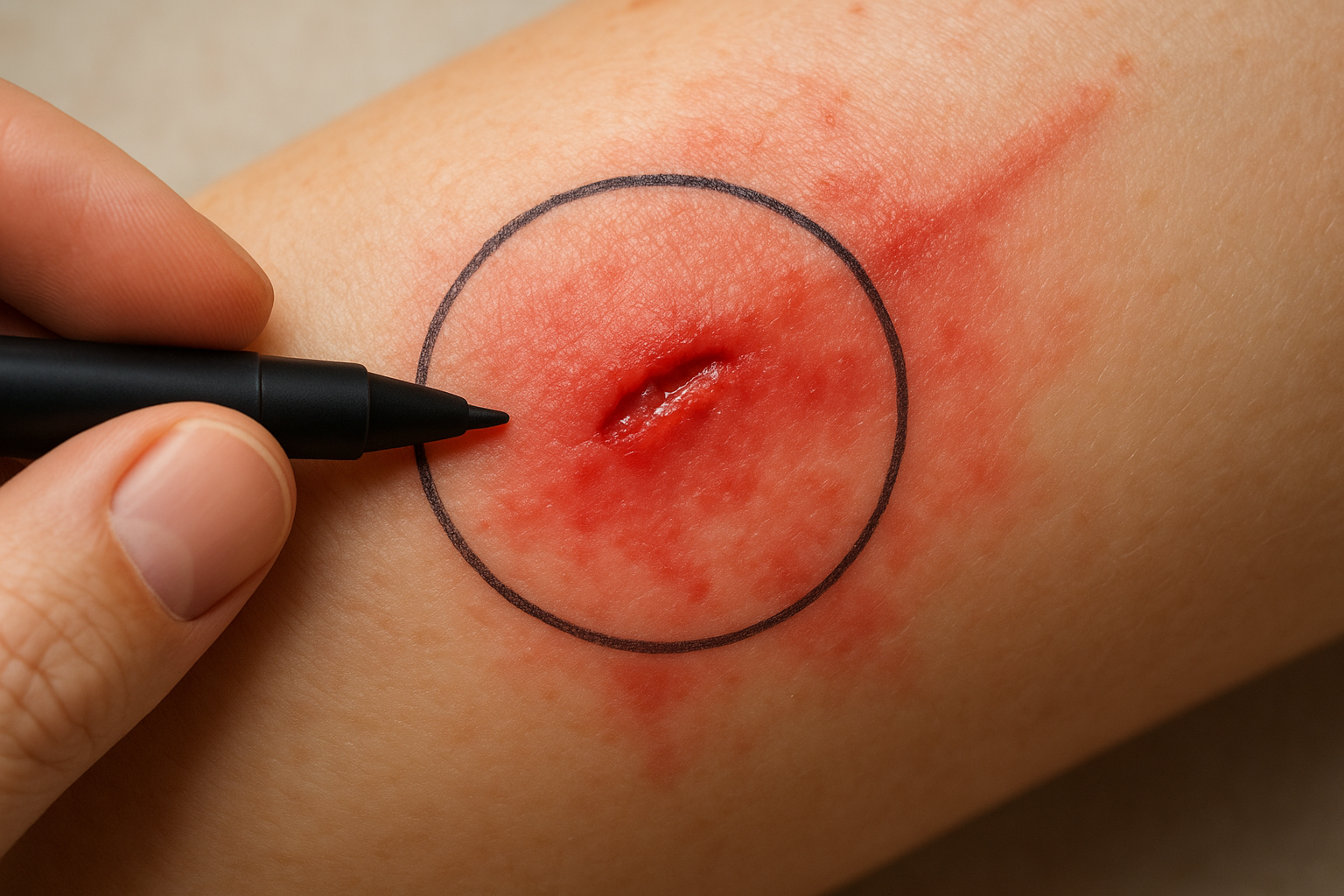
Redness that grows past where it was yesterday is your clearest signal that a cut has moved from healing to infected.
Why it happens
Redness spreads because your immune system is pumping extra blood to the area to fight bacteria that have gotten past the skin barrier. In a normal wound, that response stays localized and calms down within a day or two. When bacteria multiply faster than your body can contain them, the inflammatory response keeps expanding outward, which is why the discoloration seems to creep across the skin instead of staying in one spot. Diabetic patients and anyone with reduced circulation often show this pattern more slowly, so the redness can look mild even as the infection underneath progresses.
When to seek care
Get the wound checked if the redness extends more than an inch from the original cut, if it’s spreading after 48 hours of home care, or if you notice red streaking. Don’t wait for pus or fever to show up first, since spreading redness alone is often the earliest sign that antibiotics or professional debridement are needed.
2. Swelling and warmth that won’t go down
What it looks like
Some puffiness around a fresh cut is normal, especially in the first 24 hours, and it usually flattens out as the days pass. Infected swelling does the opposite: the area stays puffy, tight, or shiny-looking well past day three, and it often feels firm rather than soft when you press it. Touch the skin around the wound and compare it to skin a few inches away. If the wound site feels noticeably warmer to the touch, that’s a strong clue something is off underneath the surface.
Swelling that hasn’t budged after three days, paired with skin that feels hot, means the infection is likely still active.
Why it happens
Warmth and swelling both come from increased blood flow as your body sends white blood cells to the site to fight off invading bacteria. In a healthy healing wound, this response tapers off quickly. When infection takes hold, that response stays switched on, so fluid keeps pooling in the tissue and the skin keeps radiating extra heat.
When to seek care
Call a clinician if swelling hasn’t started shrinking by day three, or if the warmth spreads beyond the immediate wound edges.
3. Pus or unusual discharge
What it looks like
Drainage from a healing cut is usually thin, clear, or slightly pink for the first day or two, then it tapers off. Pus, on the other hand, is thick, cloudy, and often yellow, green, or gray. It may pool under a scab or soak through a bandage faster than you’d expect. Sometimes the discharge carries a milky consistency and builds up even after you’ve cleaned the area, which is a strong signal that bacteria have taken hold beneath the surface.
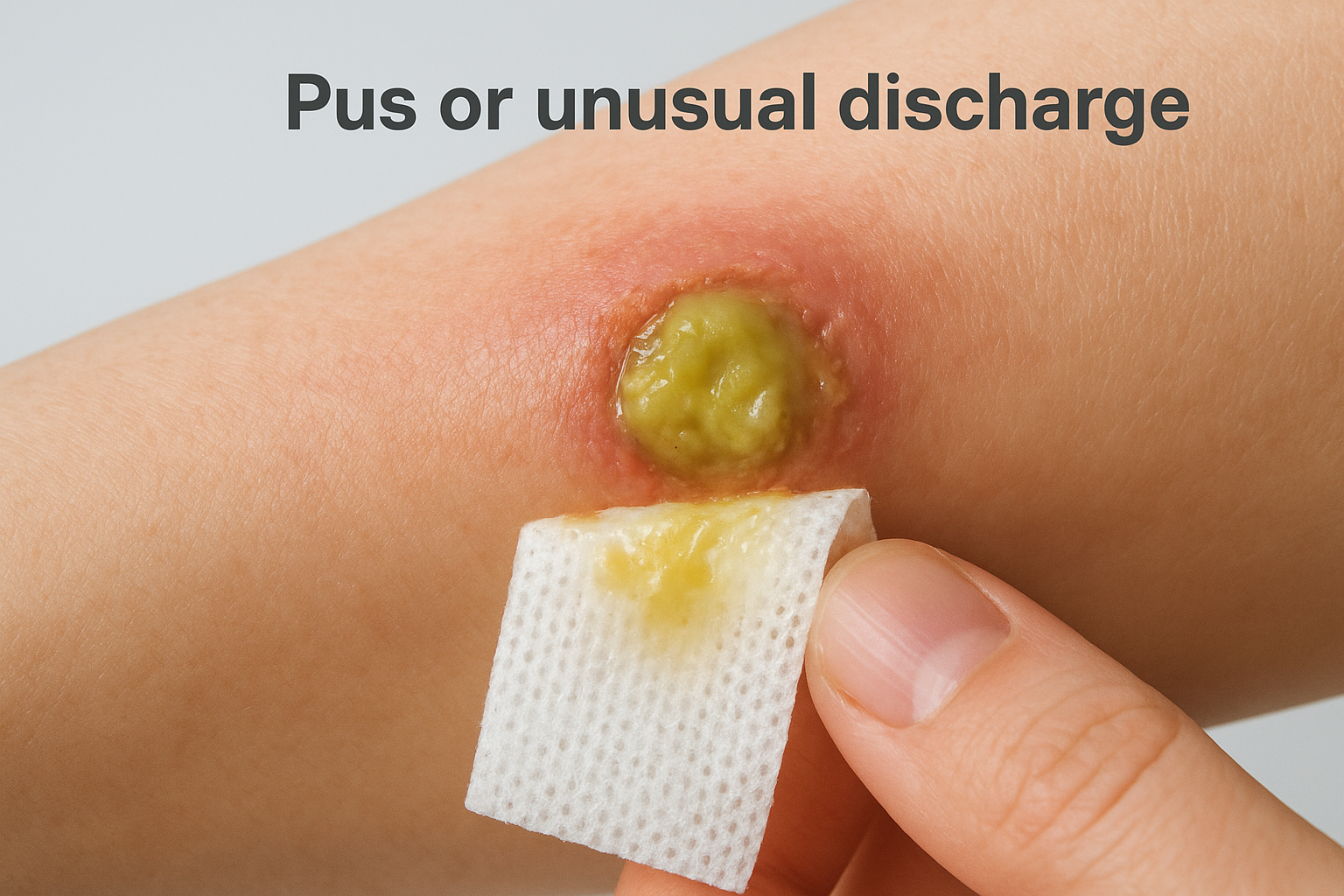
Thick, colored drainage that keeps coming back after cleaning is pus, and pus means infection, not normal healing.
Why it happens
Pus forms when white blood cells rush in to fight bacteria and both the living and dead cells accumulate at the wound site. Dead tissue and bacterial debris mix into that fluid, giving it the color and thickness you notice on a dressing.
When to seek care
Contact a wound specialist if drainage returns within hours of cleaning, changes color, or soaks through more than one bandage a day. Increasing volume of discharge over 48 hours usually means the infection is spreading rather than resolving on its own.
4. A foul odor from the wound
What it looks like
A healing cut typically has little to no smell, maybe a faint metallic scent right after cleaning. An infected wound, though, often gives off a distinct sour or rotten odor that lingers even after fresh dressing changes. Some caregivers describe it as smelling like spoiled meat or old cheese, and once you notice it, it tends to get stronger rather than fading. This is one of the signs family members catch before anything looks visibly wrong, since wound odor often shows up alongside or even before pus becomes obvious.
A rotten smell that returns after cleaning almost always points to bacteria breaking down tissue faster than your body can heal it.
Why it happens
The smell comes from bacteria breaking down dead tissue and releasing gases as a byproduct. Certain strains, particularly ones common in deep or chronic wounds, produce a much stronger odor than others, which is why some infections smell far worse than others despite looking similar on the surface.
When to seek care
If a foul smell shows up and doesn’t clear after cleaning and a fresh dressing, treat it as a red flag. Combined with drainage or redness, persistent odor usually means it’s time for a clinician to assess the wound directly rather than continuing home care alone.
5. Fever, chills, or worsening pain
What it looks like
Watch your body’s overall response, not just the wound itself. A low-grade fever above 100.4°F, chills that come and go, or pain that keeps climbing instead of easing after day two or three all point to a cut that’s become more than a local problem. Fatigue and body aches sometimes tag along, and patients often describe the pain as throbbing rather than sharp, especially at night.
Pain that gets worse instead of better after the first two days almost always means infection, not normal healing.
Why it happens
Once bacteria move past the skin and into deeper tissue or the bloodstream, your immune system ramps up a body-wide response, which is what triggers fever and chills. This is a sign the infection has outgrown the wound site itself, and systemic infection like this can escalate quickly in older adults or anyone with diabetes or vascular disease.
When to seek care
Treat fever above 100.4°F, chills, or worsening pain as urgent, especially alongside redness or drainage. This combination often signals sepsis risk, and it needs same-day medical attention, not a wait-and-see approach.
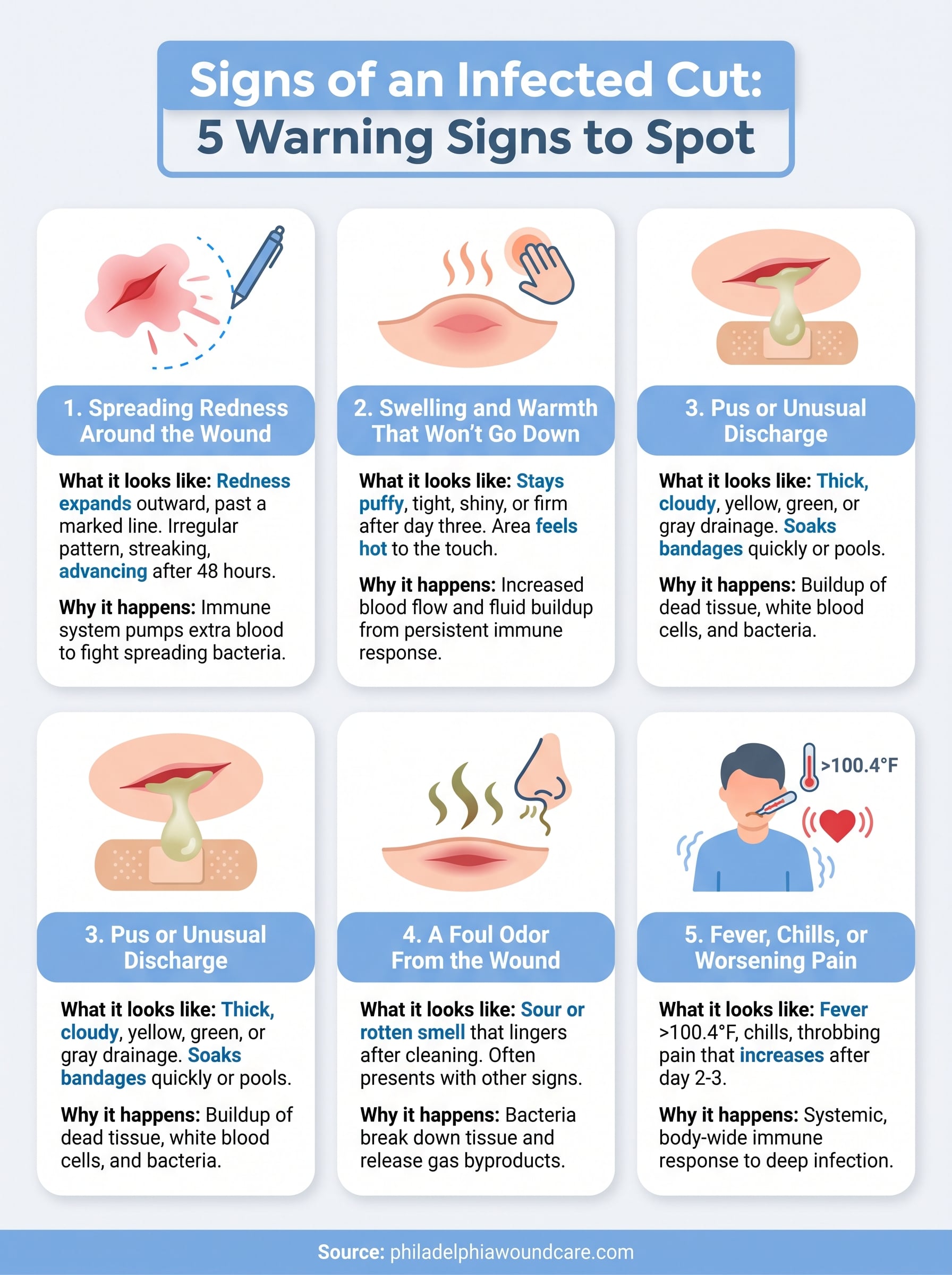
Knowing when to call a wound care specialist
Spotting one of these five signs early gives you the best shot at avoiding a hospital trip. Spreading redness, swelling that won’t quit, pus, foul odor, and fever or worsening pain all point the same direction: the wound needs professional eyes on it, not another day of waiting to see what happens. Trust what you’re seeing and feeling more than the calendar. If a cut looked fine yesterday and looks worse today, that change matters more than how many days have passed since it happened.
For patients who can’t easily get to a clinic, whether due to mobility issues, age, or a chronic condition like diabetes, a house call from a physician-led team closes that gap. Philadelphia Wound Care brings evaluation and treatment straight to the bedside, so you don’t have to gamble on a wound that’s already showing warning signs. If you’re seeing any of these symptoms right now, reach out to our care team and get it checked today.