

Regenerative Wound Therapy Philadelphia: Options & Care
Chronic wounds that resist standard treatments, diabetic ulcers, pressure injuries, venous stasis ulcers, can stall a patient’s recovery for months. When conventional dressings and basic interventions fall short, regenerative wound therapy Philadelphia providers use biologic treatments to restart the healing process at a cellular level. These therapies, including skin substitutes and allograft applications, represent a significant shift in how physicians manage non-healing wounds, especially for patients who can’t easily travel to hospital-based clinics.
At Philadelphia Wound Care, we bring these advanced regenerative options directly to patients through physician-led mobile house calls, whether they’re recovering at home, in a skilled nursing facility, or in hospice care. Our General Surgeon evaluates each wound individually, determines whether regenerative therapy is appropriate, and delivers treatment bedside. Many of these services are covered under Medicare Part B, which removes one of the biggest barriers to accessing this level of care.
This article breaks down what regenerative wound therapy actually involves, who it’s designed to help, and what treatment options are available in the Philadelphia area. If you or a loved one is dealing with a wound that won’t close despite ongoing care, the information ahead will help you understand your next steps and what to expect from this approach.
Why regenerative wound therapy matters for chronic wounds
A wound that refuses to heal puts more at stake than just the wound itself. Chronic wounds create compounding problems, including increased infection risk, emotional strain, and in severe cases, amputation or prolonged hospitalization. Standard wound care, such as antimicrobial dressings and compression therapy, works well for acute injuries. The problem is that these approaches rely on your body’s existing repair mechanisms. When those mechanisms are impaired by diabetes, vascular disease, or prolonged pressure, the wound stalls regardless of how consistently you apply treatment.
How regenerative therapies restart the healing process
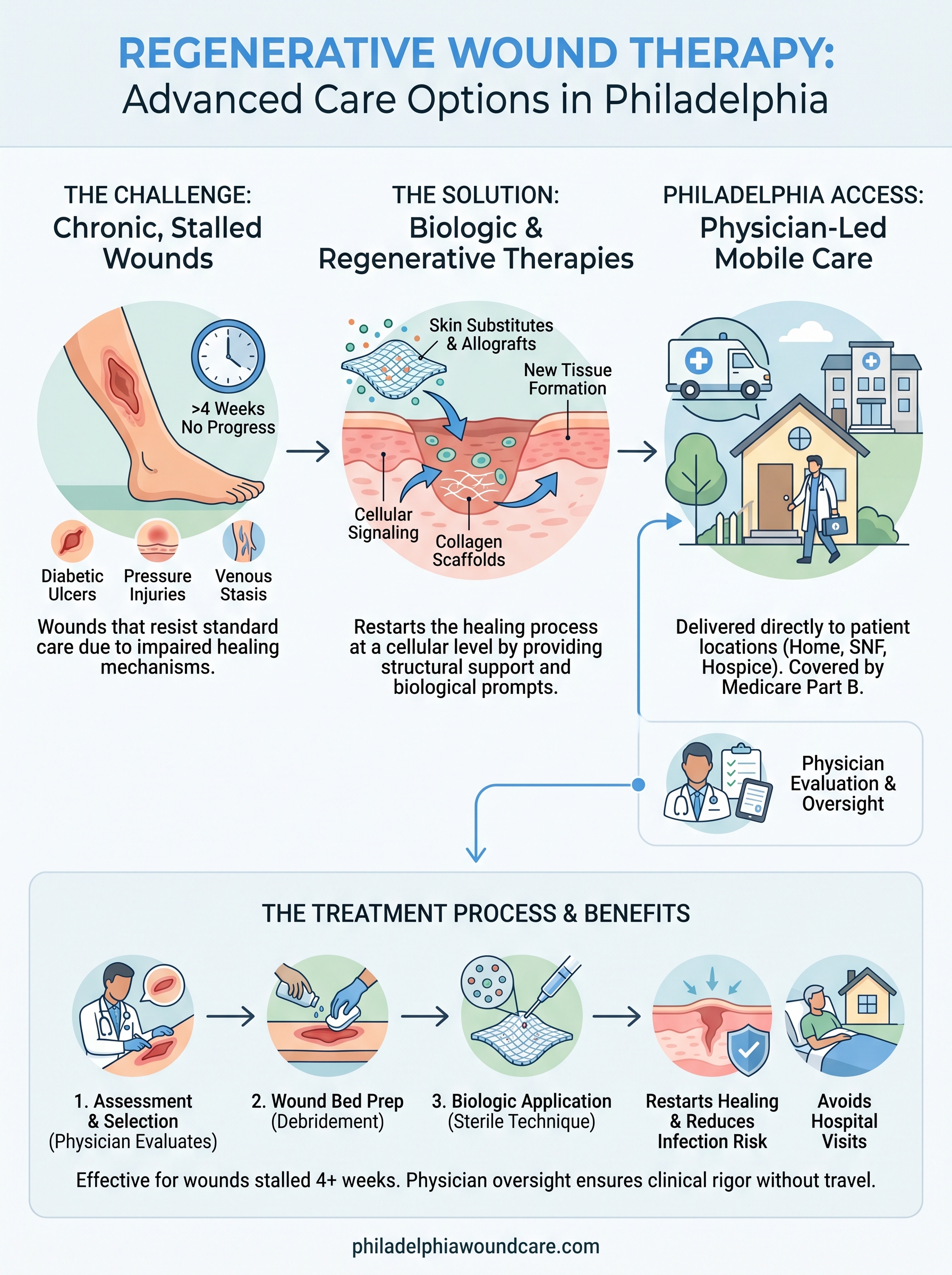
Regenerative treatments work differently from conventional wound care. Instead of simply protecting the wound bed, they introduce biologic material that signals your cells to resume the healing cascade. Skin substitutes contain collagen scaffolds and growth factors that create a structure where new tissue can form. Allograft applications use processed donor tissue to cover the wound and stimulate cellular activity in areas where circulation or immune function has been compromised. The result is that the wound bed receives a biological prompt it can no longer produce on its own, giving it the foundation it needs to begin closing.
When a wound has been open for weeks or months without progress, biologic therapy provides the signals your body lost due to illness or poor circulation.
Why access to care shapes outcomes in Philadelphia
For patients seeking regenerative wound therapy Philadelphia providers, getting to a clinic is often the core obstacle. Elderly individuals, skilled nursing facility residents, and anyone with limited mobility frequently miss appointments or delay treatment simply because transportation is difficult to arrange. That delay allows wounds to deteriorate, raising the likelihood that you or your loved one will require emergency intervention or surgery. Mobile physician services that deliver regenerative therapies directly to your location eliminate that barrier without requiring a hospital visit.
Who benefits and when to escalate care
Regenerative wound therapy isn’t for every wound, but it’s the right choice when a wound stops responding to standard treatment. Patients with diabetes, vascular disease, or prolonged pressure injuries are the most common candidates, because these conditions impair the body’s natural repair process. If your wound has been open for four or more weeks without measurable progress, that’s a clear signal to escalate care.
Patient profiles that respond well
Diabetic foot ulcers, pressure injuries, and venous stasis ulcers benefit most from biologic therapies because the surrounding tissue lacks the cellular signals needed to close on its own. Patients in skilled nursing facilities or home settings are strong candidates for mobile regenerative wound therapy Philadelphia providers, since physician-level treatment comes directly to them rather than requiring a clinic visit.
Signs you need to escalate now
Push for a specialist evaluation when your wound shows no measurable size reduction after two to four weeks of consistent care. Additional red flags include changing drainage, new odor, or discoloration at the wound edges. Delaying escalation raises your risk of bone infection or tissue loss that requires surgery to address.
If your provider hasn’t discussed biologic options after a month of stalled healing, ask for a referral or seek a second opinion.
Regenerative wound therapy options in Philadelphia
Philadelphia patients have access to several biologic and regenerative therapies that go well beyond standard dressings. The most clinically relevant options for chronic wound management include skin substitutes, cellular and tissue-based products (CTPs), and allograft applications, each designed to restore the biological activity a stalled wound can no longer sustain on its own.
Accessing these therapies doesn’t require a hospital stay when a qualified mobile physician can bring treatment directly to you.
Skin substitutes and allograft therapy
Skin substitutes provide a collagen-based scaffold that supports new tissue formation across the wound bed. Allograft applications use processed donor tissue to deliver growth factors that trigger cellular repair in wounds compromised by diabetes or vascular insufficiency. Both approaches require physician-level clinical judgment to select the right product and apply it correctly.
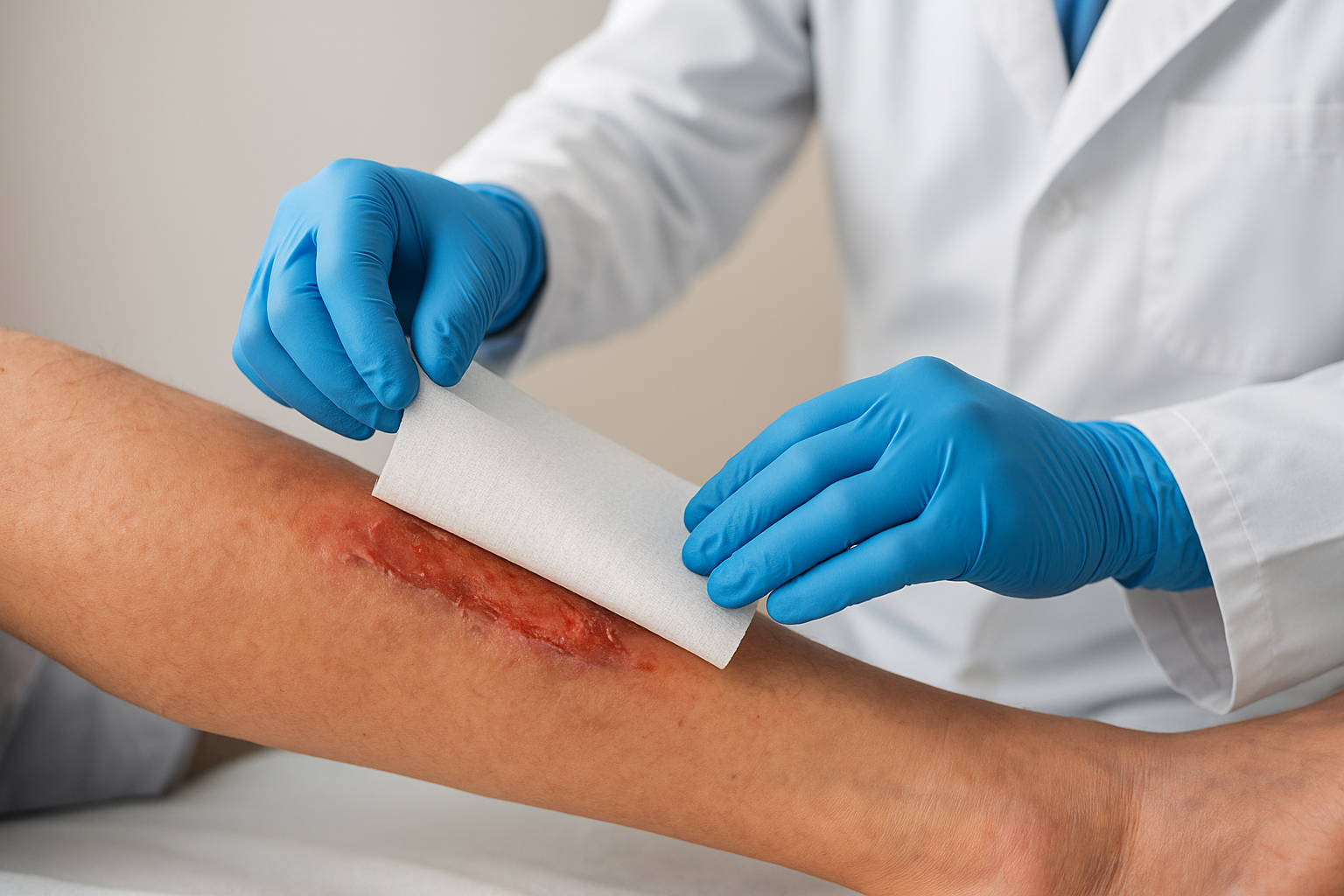
Common regenerative products your physician may use include:
- Bioengineered skin substitutes
- Cellular and tissue-based products (CTPs)
- Processed allograft tissue
Mobile delivery of regenerative wound therapy Philadelphia
Mobile physician services make these advanced treatments available at your home, skilled nursing facility, or assisted living community. Your physician evaluates wound depth, tissue viability, and overall health status to determine which regenerative option fits your specific situation before any treatment begins.
What treatment looks like at home or in a facility
When a physician brings regenerative wound therapy Philadelphia patients need directly to you, the process follows a clear clinical sequence. Your physician begins with a thorough wound assessment, reviewing tissue quality, depth, and signs of infection before selecting any biologic product. Nothing is applied until the wound bed is properly prepared, which typically includes debridement to remove non-viable tissue.
A physician-led evaluation at your bedside produces the same clinical rigor you’d expect in a hospital wound care clinic.
The step-by-step treatment process
Your physician cleans and prepares the wound bed first, then applies the appropriate biologic product, whether a skin substitute or allograft tissue. The application is precise and generally takes less than an hour. Sterile technique is maintained throughout, so the risk of introducing new contamination stays low.
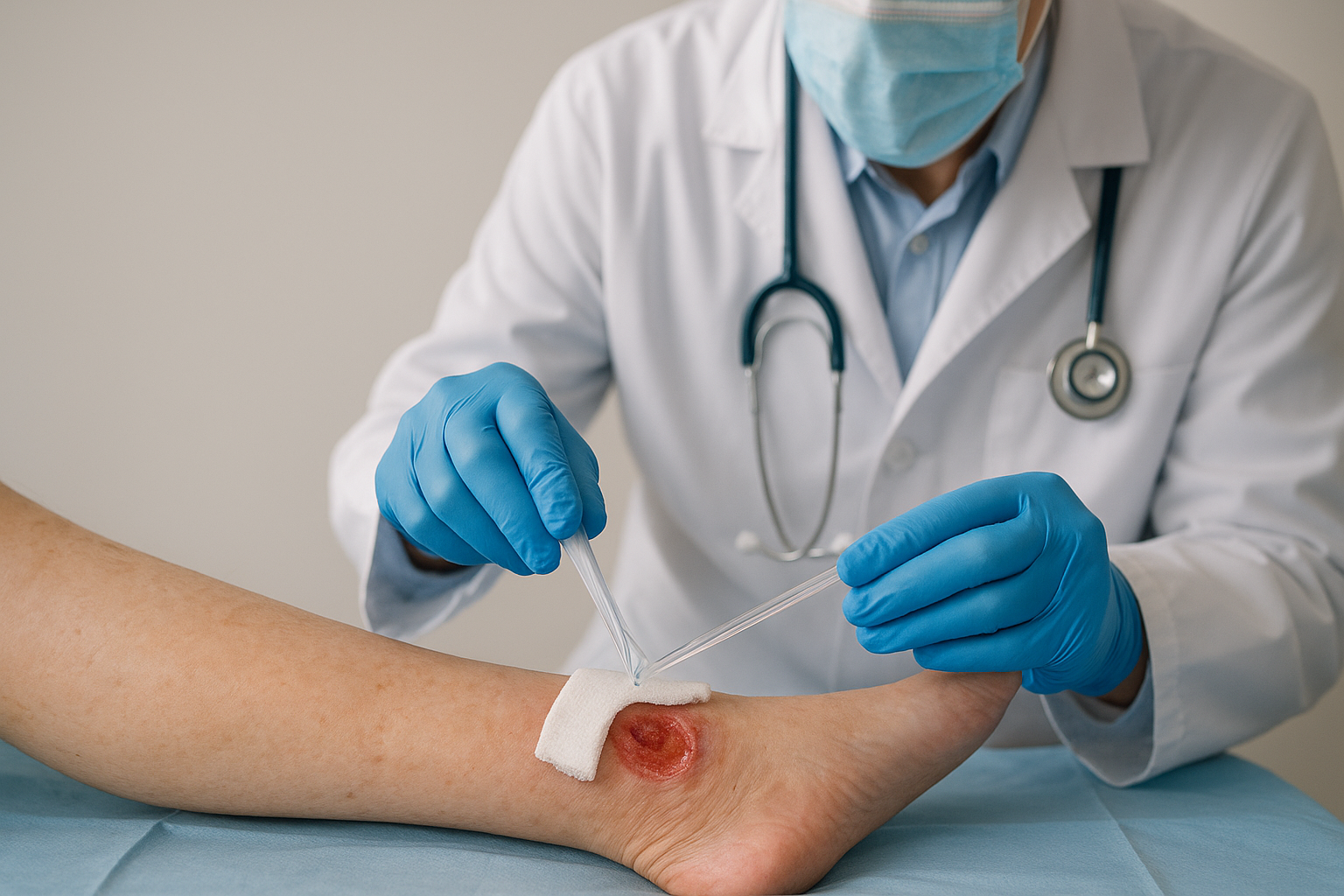
Follow-up visits are scheduled to monitor tissue response and reapply biologic material as the wound progresses. Documentation is shared directly with your referring physician or facility care team, keeping everyone aligned on the treatment plan without requiring you to travel or repeat your medical history at each encounter.
How to choose a provider in Philadelphia
Not every wound care service in the area offers biologic therapies, and not every service is led by a licensed physician. When you’re evaluating options for regenerative wound therapy Philadelphia, the most important distinction is whether treatment is directed by a physician or delegated to nursing staff alone. Physician oversight matters because biologic product selection, wound bed preparation, and treatment sequencing require clinical judgment that goes beyond standard nursing protocols.
A physician-led practice brings the same diagnostic rigor you’d expect in a hospital clinic, without requiring you to leave your home or facility.
Questions to ask before committing to a provider
Before you schedule an evaluation, confirm a few key details with the provider directly. The right service will answer these questions clearly and without hesitation, because transparency is a reliable indicator of clinical credibility.
Ask your prospective provider:
- Does a licensed physician personally perform the wound assessment and apply biologic treatments?
- Does the service bill Medicare Part B directly for advanced regenerative therapies?
- What is the response time for urgent wound care needs?
- Does the provider share documentation and treatment updates with your referring physician or facility care team?
Next steps for healing in Philadelphia
If your wound has stalled despite weeks of consistent treatment, regenerative wound therapy Philadelphia providers offer a clinical path forward that standard dressings cannot replicate. Acting sooner rather than later matters here, because every week a wound remains open raises your risk of deep infection, tissue loss, and emergency hospitalization. Physician-led biologic therapies give your wound the cellular signals it needs to start closing when your body can no longer generate them on its own.
Philadelphia Wound Care brings these advanced treatments directly to your home, skilled nursing facility, or assisted living community through mobile physician house calls. Your surgeon evaluates the wound in person, selects the appropriate regenerative therapy, and shares treatment documentation with your referring physician or facility care team so nothing falls through the gaps between appointments.
Take the next step and schedule a wound care evaluation with Philadelphia Wound Care today to start closing a wound that has resisted treatment long enough.