
Remote Wound Care Services: What They Are And When To Use
Not every wound heals on schedule. For patients managing diabetic ulcers, pressure injuries, or post-surgical complications, getting to a clinic for regular follow-ups can be physically demanding, sometimes impossible. That’s exactly where remote wound care services come in. These services bring specialist-level wound management directly to the patient, whether through mobile physician visits, virtual consultations, or a combination of both.
If you’re a caregiver researching options for a loved one, or a facility manager looking for reliable wound care support, understanding how these services work is the first step toward getting the right care in place. Remote wound care isn’t a lesser alternative to clinic-based treatment. When done right, it delivers the same advanced therapies and physician oversight, just without the trip.
At Philadelphia Wound Care, this is our entire practice. Our physician-led mobile team provides bedside wound evaluations and treatment across homes, skilled nursing facilities, and hospice settings throughout the Philadelphia area. In this article, we’ll break down what remote wound care services include, how they differ from traditional models, and when they make the most clinical sense for patients with chronic or complex wounds.
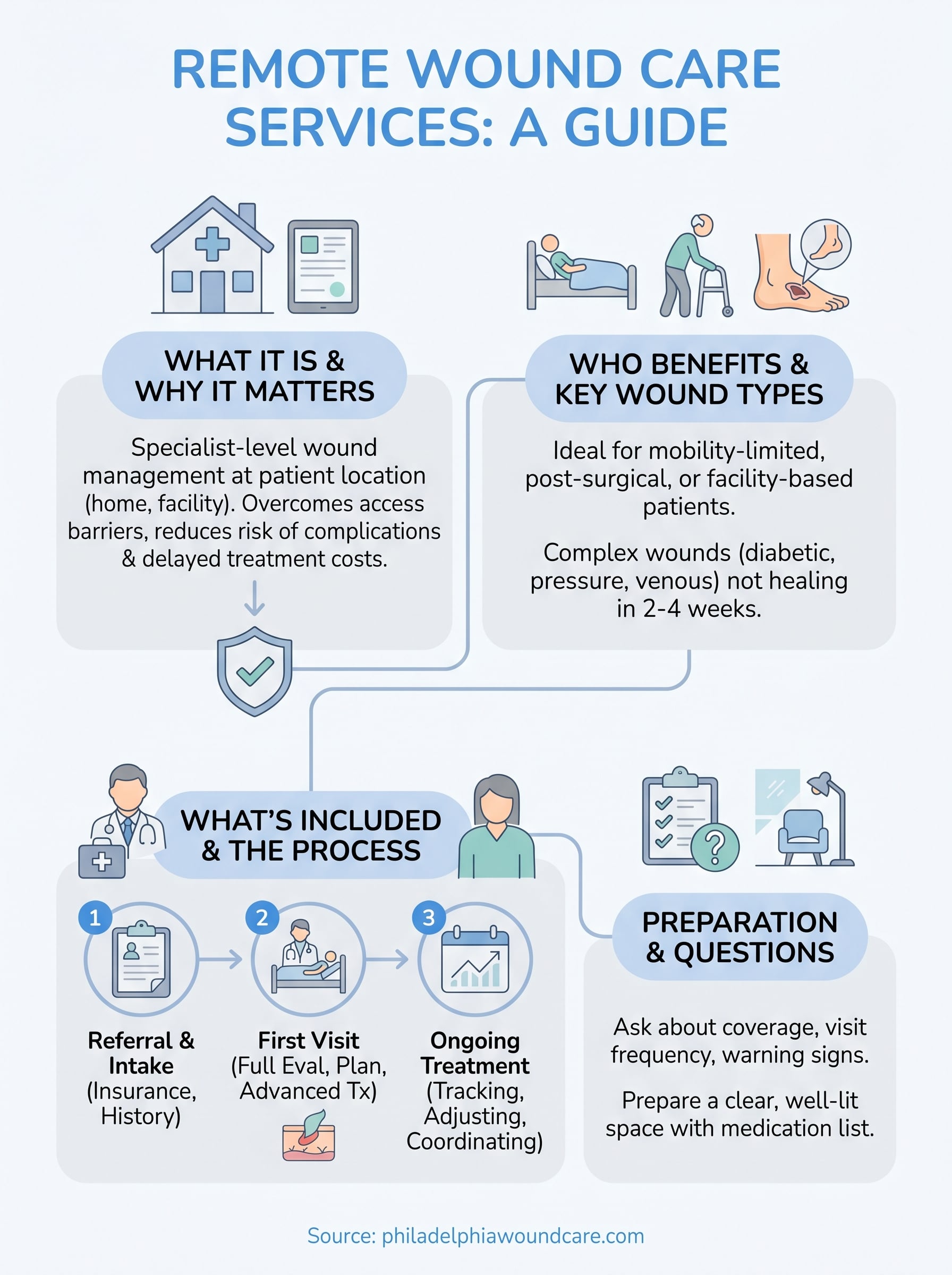
Why remote wound care services matter
Chronic wounds affect millions of Americans, and the consequences of delayed or inadequate treatment are serious. For patients with diabetes, vascular disease, or limited mobility, accessing regular wound care through a traditional outpatient clinic is often not realistic. Transportation barriers, physical pain, and post-discharge fatigue all stack up against consistent follow-up, and that’s exactly the gap that remote wound care services are built to fill.
The access problem in wound care
Getting a wound properly assessed takes more than a bandage change. It requires trained eyes, appropriate debridement tools, and in many cases, access to advanced biologics or regenerative therapies. For a patient who is bed-bound or recovering in a skilled nursing facility, traveling to an outpatient wound clinic for each appointment isn’t just inconvenient. It creates real clinical risk. Moving a patient with a fragile wound unnecessarily raises the chance of further injury, additional infection exposure, and treatment delays that set back the healing timeline by days or weeks.
The longer a complex wound goes without proper physician oversight, the harder it becomes to reverse the damage.
Medicare program data shows that chronic wound complications, including infection and amputation, rank among the highest-cost outcomes in post-acute care. When patients can’t reliably reach care, wounds stall, infections deepen, and hospitalizations follow, often reversing whatever progress was made during the initial recovery period.
What delayed treatment actually costs
Wound complications don’t stop at the physical level. They place significant financial and emotional strain on family caregivers, facility staff, and the broader healthcare system. A pressure injury that could have been addressed with early intervention can escalate into a stage IV ulcer requiring surgical debridement, prolonged antibiotics, and weeks of additional recovery, all of which could have been avoided with consistent, qualified oversight in the first place.
Caring for a loved one at home with a wound that won’t heal puts you in an impossible position. You watch for signs of infection, try to interpret discharge instructions that may not reflect how the wound looks a week later, and stay uncertain about whether what you’re seeing is progress or a warning sign. Bringing a physician directly to the patient removes that uncertainty and restores a structured plan of care with someone accountable for the outcome.
What remote wound care services include
Remote wound care services cover the same clinical ground as an outpatient clinic, delivered where the patient actually is. A qualified provider arrives with the equipment, wound care supplies, and clinical authority to assess, treat, and adjust the plan of care on the spot. The scope of what gets provided depends on the patient’s wound type and complexity, but the core structure stays consistent.
Clinical assessment and hands-on treatment
At every visit, your provider performs a thorough wound evaluation, measuring dimensions, assessing tissue quality, and documenting changes since the last appointment. Debridement, irrigation, and dressing changes happen at the bedside, not weeks later at a clinic. Your provider also checks for signs of systemic infection or complications that could indicate a need for escalation, which keeps small problems from becoming serious ones.
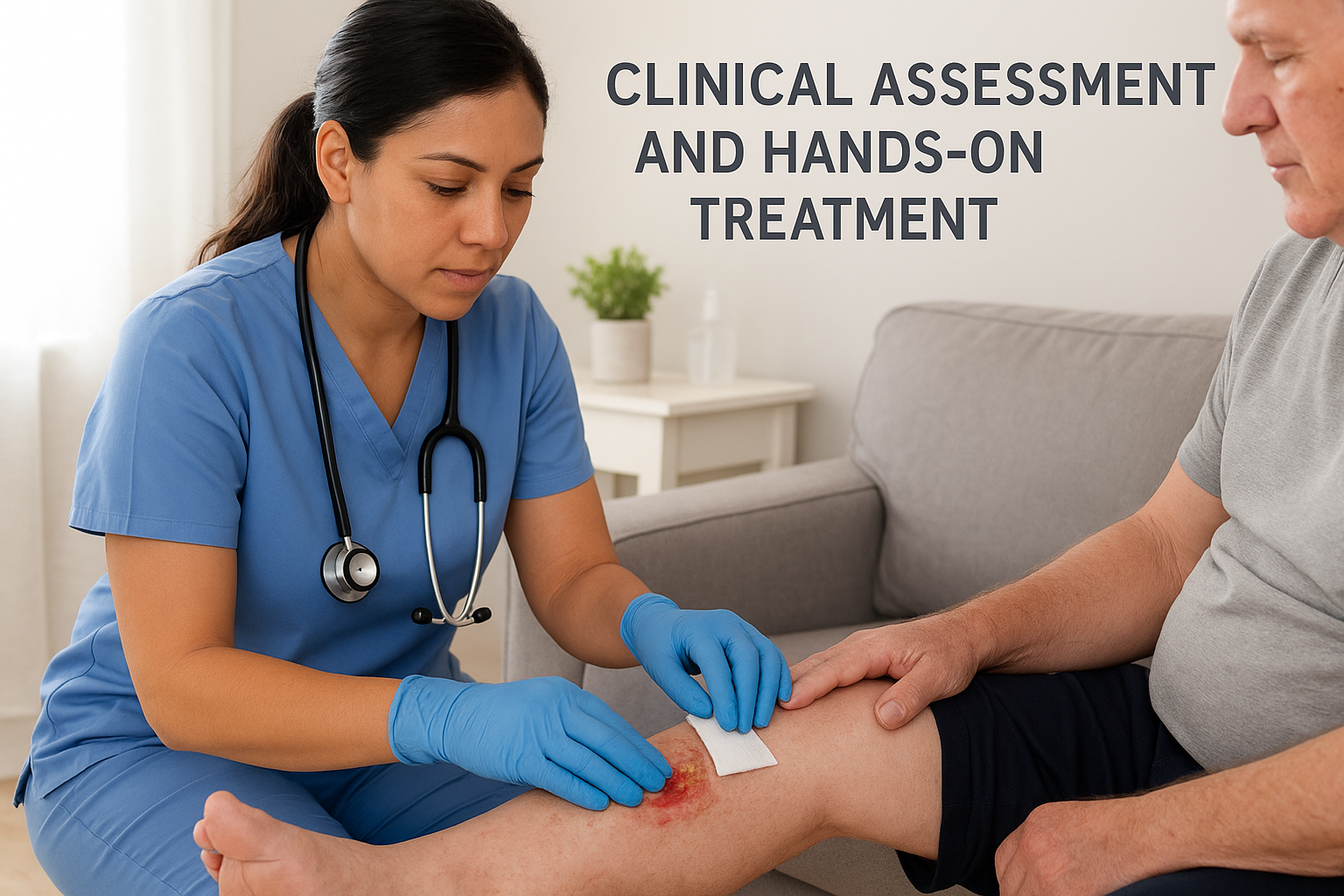
Consistent bedside assessment by a physician, not just a nurse or aide, is what separates true remote wound care from basic home health visits.
Advanced therapies and care coordination
Many patients with chronic wounds need more than standard dressings. Allograft and regenerative therapies, which promote new tissue growth in wounds that have stalled, are part of what a physician-led mobile service can deliver directly at the patient’s location. Beyond the hands-on treatment, your provider also coordinates with referring physicians, facility staff, and case managers to keep everyone aligned on the treatment plan. That coordination prevents the information gaps that often develop between discharge and full recovery, reducing the risk of complications going unnoticed.
When remote wound care is the right choice
Not every patient needs remote wound care, but many do and don’t know it’s available. Remote wound care services fit best when the gap between where a patient is and where treatment happens creates real clinical risk. If your patient or loved one struggles to reach a clinic reliably, or if transporting them causes physical strain and delays care by days, bringing care to them is the medically sound choice.
Patients who benefit most
Certain situations make in-person clinic visits genuinely difficult. Bed-bound or mobility-limited patients face the highest risk when moved repeatedly for appointments, especially those with fragile or infected wounds. Post-surgical patients recently discharged from a hospital often lack the stamina for outpatient follow-up but still need consistent physician oversight to prevent complications during the critical healing window.
Patients in skilled nursing facilities or hospice settings rarely have access to wound specialists on-site, which makes mobile physician visits the only realistic path to specialist care.
Residents of assisted living communities or long-term care facilities face a similar gap. The nursing staff at these locations can manage basic wound maintenance, but they aren’t equipped to perform debridement, prescribe regenerative therapies, or escalate care when a wound stops responding to treatment.
Wound types that call for specialist oversight
Diabetic foot ulcers, venous leg ulcers, and pressure injuries are the wound types most likely to stall without physician-level intervention. These wounds don’t respond reliably to standard dressings alone and need treatment protocols tailored to their root cause. If you notice any of the following signs, it’s time to bring in a specialist:
- No measurable reduction in wound size after two to four weeks of treatment
- Visible bone, tendon, or deep tissue
- Increasing drainage, odor, or surrounding redness
- Recurrent breakdown in the same location
How remote wound care works step by step
Understanding the process helps you know what to expect before care begins. Remote wound care services follow a clear sequence from the first contact through ongoing treatment, and each step is designed to keep care consistent, documented, and responsive to how the wound is actually progressing.
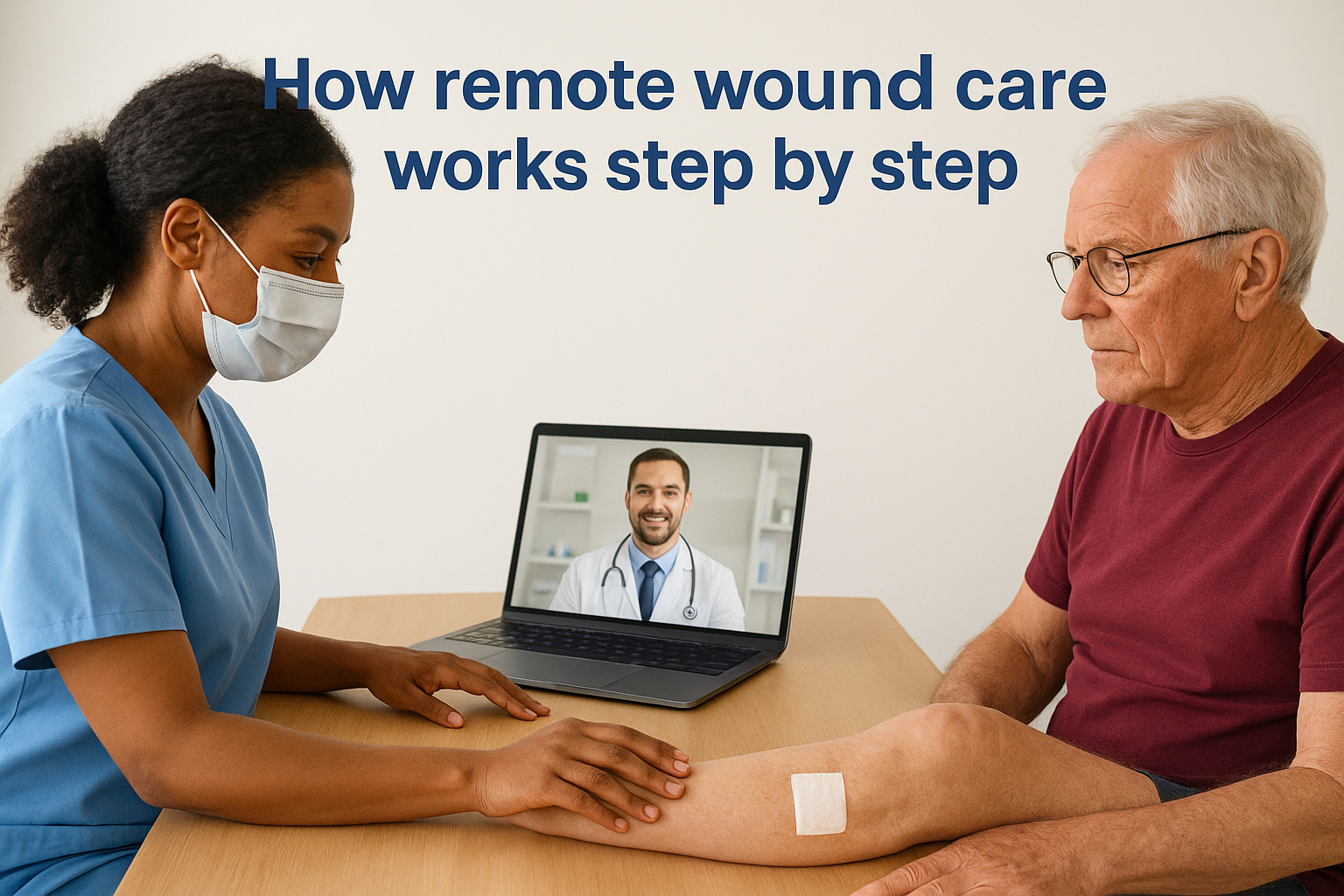
Getting started: referral and intake
Most patients enter through a referral from a hospital discharge planner, primary care physician, or facility case manager. Your provider collects basic intake information, including your wound history, current medications, and insurance details, before the first visit. Medicare Part B covers many advanced wound care treatments delivered in the home or facility setting, so the financial barrier is often lower than families expect.
Common information gathered during intake includes:
- Current wound location, size, and duration
- Underlying conditions such as diabetes or vascular disease
- Active medications and known allergies
- Insurance plan details for billing coordination
The first visit and ongoing treatment
During the initial appointment, your physician evaluates the wound in full, measures its dimensions, documents tissue quality, and confirms the diagnosis. From that assessment, you receive a structured treatment plan that outlines which therapies will be used, how often visits will occur, and what progress milestones to watch for.
A physician-led first visit sets the clinical baseline that determines whether advanced therapies like allograft are appropriate from the start.
Follow-up visits build on that baseline. Your provider tracks changes visit to visit, adjusts dressings or therapies based on what the wound shows, and communicates those updates to everyone involved in your care. That continuity of physician oversight is what allows complex wounds to move forward instead of stalling between appointments.
Questions to ask and how to prepare at home
Knowing what to ask before your first appointment helps you get more out of remote wound care services from day one. The right questions give you a clearer picture of the treatment plan, what to watch for between visits, and how to support the healing process on your end. Preparation on your side also helps the provider move quickly during the visit itself, which means less disruption for the patient.
Questions to ask before the first visit
Before your provider arrives, write down your questions so nothing gets missed in the moment. The following are the most useful ones to start with:
- Which insurance plans are accepted, and does Medicare Part B cover the specific therapies being recommended?
- How often will the physician visit, and what triggers an unscheduled check-in?
- What warning signs should you watch for between appointments?
- Who do you contact if the wound looks different or the patient develops a fever?
- Will you receive written documentation of the treatment plan after the visit?
Getting clear answers to these questions before the first visit removes the guesswork and keeps you and your provider on the same page.
How to prepare your space
Your provider needs enough room to work safely at the patient’s bedside, with access to both sides of the wound site if possible. Clear the immediate area of clutter, make sure the lighting is strong, and have a list of current medications ready to hand over during intake. A clean, accessible workspace lets your provider focus entirely on the wound rather than working around obstacles.
Next steps for getting care
If you’ve read this far, you likely have a patient or loved one dealing with a wound that needs more than what’s currently in place. Remote wound care services work best when care starts before the wound deteriorates further, and timing matters more than most families realize. Whether you’re a family caregiver, a facility case manager, or a referring physician, the referral process is straightforward and typically begins with a single call or form submission.
Philadelphia Wound Care serves patients across the Philadelphia area with physician-led mobile wound evaluations delivered at home, in skilled nursing facilities, and in hospice settings. Most advanced therapies are covered under Medicare Part B, which removes the financial barrier that keeps many patients from accessing specialist care. If you’re ready to get a plan in place, request a wound care referral to get started today.