
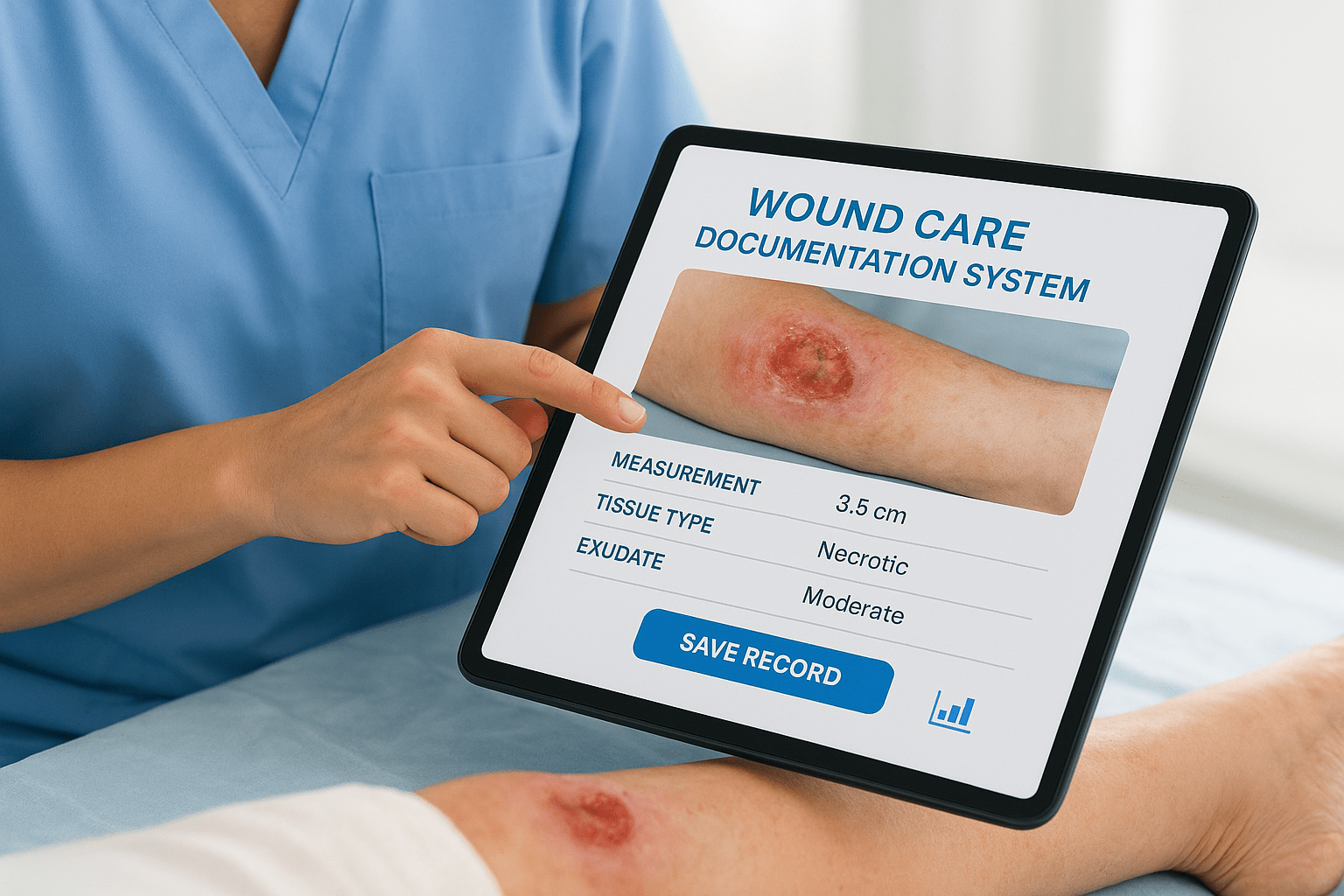
Wound Care Documentation System: What It Is & How It Works
Tracking wound healing isn’t just about snapping a photo and jotting down notes. Clinicians managing chronic or complex wounds need structured, repeatable methods to measure progress, adjust treatment plans, and communicate findings across care teams. A wound care documentation system is the clinical software built to do exactly that, replacing fragmented paper records and generic EHRs with tools designed specifically for wound assessment, measurement, and reporting.
At Philadelphia Wound Care, our physician-led mobile practice treats patients across private homes, skilled nursing facilities, and hospice settings throughout the Philadelphia region. Because we coordinate care with referring physicians, hospital case managers, and facility staff, accurate and accessible documentation isn’t optional, it’s the backbone of every treatment decision we make. The ability to maintain consistent wound records across multiple care environments directly affects patient outcomes.
This article breaks down what a wound care documentation system actually includes, how it functions in clinical practice, and why it matters for providers managing wounds outside traditional hospital walls.
Why wound documentation systems matter
Without reliable records, wound care becomes guesswork. When a wound measurement from a previous visit is missing or a clinical photo wasn’t labeled correctly, the next clinician has no real baseline to compare against. That gap in information doesn’t just slow treatment decisions; it puts patients at direct clinical risk and exposes your practice to compliance problems.
The clinical cost of incomplete records
Chronic wounds like diabetic foot ulcers and pressure injuries can change significantly between visits. A wound that looks stable one week may show tunneling or early infection signs the next. If your documentation system doesn’t capture consistent, structured data at each encounter, you lose the ability to detect these trends early. Missing records mean you’re reacting to wounds rather than managing them with a clear plan.
Standardized wound assessment data, captured at every visit, is the difference between a reactive treatment plan and a predictive one.
For providers working across multiple care settings, including skilled nursing facilities, private homes, and assisted living communities, incomplete records create serious breaks in continuity. A referring physician reviewing a patient’s history needs to see wound dimensions, tissue type, exudate levels, and treatment responses in a consistent format. When that data is scattered across paper forms or non-specialized EHR fields, coordinated care falls apart and outcomes suffer.
Compliance, reimbursement, and liability
Payers, including Medicare and Medicare Advantage, require detailed clinical documentation to justify advanced treatments like allograft therapy or debridement. If your records don’t clearly show wound progression, treatment rationale, and measurable response to care, claims get denied. A dedicated wound care documentation system organizes this information into formats that directly support billing and authorization requirements.
Accurate documentation also protects your clinical team in the event of a complaint or regulatory audit. Facilities and mobile practices alike need records that demonstrate appropriate decisions were made at each encounter. Gaps in documentation are routinely cited in malpractice cases and CMS audits, making systematic record-keeping a matter of both professional and legal responsibility for any provider managing complex wounds outside a hospital setting.
How a wound care documentation system works
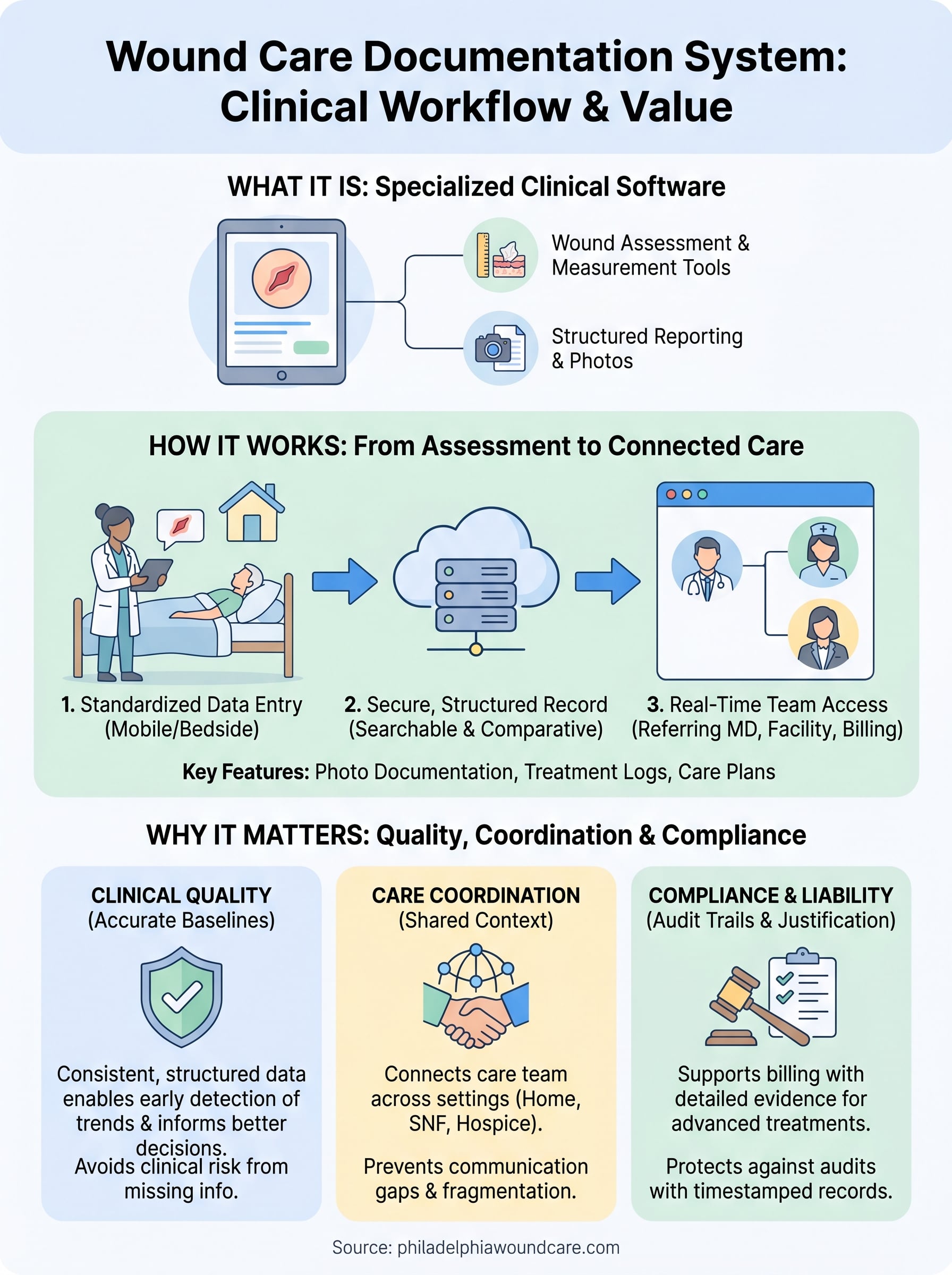
A wound care documentation system works by standardizing the data collected at every patient encounter and storing it in a structured, searchable format. When a clinician opens a record before a visit, they see previous wound measurements, treatment history, and clinical photos organized in sequence. That context shapes every clinical decision made at the bedside, from selecting a dressing type to determining whether care needs to escalate.
From assessment to structured record
At each visit, the clinician enters data into predefined clinical fields covering wound dimensions, tissue type, exudate characteristics, and periwound condition, rather than writing open-text notes. Structured fields allow the system to generate automatic comparisons between visits, flagging changes in wound size or tissue quality without requiring a manual review of prior records.
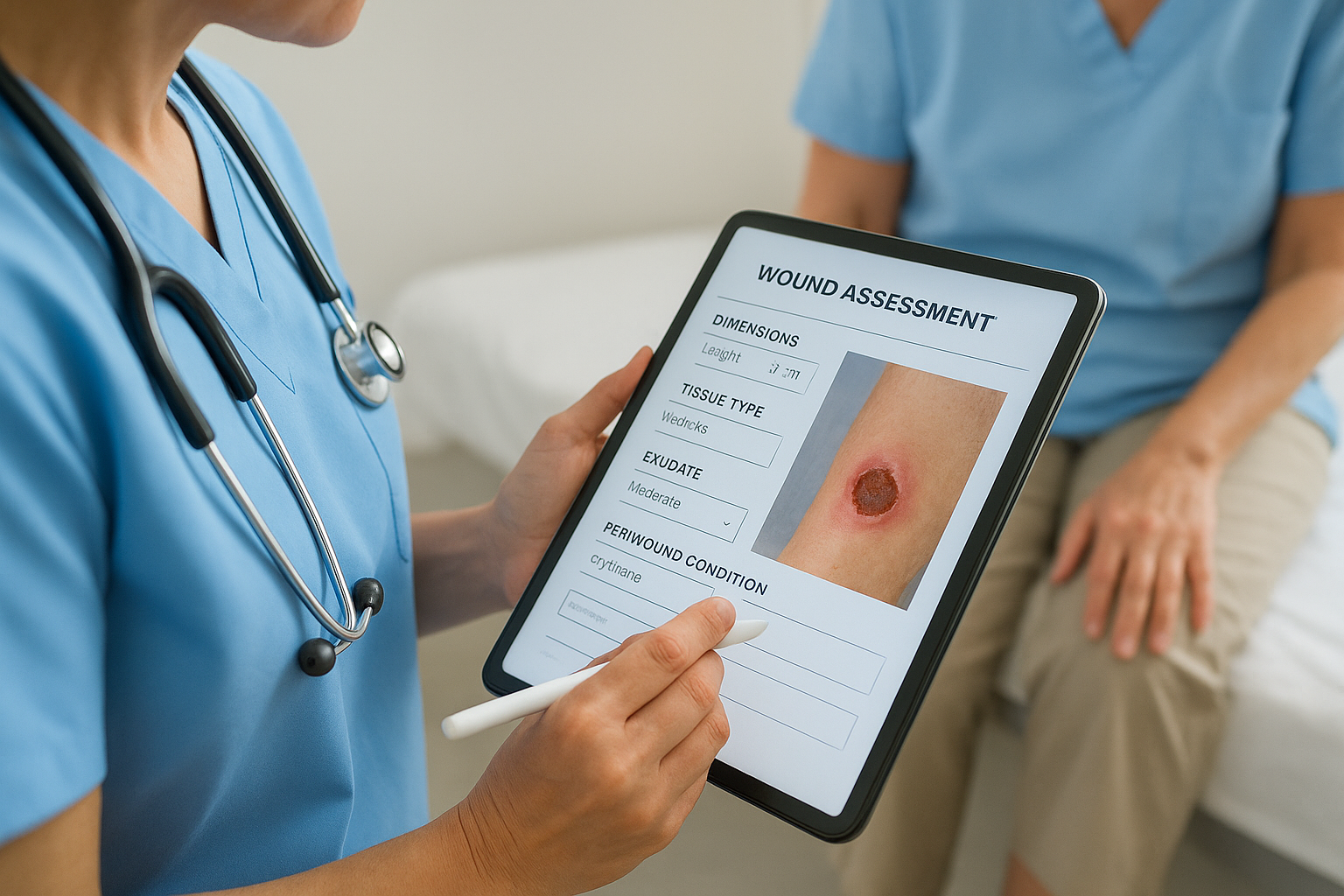
When data entry follows a defined structure at every encounter, your records become a predictive clinical tool rather than a reactive log.
That consistency is especially valuable when multiple clinicians manage the same patient across different visits or care settings, because every provider works from the same standardized baseline.
Connecting documentation to the care team
Once a visit record is saved, the system makes it immediately accessible to your referring physicians, facility nurses, and billing staff without manual transfers or phone follow-ups. Mobile-friendly platforms allow clinicians working in patients’ homes or nursing facilities to upload photos, enter data, and submit records in real time.
That real-time sharing closes the communication gaps that form when wound care happens across multiple settings. Every provider gets a current, accurate picture of your patient’s wound status, which directly supports faster and better-informed treatment decisions.
What a wound care documentation system includes
A wound care documentation system covers more than wound measurements. It brings together clinical data, visual records, and treatment history into a single location your entire care team can access and act on. Understanding what’s inside the system helps you evaluate whether a platform actually meets the demands of complex wound management across multiple care settings.
Clinical assessment fields
Structured clinical fields form the foundation of any wound documentation platform. Rather than open-text notes, predefined data entry fields ensure every clinician captures the same information at every visit, making visit-to-visit comparisons fast and reliable. Standard fields typically include:
- Wound dimensions (length, width, depth)
- Tissue type and wound bed condition
- Exudate amount and character
- Periwound skin status
Photo documentation and wound imaging
Visual records are critical for tracking wound progression over time. A strong system lets you capture and attach clinical photographs directly to a patient’s visit record, with automatic timestamps and location tagging.
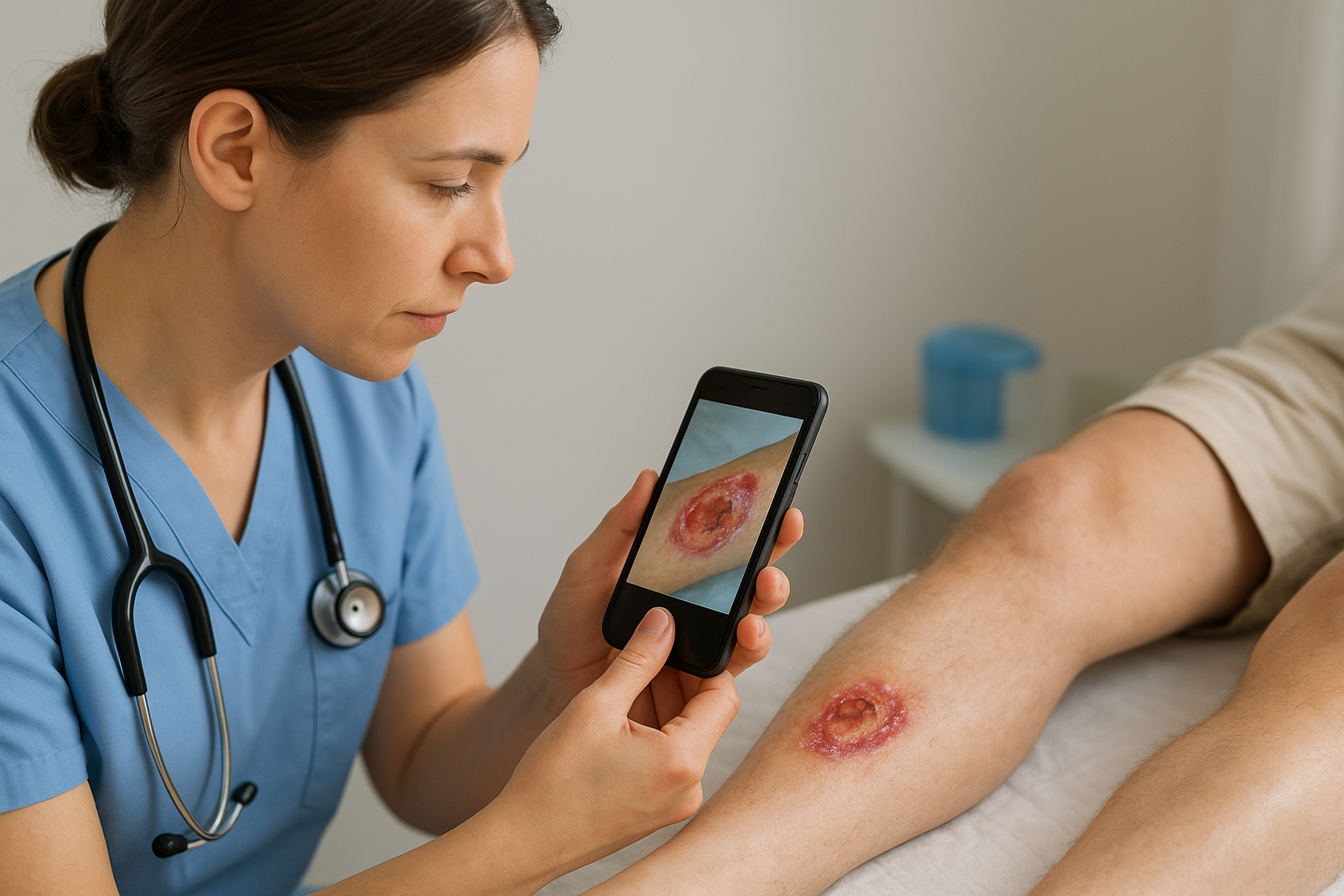
Consistent photo documentation gives your referring physicians and facility staff a clear, objective view of wound status without requiring an in-person review.
Linked imaging means any clinician reviewing the record sees visual evidence alongside clinical measurements, not just typed descriptions of tissue appearance.
Treatment records and care plans
Beyond assessment data, the system stores applied treatment details including dressing types, debridement notes, and advanced therapies like allograft.
Your team can also access the active care plan at any point, so every provider visiting the patient knows which protocol is in place and why, without needing to call anyone for a status update.
Features that support quality and compliance
A wound care documentation system doesn’t just store records. It actively supports the clinical quality standards and compliance requirements your practice needs to meet across every payer and regulatory framework. The right features make the difference between a system that helps you pass an audit and one that creates more risk than it removes.
Outcome tracking and reporting tools
Tracking wound outcomes over time gives your team objective evidence of treatment effectiveness. Systems with built-in reporting dashboards let you pull aggregate data on healing rates, treatment protocols, and visit frequency, so you can identify patterns across your patient population and adjust care protocols before problems become systemic.
Outcome data doesn’t just improve individual patient care; it gives your practice the evidence it needs to justify advanced treatment decisions to payers and administrators.
Your reports also support quality improvement reviews within skilled nursing facilities or managed care networks that require performance data from contracted providers. Having those numbers ready on demand removes the administrative burden of compiling records manually before each review cycle.
Audit trails and access controls
Every entry in a compliant wound care platform carries a timestamp and user ID, creating a clear record of who documented what and when. This audit trail is critical during CMS reviews or malpractice inquiries, where incomplete or altered records draw immediate scrutiny from reviewers.
Access controls ensure that only authorized clinicians and staff can view or modify patient records, protecting both patient privacy and your practice’s liability position under HIPAA requirements for any mobile or multi-site care operation.
How to choose and implement a system
Choosing a wound care documentation system starts with understanding your specific care environment and workflow. A platform built for a large outpatient clinic may not serve a mobile practice operating across home visits and nursing facilities. Before evaluating any software, map out where your clinicians document, how they access records, and which providers need to see patient data after each visit.
Evaluate your care environment first
Your first filter should be mobile accessibility. If your clinicians document at the bedside in patients’ homes or facility rooms, the system needs to function reliably on a tablet or smartphone without requiring a desktop setup. Look for platforms that support offline data entry with automatic sync, so documentation doesn’t stall when internet access is limited at a visit location.
A system your clinicians won’t use consistently is worse than no system at all, because inconsistent records create the same gaps as missing records entirely.
Confirming that the platform integrates with your billing workflow and supports payer-specific documentation formats is equally important. For practices billing under Medicare Part B for advanced wound treatments, the system should organize clinical findings in a way that directly supports medical necessity documentation without requiring manual reformatting before submission.
Plan for adoption across your team
Successful implementation depends on training every user before go-live, not after. Assign a clinical lead to own the rollout, set a defined training period, and run at least two weeks of parallel documentation alongside your old process before fully switching over. That overlap catches data gaps before they affect real patient records.
After launch, schedule a structured review at 30 days to identify fields being skipped or workflows that don’t match how your team operates. Early adjustments to your documentation templates are far easier to make before poor habits become embedded across your entire care team.
Next steps for your wound care team
A strong wound care documentation system gives your clinical team the structure it needs to track healing, justify advanced treatments, and coordinate care across every setting your practice operates in. If your current records are fragmented, inconsistent, or hard to share with referring providers, the gap between your documentation and your care quality will only grow as your patient volume increases. Standardized, accessible records are not a back-office concern; they directly shape what happens at the bedside on every visit.
Start by auditing what your team currently captures at each encounter and where that data goes after the visit closes. Identify the biggest gaps in your workflow before you evaluate any platform. If you are managing patients across homes, nursing facilities, or hospice settings in the Philadelphia area and need a wound care partner who prioritizes both clinical outcomes and documentation accuracy, contact Philadelphia Wound Care to discuss how we can support your patients.