

Wound Care Partner for Facilities: What To Look For In 2026
Choosing a wound care partner for facilities isn’t just an operational decision, it’s a clinical one. The provider you bring in will treat your most vulnerable residents, manage complex cases your staff may not have bandwidth for, and directly affect your outcomes data. Get it wrong, and you’re dealing with delayed healing, readmissions, and strained relationships with families and referral sources.
But the options aren’t always straightforward. Some partners offer volume; others offer depth. Some send nurses; others send physicians. The differences matter more than most facility administrators realize until they’re already locked into a contract that underdelivers.
At Philadelphia Wound Care, we work inside skilled nursing facilities, assisted living communities, and hospice settings every day as a physician-led mobile practice. That experience has given us a clear view of what separates a reliable wound care partner from a mediocre one. This article breaks down exactly what your facility should evaluate, from clinical qualifications and response times to insurance coordination and care documentation, before signing on with any wound care provider in 2026.
What a wound care partner does for facilities
A wound care partner does more than treat wounds on a schedule. At its core, the arrangement means an outside specialist or practice takes on clinical responsibility for your facility’s wound patients, working alongside your existing staff rather than replacing them. The partner brings advanced diagnostic and treatment capabilities that most facility teams are not staffed or trained to deliver independently.
Clinical Services at the Bedside
When a wound care partner comes into your building, they assess, debride, apply advanced dressings, and in many cases provide allograft or regenerative therapies that require physician oversight. These are not routine nursing tasks. They require a licensed clinician with wound-specific training who can evaluate underlying causes, adjust treatment protocols based on how a wound responds, and escalate care appropriately when healing stalls or infection develops.
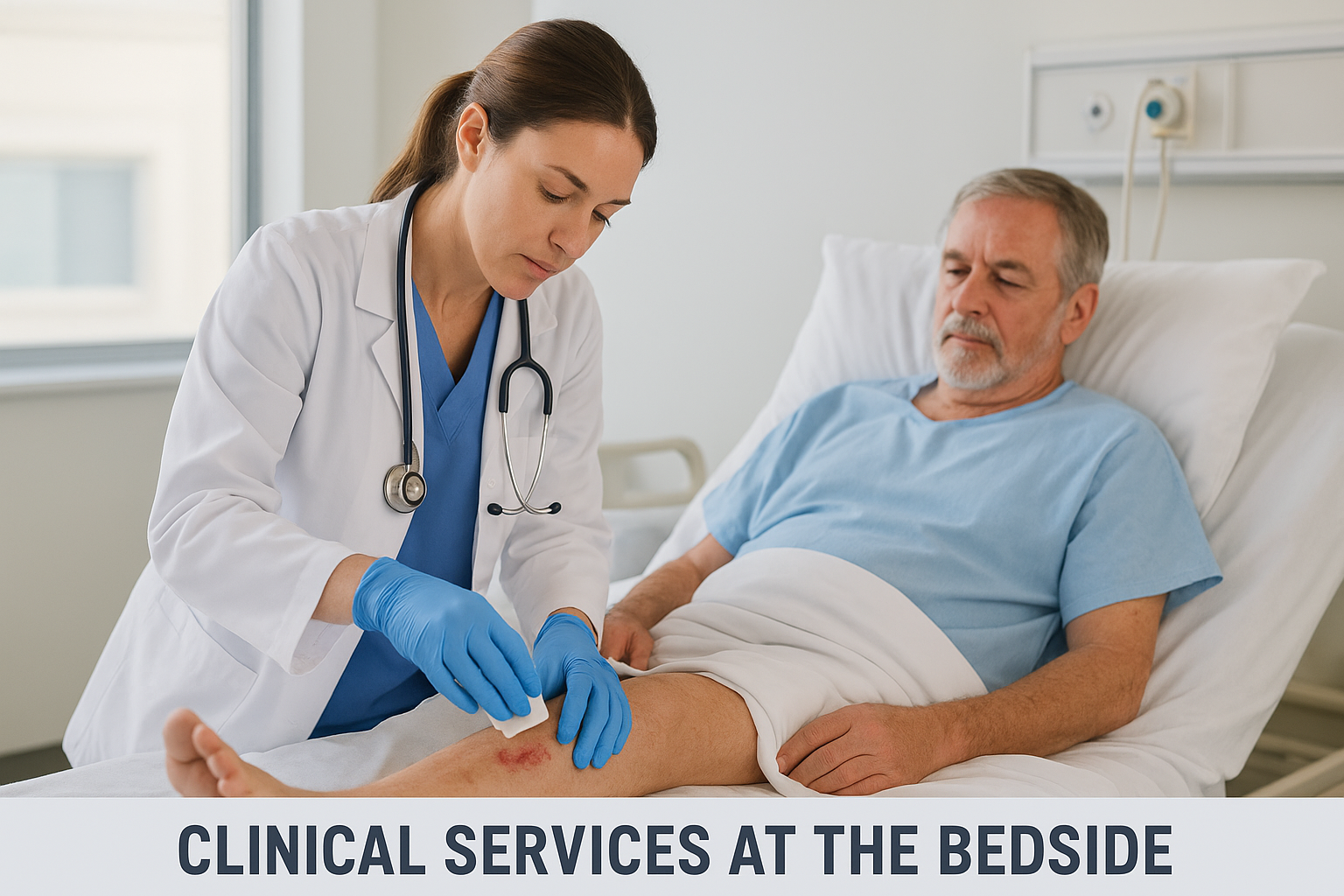
The difference between a nurse-led and physician-led wound care partner is significant: only a physician can diagnose, order advanced biologics covered under Medicare Part B, and make binding clinical decisions at the bedside.
Documentation, Coordination, and Accountability
A strong wound care partner for facilities also handles detailed clinical documentation with every visit, including wound measurements, photos, treatment codes, and progress notes that feed into your existing records. This matters for your surveys, your liability, and your ability to demonstrate outcomes to referral partners. Beyond paperwork, they coordinate directly with your attending physicians and facility nurses to keep the care plan aligned so nothing falls through the gaps between visit cycles.
Your staff should never feel like they are left guessing about what the wound care provider did or why. Clear handoff communication and consistent documentation standards are part of what you are paying for, and any serious partner treats them as non-negotiable.
Why facilities use a wound care partner
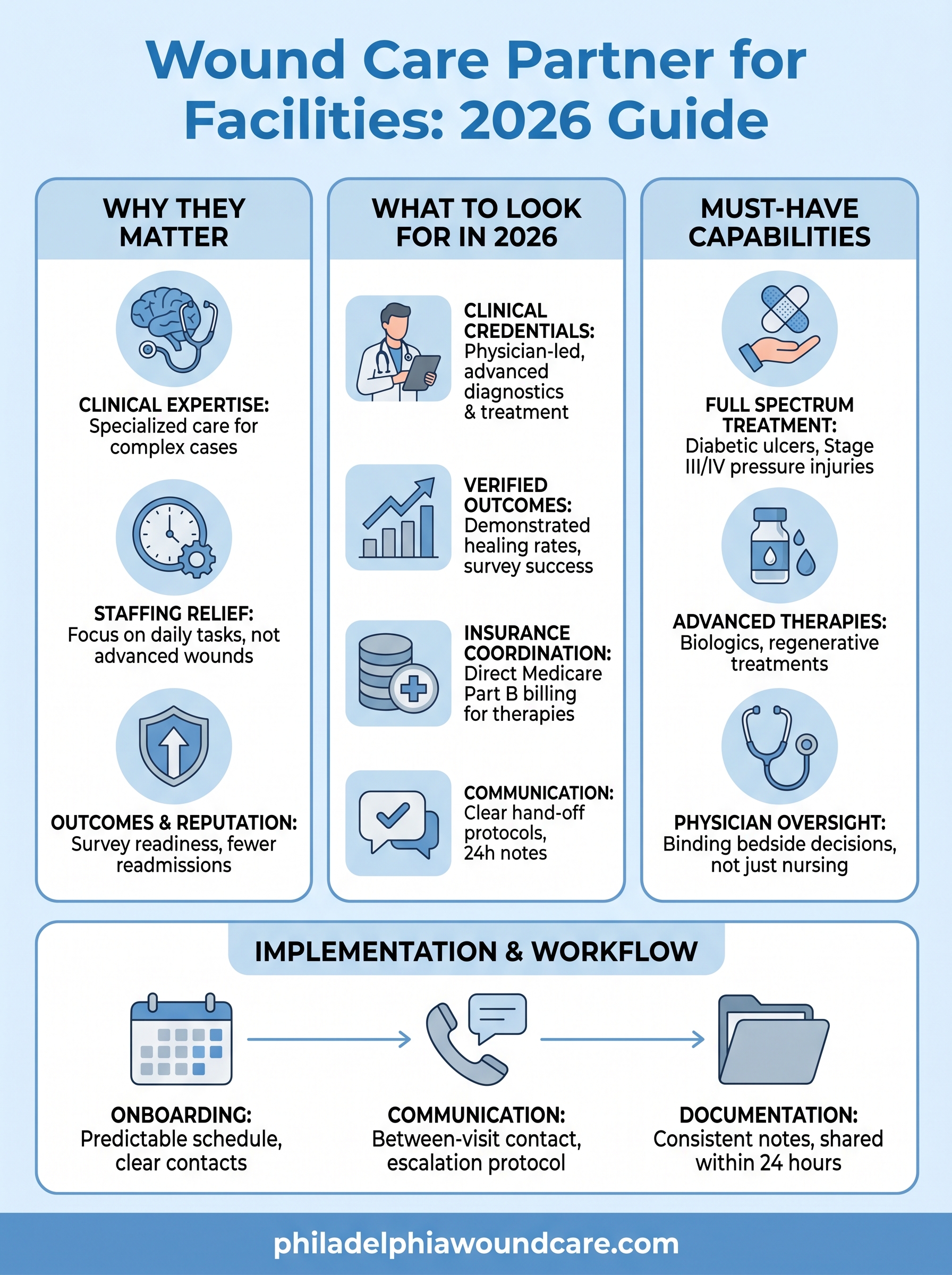
Facilities bring in outside wound care expertise for one straightforward reason: wound management is a specialty, and most facilities are not set up to deliver it at the level complex patients need. When your staff is stretched across multiple residents, dedicating the time and clinical focus required for non-healing diabetic ulcers or pressure injuries is simply not realistic on a routine basis.
Staffing Gaps and Clinical Complexity
Your nursing staff handles a wide scope of daily care. Chronic wound management, however, demands focused evaluation, specific debridement techniques, and knowledge of advanced therapies that fall outside standard nursing training. A wound care partner for facilities fills that gap without requiring you to hire, credential, and manage a specialist in-house.
Facilities that partner with a dedicated wound specialist typically see fewer wound-related readmissions, which directly protects your referral relationships and survey outcomes.
Outcomes, Liability, and Reputation
Survey readiness and rehospitalization rates are two metrics that directly affect your facility’s reputation and referral volume. Unmanaged or slowly progressing wounds create documentation gaps, family complaints, and potential liability. Bringing in a qualified partner gives you documented clinical oversight at every visit, which protects your facility and demonstrates to families and referral sources that you take resident care seriously.
How to evaluate wound care partners in 2026
Evaluating a wound care partner for facilities requires looking past marketing claims and asking specific operational questions. The right partner should be able to demonstrate verified outcomes, clear communication protocols, and clinical credentials before your first conversation ends. In 2026, with staffing pressures and survey scrutiny higher than ever, you cannot afford to rely on a partner’s word alone.
Questions to Ask Before You Commit
Start by asking any prospective partner about their physician oversight model and credentialing process. Who exactly comes to your building, what are their qualifications, and how are they supervised? You also want to know their average response time for urgent cases, how they handle documentation handoff to your nursing team, and whether they bill insurance directly or route costs through your facility.
A partner who cannot give you straight answers to these questions during the evaluation phase will not give you straight answers when a resident’s wound stalls at week six either.
Request references from similar facility types they currently serve, and ask to review sample visit documentation so you can judge clarity and completeness before signing anything.
Must-have clinical capabilities and coverage
Not every wound care partner for facilities brings the same clinical toolkit. Before you move forward with any provider, verify that their core capabilities match the complexity of your resident population, not just the most straightforward cases on your census.
Clinical Credentials and Treatment Range
Your partner should be able to manage the full spectrum of chronic wounds: diabetic foot ulcers, pressure injuries at Stage III and IV, venous ulcers, and post-surgical wounds that are not responding to standard care. Confirm that a licensed physician, not just a nurse or wound care technician, leads and directs every treatment plan. Physician oversight is what allows a partner to order advanced biologics, perform sharp debridement, and make binding clinical decisions at bedside without routing every choice back through your attending.
A partner who can only manage lower-acuity wounds will refer your hardest cases out anyway, which defeats the purpose of the arrangement.
Insurance Billing Capabilities
Your partner needs to bill Medicare Part B directly for advanced therapies like allograft and regenerative treatments. If they cannot, the cost burden shifts to your facility or your residents. Confirm their credentialing status with Medicare and major commercial insurers before you finalize any agreement.
Implementation, workflows, and communication
Getting a wound care partner for facilities integrated into your daily operations takes more than signing an agreement. You need a clear onboarding plan that covers scheduling logistics, staff introductions, and documentation handoff protocols from day one.
Scheduling and Onboarding
Your partner should establish a predictable visit schedule that fits your staffing patterns, not the other way around. Before the first visit, confirm how your nursing team will communicate urgent wound changes between scheduled appointments, and who the designated clinical contact is on both sides.
A disorganized onboarding process is a reliable signal of how the partnership will run long-term.
Communication Between Visits
Between-visit communication is where many wound care partnerships break down. Your partner should provide a direct point of contact for your nurses to reach when a wound changes unexpectedly, along with a documented escalation protocol.
Every visit note should reach your team within 24 hours so attending physicians can review and act without delays. When communication runs consistently, your staff spends less time chasing updates and more time focused on direct resident care.
Next steps for your facility
If you have read this far, you already know that selecting the right wound care partner for facilities comes down to clinical depth, clear communication, and verified credentials. The evaluation framework above gives you the specific questions to ask before you commit to anyone, and the answers you get will tell you quickly whether a provider operates at the level your residents deserve.
Your most vulnerable residents cannot wait for a partnership that gradually figures itself out. They need consistent physician-led oversight and a provider who treats documentation, response times, and staff coordination as part of the job, not as extras.
Philadelphia Wound Care brings physician-led mobile wound care directly to skilled nursing facilities, assisted living communities, and hospice settings across the Philadelphia region, with direct Medicare billing and same-day referral responses. If you are ready to bring that level of care into your building, submit a referral or contact our team to get started.