

7 Essential Supplies For Wound Care At Home
You’ve been sent home with a wound to manage, and the discharge papers list a few products without explaining why they matter or where to find them. Stocking the right supplies for wound care at home is not complicated, but using the wrong dressing or skipping a step can slow healing or lead to infection, especially for diabetic ulcers, pressure sores, or post-surgical incisions.
This guide walks through the seven items every home caregiver should keep on hand, from saline solution and gauze to antimicrobial dressings and skin barrier cream. You’ll know what each supply does, when to reach for it, and how to tell if a wound needs more than a basic bandage change.
We put this list together from what we see at the bedside every week, treating chronic wounds in homes and care facilities across the Philadelphia area. If a wound isn’t closing despite good home care, that’s usually the signal to bring in a physician-led mobile wound team rather than adding another product to the drawer, and we’ll point out those warning signs along the way.
1. Professional wound care support for complex wounds
Before stocking a single dressing, you need an honest read on whether this wound is a home-supply job or a medical one. A diabetic ulcer, a stage 3 or 4 pressure sore, or a post-surgical wound that’s reopened doesn’t respond to gauze and antiseptic alone. These wounds often need debridement, prescription-strength therapies, or lab work to catch an infection early, none of which come in a drugstore kit. Treating professional wound care as supply number one, ahead of tape and dressings, saves families weeks of frustration and reduces the risk of hospital readmission.
How it works
A physician-led mobile wound care team, like ours at Philadelphia Wound Care, comes to the patient instead of the other way around. A licensed General Surgeon evaluates the wound bedside, measures depth and tissue type, and builds a treatment plan that can include allograft and regenerative therapies for wounds that have stalled. We coordinate with the referring physician, facility staff, or hospice team so the plan doesn’t conflict with other treatment, and we commit to 24-hour response for urgent cases. That kind of oversight is something no over-the-counter product can replicate.
A wound that hasn’t improved in two weeks needs a clinician’s eyes, not another trip to the pharmacy.
Best for
This level of care fits patients who are homebound, mobility-impaired, or managing wounds tied to diabetes, vascular disease, or prolonged bed rest. It’s also the right call for family caregivers who feel out of their depth, and for facility case managers who need a specialist partner rather than another in-house nurse visit. If you’re seeing increased drainage, a foul odor, spreading redness, fever, or a wound edge that looks black or leathery, stop troubleshooting with supplies and call for an evaluation.
Where to get it
Medicare, Medicare Advantage, and most commercial insurance plans cover mobile physician wound visits and advanced therapies like allograft treatment under Medicare Part B, according to the Centers for Medicare & Medicaid Services (cms.gov). That coverage removes the cost barrier that keeps many patients from getting specialist care outside a hospital. You can request a visit through a referring physician, a facility case manager, or by contacting a mobile wound care practice directly, usually with a response within a day for urgent referrals.
2. Wound cleansers and antiseptic solutions
Every dressing change starts the same way: getting the wound bed clean before you cover it back up. Wound cleansers and antiseptic solutions remove debris, old drainage, and bacteria that can slow healing, and they’re the supply you’ll reach for most often in a home wound care routine. Skipping this step, or using the wrong product, is one of the most common mistakes we see when a wound stalls instead of closing.
How it works
Sterile saline is the gold standard for most wounds because it cleans without damaging new tissue, and you can buy it premixed or make a simple version at home with distilled water and salt. Antiseptic solutions like diluted povidone-iodine or hypochlorous acid sprays go a step further, targeting bacteria on wounds that show early signs of contamination. The general rule: irrigate gently, don’t scrub, and let the solution do the work of loosening debris rather than forcing it out.
Clean the wound, don’t punish it. Gentle irrigation beats scrubbing every time.
Best for
Saline works for daily maintenance on healing surgical incisions, minor pressure sores, and skin tears. Antiseptic solutions suit wounds with visible drainage, odor, or a history of infection, but they shouldn’t replace a clinician’s evaluation if those signs persist. Diabetic patients especially need consistent cleansing since even small ulcers can progress quickly without it.
Where to get it
Saline wound wash and basic antiseptic sprays are available at any pharmacy, big-box store, or medical supply retailer, typically for under $10 a bottle. For patients with insurance-covered home wound care, a mobile wound team can also supply clinical-grade solutions as part of an ongoing treatment plan.
3. Sterile gauze and non-adherent dressings
Once the wound is clean, you need something to cover it that won’t undo the work you just did. Sterile gauze and non-adherent dressings protect the wound bed from bacteria and friction while absorbing drainage, and they’re the backbone of most home wound care routines. Grabbing a fluffy cotton pad from an old first-aid kit isn’t the same thing. Standard gauze can stick to raw tissue and tear it open again at the next change, which is exactly why non-adherent versions exist.
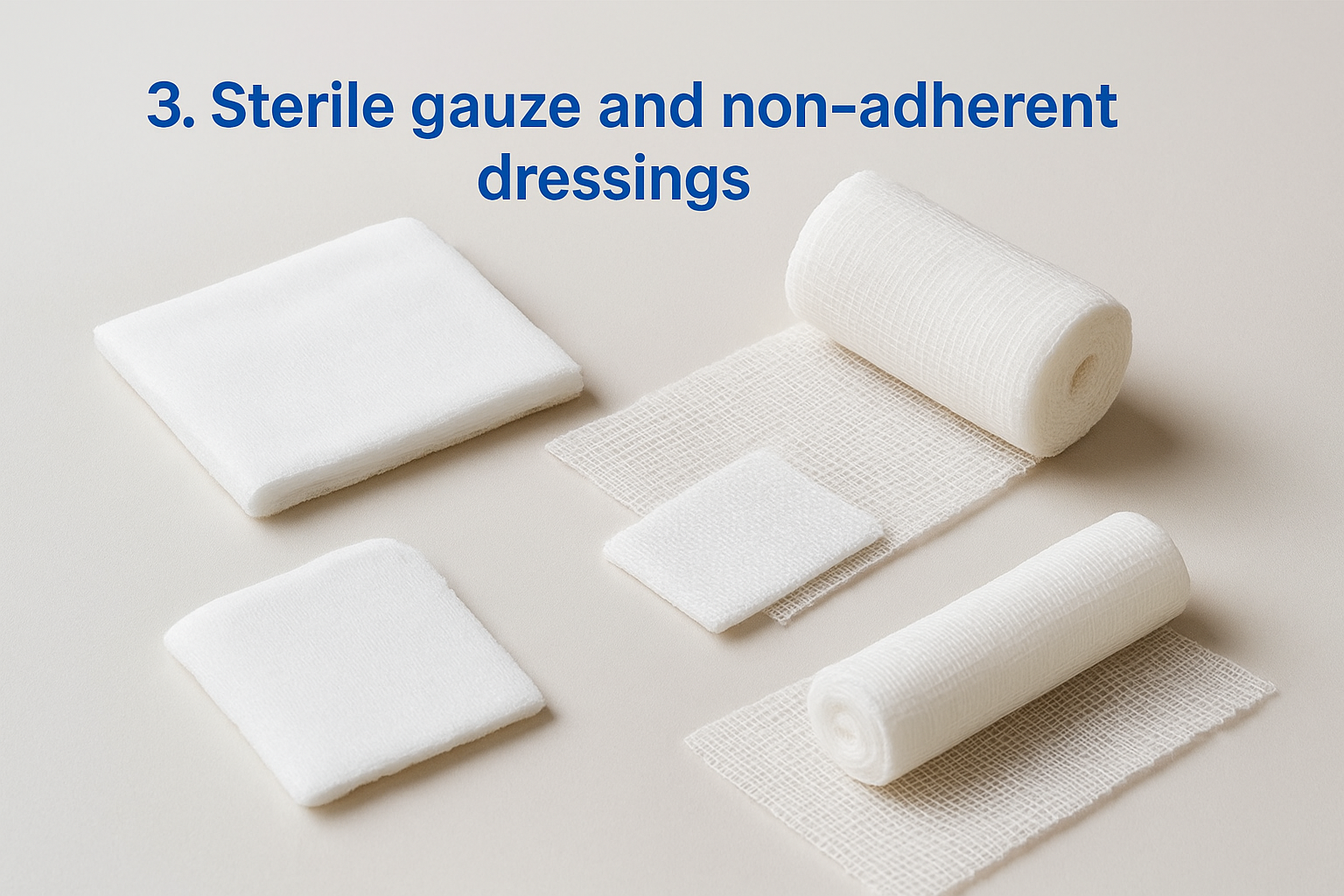
How it works
Non-adherent dressings use a coated or mesh layer that sits against the wound without bonding to new tissue, so removal doesn’t restart the healing clock. Sterile gauze pads go over that layer to absorb drainage and add a physical barrier against dirt and moisture. For deeper wounds, packing strips or ribbon gauze fill the space so it heals from the bottom up instead of closing over a pocket of dead space.
A dressing that tears the wound on removal is doing more harm than the wound itself.
Best for
This combination suits surgical incisions, skin tears, shallow pressure sores, and any wound with light to moderate drainage. It’s the right starting point for most caregivers managing daily dressing changes at home.
| Product | Best use |
|---|---|
| Non-adherent pad | Direct wound contact layer |
| Sterile gauze roll or pad | Absorption and coverage |
| Packing strip | Deep or tunneling wounds |
Where to get it
Pharmacies and medical supply stores stock both items cheaply, often bundled in bulk boxes for frequent changes. Facilities and mobile wound care providers typically supply hospital-grade versions as part of an ongoing treatment plan, which matters for wounds that need packing correctly to avoid trapping bacteria.
4. Advanced dressings for chronic or slow-healing wounds
Basic gauze runs out of usefulness once a wound stalls past a few weeks. Advanced dressings for chronic wounds step in when the wound bed needs help doing more than staying clean and covered. These products manage moisture balance, fight bacteria, or actively support tissue growth, which matters for diabetic ulcers, venous ulcers, and pressure sores that haven’t budged with standard care.
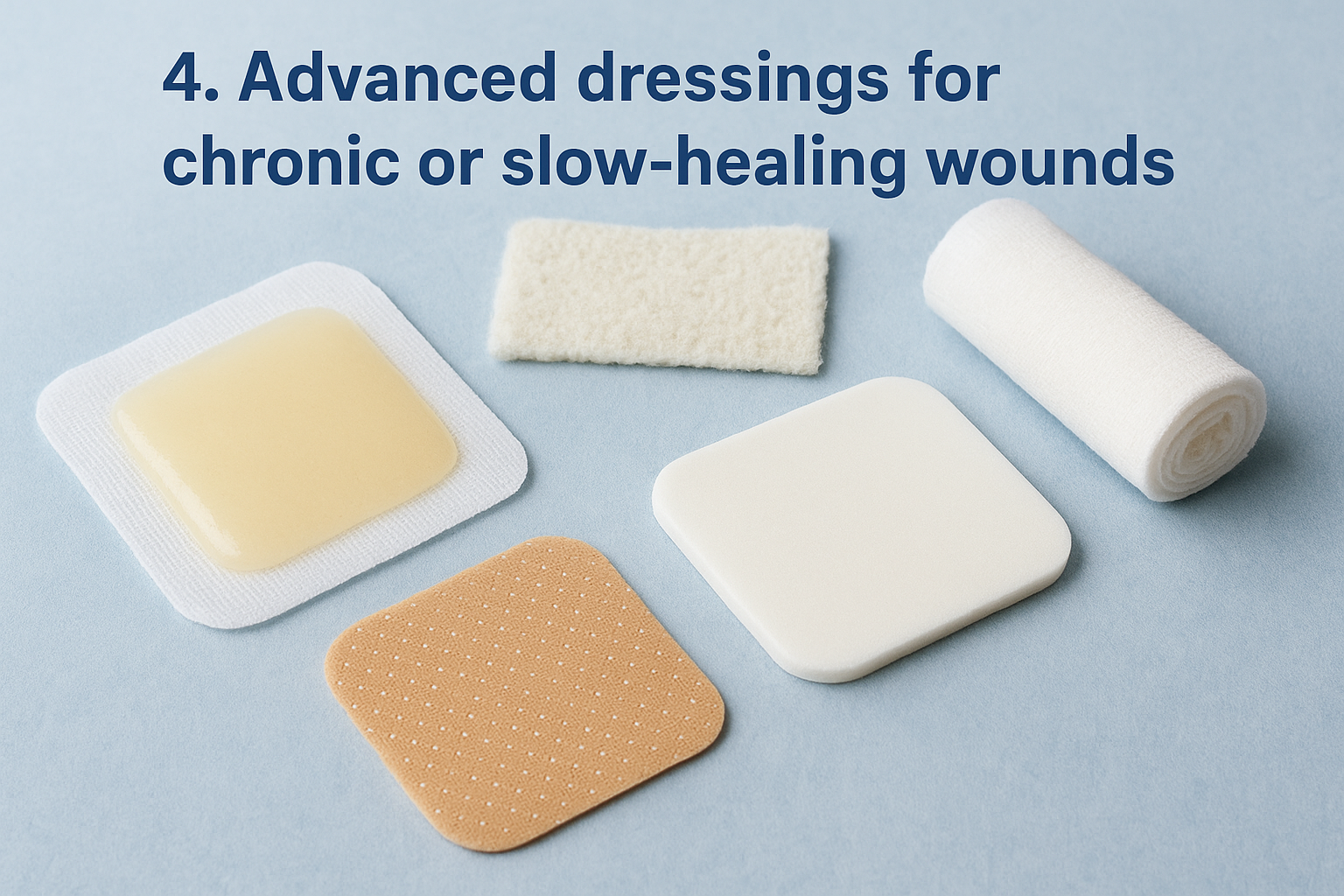
How it works
Hydrogel dressings keep a moist environment that encourages new tissue in wounds that are too dry to heal on their own. Foam dressings absorb heavy drainage from venous ulcers without soaking through, and alginate dressings, made from seaweed fiber, do the same job for wounds that ooze even more. Silver-infused dressings add an antimicrobial layer for wounds showing early signs of bacterial overgrowth, cutting infection risk without a full course of oral antibiotics.
A wound that’s stalled for weeks needs a dressing that does more than cover it, it needs one that actively supports healing.
Best for
These dressings suit wounds that haven’t shown visible improvement in two to three weeks of basic care, along with venous ulcers, diabetic foot ulcers, and pressure sores with heavy or unpredictable drainage. Caregivers managing a wound that keeps reopening or oozing through standard gauze should move to this category before the wound worsens.
Where to get it
Medical supply stores and larger pharmacies carry hydrogel, foam, and alginate dressings, though prices run higher than basic gauze, often $5 to $15 per dressing. Many require a prescription or physician guidance to use correctly, and Medicare Part B typically covers them when prescribed as part of a documented wound care plan, which is where a mobile wound physician can help avoid guesswork and out-of-pocket cost.
5. Medical tape and securement wraps
Dressings only work if they stay put between changes. Medical tape and securement wraps hold gauze, foam, or hydrogel in place without shifting during movement, sleeping, or transfers, and picking the wrong adhesive can do real damage to fragile skin. Anyone stocking supplies for wound care at home needs at least two tape options, since one product rarely fits every skin type or wound location.
How it works
Paper tape and silicone-based tapes hold dressings in place while peeling off gently, which matters most for thin, aging, or steroid-treated skin that tears easily. Cohesive wraps stick to themselves rather than skin, so they secure dressings on limbs or joints without any adhesive contact at all. For fingers, heels, or awkward joints, tubular retainer nets hold a dressing snug without tape entirely, which cuts down on skin trauma from repeated changes.
The right tape protects the skin around the wound as much as the dressing protects the wound itself.
Best for
Silicone tape and cohesive wraps suit elderly patients, diabetics, and anyone with thin or fragile skin prone to tearing. Standard cloth or paper tape works fine on healthy skin for short-term surgical dressings. Retainer nets are the better call for joints, fingers, or wounds in spots where tape won’t hold.
Where to get it
Pharmacies and medical supply stores carry all three options for a few dollars per roll. Facilities and mobile wound care teams typically stock skin-friendly securement products as part of a full treatment plan, avoiding the trial-and-error of finding a tape that won’t strip skin at the next change.
6. Gloves and essential wound care tools
Good technique matters as much as good supplies, and that starts with gloves and essential wound care tools that keep the whole process sanitary. Bare hands introduce bacteria into a wound faster than almost anything else in a dressing change, and the wrong tool can nick fragile tissue or tear a healing edge. This is the category caregivers skip most often, usually because it feels less urgent than the dressing itself, but it’s what keeps every other supply on this list working the way it should.
How it works
Disposable nitrile gloves create a barrier between your hands and the wound, and you should use a fresh pair for every step, cleaning, applying medication, and dressing. Blunt-tip scissors trim gauze and tape to size without risking a slip near skin, while forceps let you place packing strips or remove old dressing material without touching the wound directly. A small waste bag for used supplies keeps contaminated materials from sitting in an open trash can near the patient.
Clean hands and clean tools matter as much as the dressing you put on afterward.
Best for
Any caregiver doing hands-on dressing changes needs this kit, but it matters most for immunocompromised patients, diabetics, and anyone managing a wound with active drainage where cross-contamination risk runs higher. Facilities already build these tools into every care cart, and home caregivers should treat them the same way, not as optional extras.
Where to get it
Pharmacies sell gloves, scissors, and forceps individually or in basic wound care kits for $10 to $20. Buying nitrile gloves in bulk boxes of 100 is cheaper long-term than small trial packs, and it’s worth keeping a spare box on hand so you never run out mid-change.
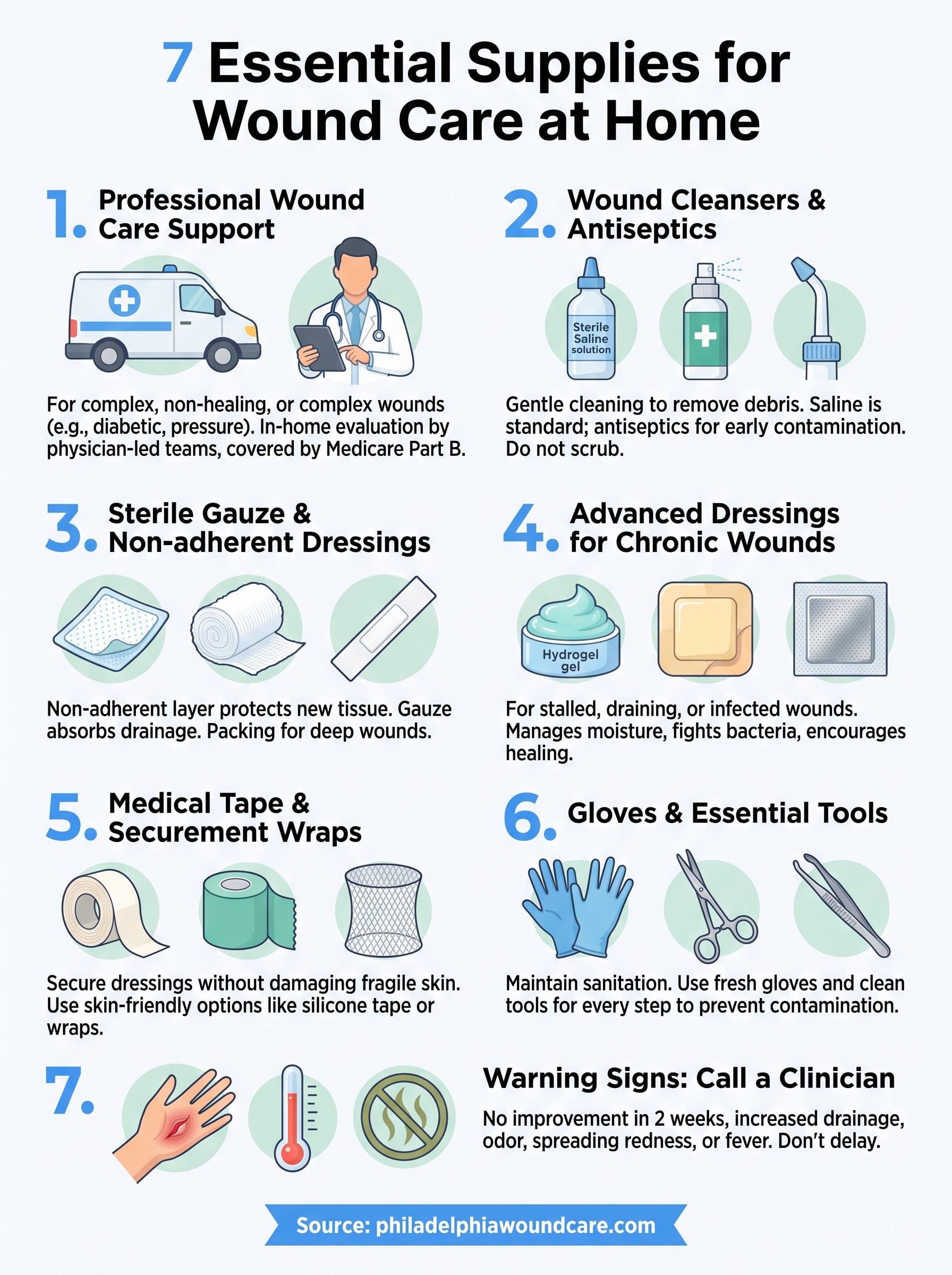
Building a home wound care kit you can rely on
Stocking these seven supplies for wound care gives you a home setup that can handle most everyday dressing changes without a scramble to the pharmacy. Saline and antiseptic solutions keep the wound clean, gauze and advanced dressings protect it, tape holds everything in place, and gloves keep the whole process sanitary. That’s the foundation.
What a home kit can’t do is replace clinical judgment. A wound that’s stalled, draining more than usual, or showing signs of infection needs a physician’s eyes, not another product from the list. Diabetic ulcers, deep pressure sores, and post-surgical wounds that reopen fall into that category more often than families expect, and waiting too long is what leads to hospital readmissions.
If you’re managing a wound that isn’t responding to home care, don’t wait for it to get worse. Reach out to our mobile wound care team and get a physician to the bedside, usually within 24 hours.