

Post-Acute Wound Care: Definition, Settings, And Services
When a patient leaves the hospital, the wound doesn’t stop needing attention. Post-acute wound care picks up where inpatient treatment ends, providing ongoing clinical management for wounds that still require specialized oversight to heal properly. This phase of recovery is critical, and often misunderstood by patients, families, and even some referring providers.
The challenge is that many complex wounds, from diabetic ulcers to surgical incisions, need more than basic dressing changes. They need physician-led evaluation, advanced therapies, and consistent follow-up, all delivered in settings where patients actually live and recover. That’s exactly why Philadelphia Wound Care exists. As a mobile wound management practice, we bring surgeon-level care directly to patients in homes, skilled nursing facilities, and assisted living or hospice environments across the Philadelphia area.
This article breaks down what post-acute wound care actually means, where it happens, who provides it, and what services patients and caregivers should expect. Whether you’re a family member coordinating care after a hospital discharge or a facility administrator seeking wound care support, you’ll find a clear, practical overview of how this essential phase of recovery works.
Why post-acute wound care matters
Wounds that appear stable at hospital discharge can deteriorate quickly once a patient returns home or enters a facility. Without consistent clinical oversight, even a well-managed surgical site can develop infection, break down, or fail to progress through normal healing stages. This is where post acute wound care becomes critical, not optional, and the difference in outcomes between managed and unmanaged wounds is measurable and significant.
The transition from hospital to home or facility is one of the highest-risk periods for wound complications.
The cost of gaps in wound care
When wound care falls through the cracks after discharge, the consequences compound fast. Rehospitalization rates climb when wounds aren’t properly monitored, and for elderly patients or those with diabetes or vascular disease, a single unmanaged wound can escalate into a limb-threatening condition. Each gap in care also extends total recovery time and increases the burden on family caregivers who are already managing complex medical needs without clinical training.
Inadequate follow-up creates financial strain on top of physical harm. Medicare data consistently shows that preventable readmissions tied to wound complications generate enormous costs for patients and the healthcare system. When patients receive proper post-discharge wound management, readmissions drop and recovery timelines shorten, benefiting patients, families, and facilities alike.
Why standard home health isn’t always enough
Many home health agencies provide wound dressing changes as part of their standard services, but this is not the same as physician-led clinical management. Nurse visits can miss early signs of infection, tissue necrosis, or treatment failure that a trained surgeon would identify immediately. Families often assume that home health is covering wound care comprehensively, when in reality patients are receiving maintenance rather than specialized treatment.
Your most complex wounds, including diabetic ulcers, pressure injuries, and post-surgical sites, require a licensed physician who can evaluate tissue, adjust the treatment plan, and coordinate directly with your referring provider.
What post-acute wound care includes
Post-acute wound care is more than changing a bandage. It combines clinical assessment, active treatment, and care coordination into a structured plan that responds to how your wound progresses over time. Each visit builds on the last, adjusting therapy based on what the tissue actually shows rather than a fixed schedule.
Clinical services you should expect
A proper post acute wound care program covers services that go well beyond basic wound dressing. Your provider should assess tissue viability, identify early signs of infection, and determine whether the current treatment approach is producing results. When a wound stalls, the response should be a change in clinical strategy, not a repeat of the same intervention.
If your current wound care plan hasn’t produced measurable progress within a few weeks, escalation to a specialist is the right move.
Advanced therapies like allograft applications and regenerative treatments are also part of a complete wound care program. These options target wounds that have failed to respond to standard care, and under Medicare Part B, many patients can access these treatments without bearing the full cost out of pocket. Your care plan should reflect both your wound type and your overall health picture.
Where post-acute wound care happens
Post acute wound care doesn’t require a clinic or a hospital bed. It follows the patient, delivered in the setting where recovery is already taking place. Understanding your options helps you make informed decisions after discharge.
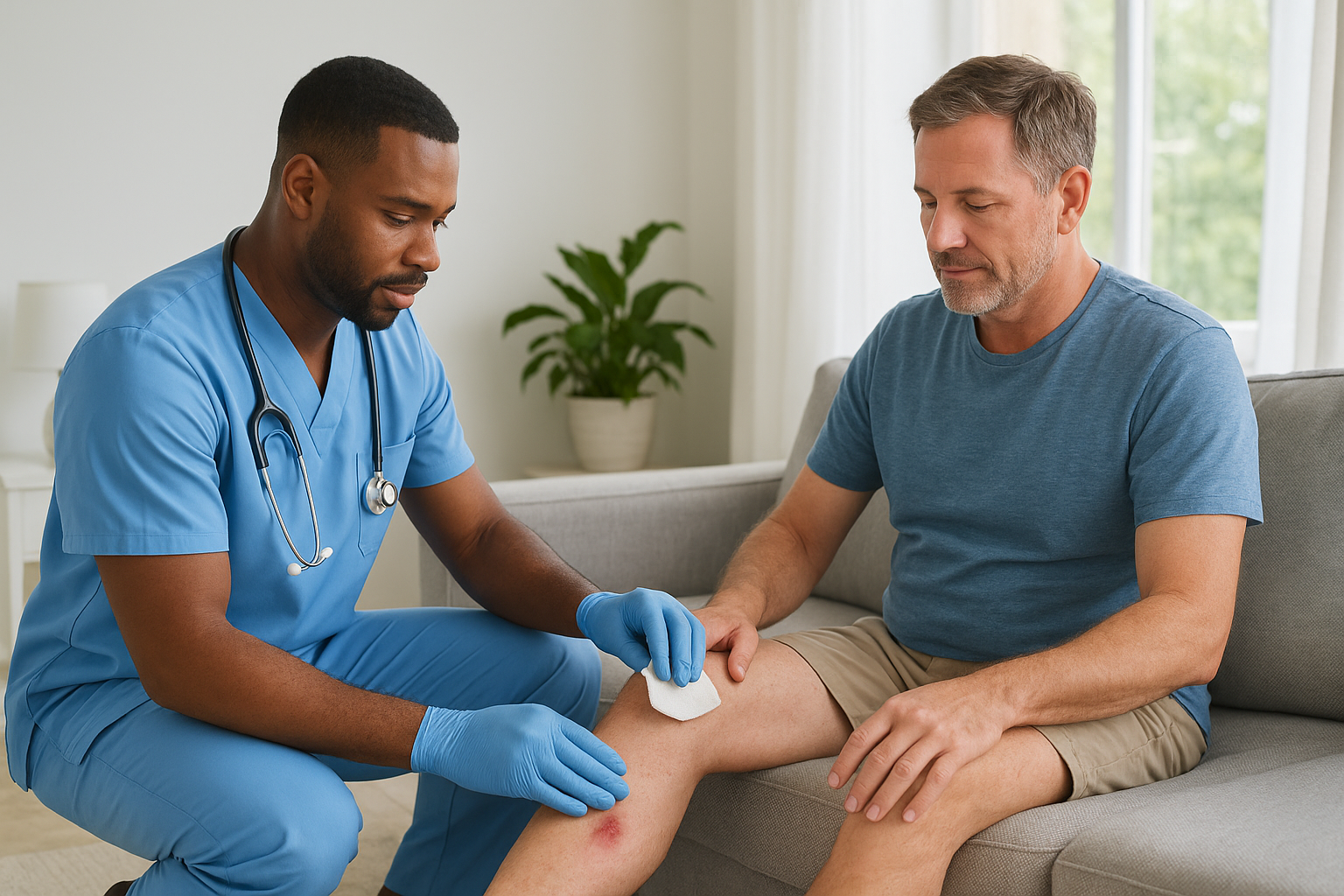
At home
Your home is one of the most common settings for post-acute wound management. Mobile physician practices bring clinical evaluation and treatment directly to your bedside, removing the strain of transportation for patients with limited mobility. This approach keeps recovery on track without disrupting your environment.
A visiting physician can also spot contributing factors in your living situation, such as mattress type or footwear choices, that directly affect how a wound heals.
In skilled nursing and assisted living facilities
Skilled nursing facilities, assisted living communities, and hospice settings all receive on-site wound care visits from mobile providers. Facility staff often lack the authority to manage complex wounds independently, so a specialist physician fills that gap directly.
Your facility doesn’t need to transfer a patient to a wound care clinic when a qualified provider can come to them.
This model reduces unnecessary transfers and allows the wound care provider to coordinate directly with nursing staff and your referring physician.
How post-acute wound care works day to day
Post acute wound care runs on a structured rhythm: your provider visits, evaluates, treats, and documents each finding, then adjusts the plan before the next appointment. Each visit has a clear clinical purpose rather than being a routine task.
What happens during a visit
Your physician examines the wound in detail, measuring wound dimensions, assessing tissue type, and checking for signs of infection or healing regression. This data drives every decision about what comes next in your treatment plan.
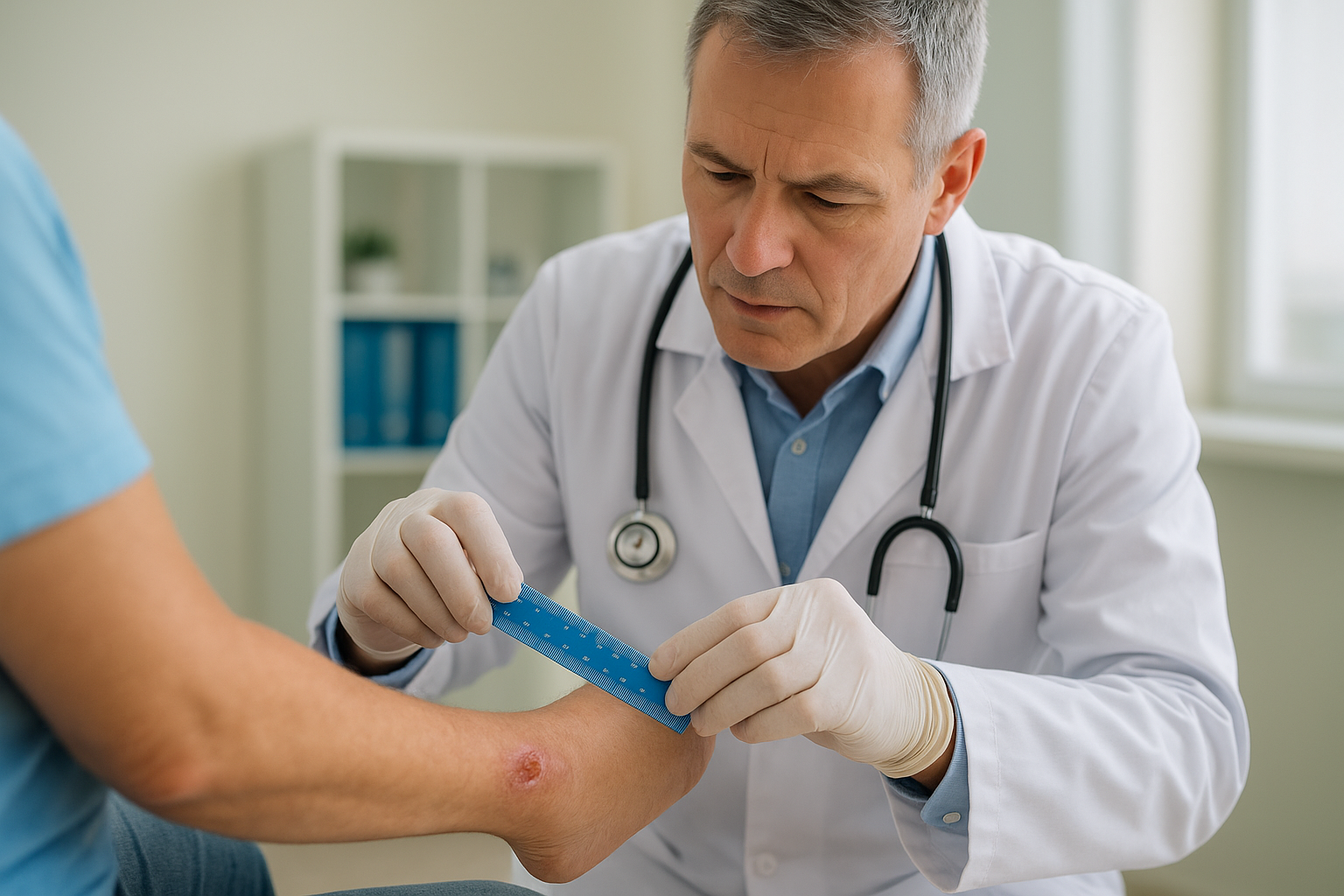
Treatment during a visit might include debridement, dressing application, or administration of advanced therapies like allograft, depending on what the wound requires. You receive care matched to your wound’s current state, not a fixed protocol applied regardless of progress.
Communication between your care team
After each visit, your wound care physician documents findings and shares updates directly with your referring provider. This keeps everyone aligned, from your primary care doctor to nursing staff at your facility.
Consistent documentation and provider communication are what separate a structured wound care program from disconnected one-off visits.
Regular reporting also creates a clear record of healing progression, which supports insurance coverage decisions and helps flag when a wound needs a change in treatment direction.
Key questions and common misconceptions
Two misconceptions come up frequently when patients and families first encounter post acute wound care. The first is that wound care ends when the bandage is applied. The second is that any nurse visit adequately covers what a physician-led wound specialist provides. Neither assumption is accurate, and both lead to decisions that slow or reverse recovery progress.
Assuming your wound is being managed and actually confirming it is being managed are two very different things.
What you should ask your provider
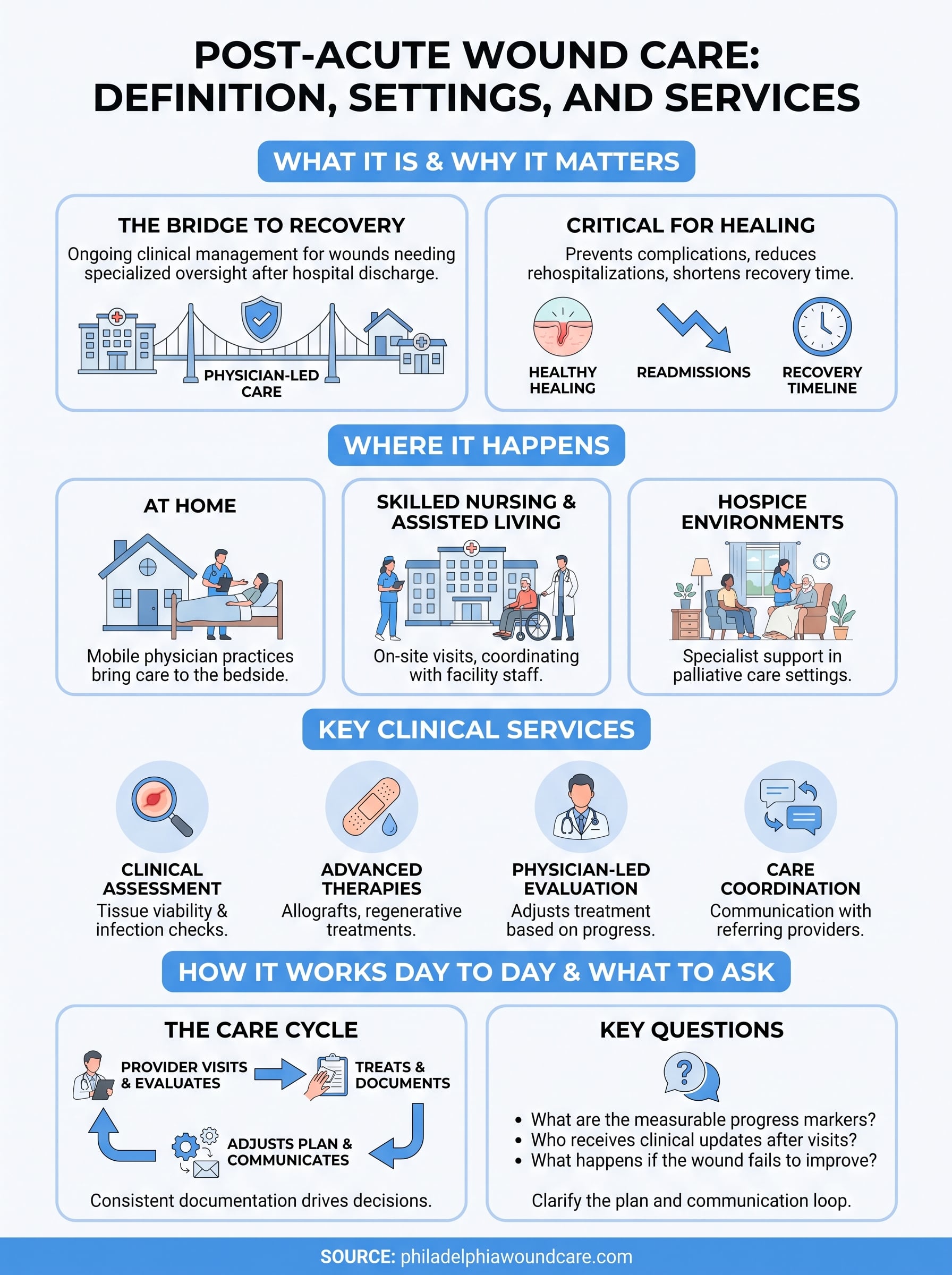
When a wound care clinician visits, you have every right to ask specific, direct questions about your treatment plan. Find out what measurable progress markers your provider tracks between visits, and ask clearly what changes will happen if the wound fails to improve within a defined timeframe. A qualified provider answers these questions directly and adjusts the plan based on tissue evidence, not a fixed routine.
You should also clarify who receives clinical updates after each visit. Knowing that your primary care physician and facility nursing staff are included in the communication loop confirms that your care is coordinated rather than isolated. If nobody is updating your referring doctor, that is a gap worth addressing immediately.
What to do next
You now have a clear picture of what post acute wound care looks like, where it happens, and what separates a real clinical program from basic maintenance. The next step is straightforward: connect with a provider who can deliver physician-led wound management directly to your patient or loved one, without requiring a clinic visit or hospital transfer.
Philadelphia Wound Care brings surgeon-level evaluation and advanced wound treatments to patients in their homes, skilled nursing facilities, and assisted living communities across the Philadelphia area. Whether you’re a family caregiver managing a discharge, a facility administrator handling complex wound cases, or a physician looking for a reliable referral partner, the process starts with a single conversation. Explore our mobile wound care services in Philadelphia to understand exactly what we offer and how to get your patient scheduled quickly.