

How to Know If Your Cut Is Infected: Signs to Watch
A cut that stings for a day or two and then quiets down is doing what it’s supposed to do. But when redness spreads, drainage changes color, or pain gets worse instead of better, you’re looking at something else. How to know if your cut is infected comes down to reading a handful of physical signs your body gives you, and knowing which ones mean "keep an eye on it" versus "call a doctor today."
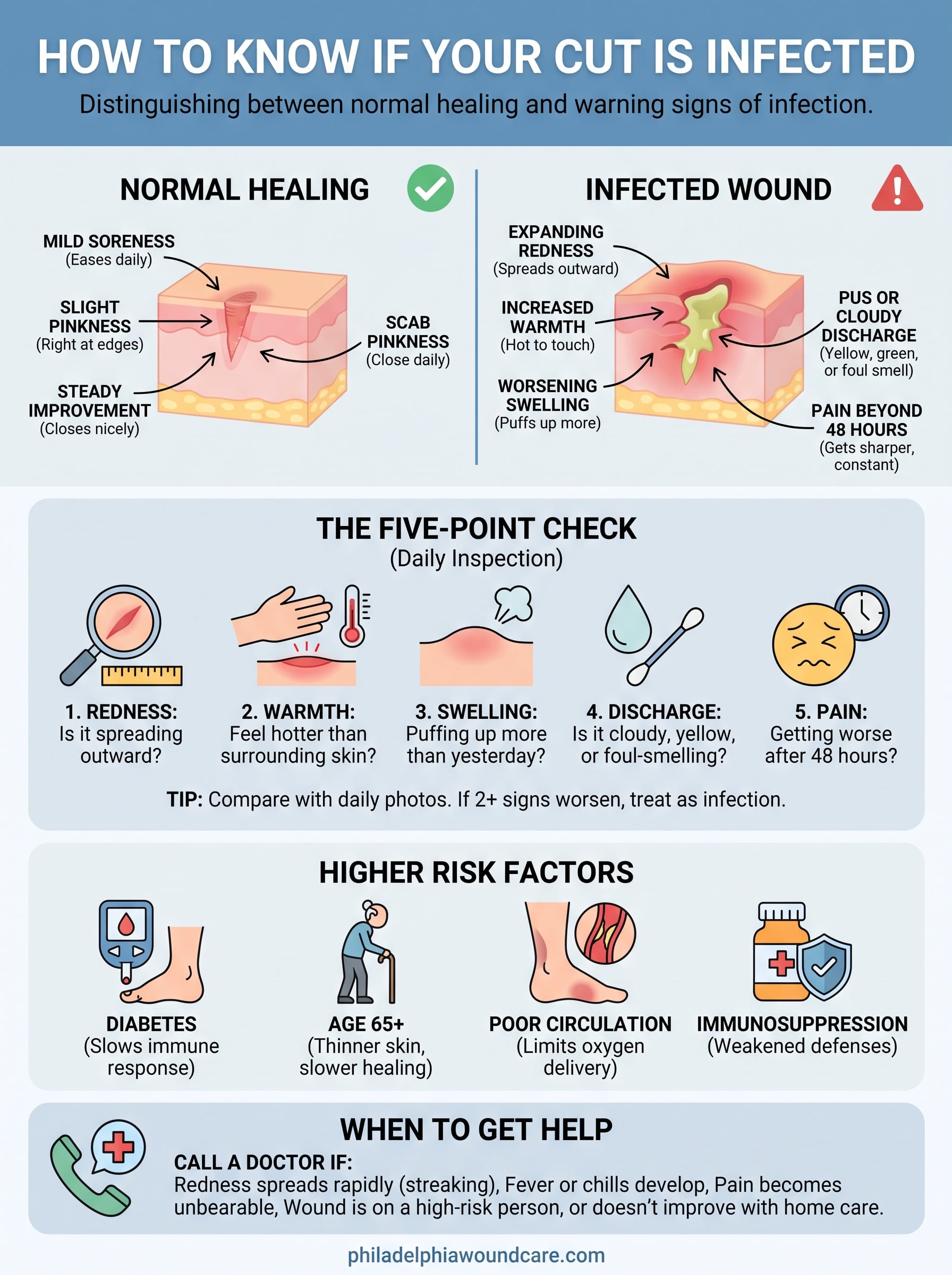
The short answer: infection shows up as expanding redness, warmth, swelling, pus or cloudy discharge, worsening (not lessening) pain after the first 48 hours, fever, or red streaking near the wound. Normal healing looks like mild soreness, slight pinkness right at the edges, and steady improvement day over day. Once you know what to compare against, telling the two apart gets a lot easier.Normal healing follows a predictable timeline, while an infected wound breaks that pattern.
Below, we walk through each warning sign in detail, explain how infection differs from a wound that’s simply irritated, and cover when a cut needs more than soap, water, and a bandage. For diabetic patients, seniors, and anyone with a wound that isn’t closing on its own, we’ll also touch on why chronic or non-healing wounds often need specialized care, and how mobile physician-led treatment can catch problems before they become serious.
Why noticing infection early matters
A small cut that goes untreated for even a few days can turn into a much bigger medical problem than the wound itself. Bacteria that get past the skin barrier multiply fast, and once they move from the surface into surrounding tissue, treatment options narrow considerably. What starts as a simple antibiotic ointment situation can escalate into oral antibiotics, then IV antibiotics, then a hospital stay if you wait too long to act.
How fast infection can progress
Skin infections like cellulitis can spread several inches within 24 to 48 hours once they take hold, according to the CDC. That’s why catching early warning signs matters more than any single treatment product on the shelf. Waiting to see if things improve on their own often costs you the narrow window where a topical antibiotic and a clean dressing would have been enough.
A cut you watch closely for 48 hours is far cheaper, in time and health, than one you ignore for a week.
Why the stakes are higher for some wounds
Not every infected cut carries the same risk. A minor infected scrape on a healthy 30-year-old’s forearm is a different situation than the same infection on a diabetic senior’s lower leg, where poor circulation slows the immune response and lets bacteria establish faster. For people managing chronic conditions, an infection that reaches the bloodstream, known as sepsis, is a genuine medical emergency, not a scare tactic.
Left unchecked, a locally infected wound can progress along a fairly predictable path:
- Localized infection: redness, warmth, and mild swelling contained near the cut
- Cellulitis: infection spreading into deeper skin layers, often with red streaking
- Abscess formation: pus pockets that may require drainage
- Systemic infection: fever, chills, rapid heartbeat, confusion, signs the infection has entered the bloodstream
Understanding where you fall on that path tells you how urgently you need to act, which is exactly what the next section helps you determine.
How to check your cut for signs of infection
Start with a simple visual and physical check, done in good light, at the same time each day so you can compare. Daily inspection catches changes before they snowball, and it only takes a minute once you know what to look for.
The five-point check
Run through this list every time you change a dressing:
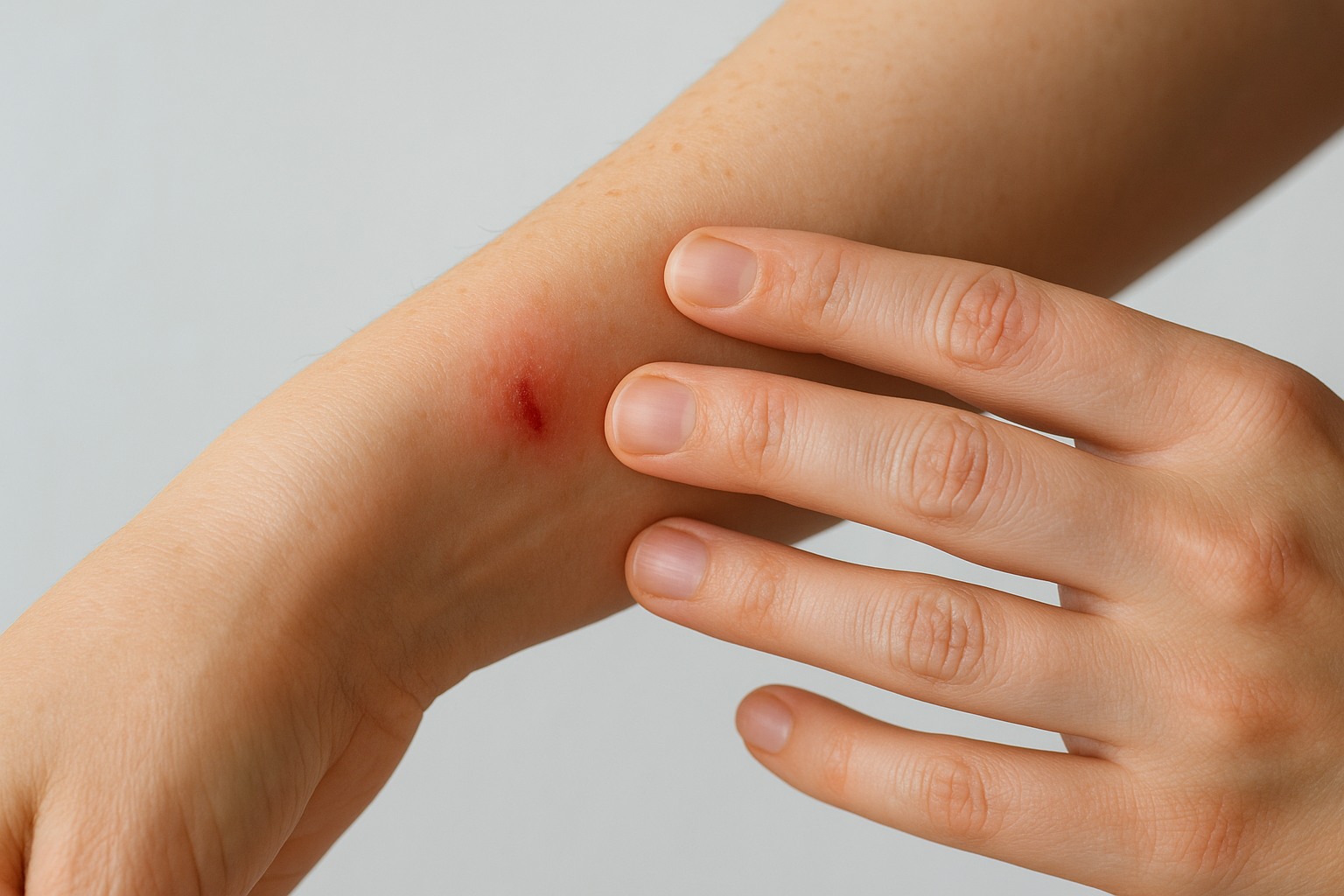
- Redness: Is it staying within a few millimeters of the edge, or spreading outward?
- Warmth: Does the skin around the cut feel noticeably hotter than skin nearby?
- Swelling: Is the area puffing up more than it did yesterday?
- Discharge: Is fluid clear or slightly pink, or has it turned yellow, green, or cloudy?
- Pain: Is discomfort easing day by day, or getting sharper and more constant?
If two or more of these are trending the wrong direction, treat it as infection until proven otherwise.
Gently press around the wound edges. Tenderness that’s worse than the day before is one of the more reliable early warning signs, even before redness becomes obvious. Also smell the dressing when you remove it. A foul odor, distinct from the mild smell of a healing wound, often shows up before visible pus does.
Document what you see. Snap a photo each day from the same angle. Comparing photos side by side makes subtle spreading far easier to catch than relying on memory alone, especially if you’re checking a wound on someone else, like an aging parent.
Who’s most at risk for a cut becoming infected
Some people heal a scraped knee in three days flat. Others watch the same size cut turn red and swollen by day two. Underlying health conditions explain most of that gap, and knowing where you or a loved one falls on that spectrum changes how closely you should be watching a wound.
Conditions that raise the odds
Diabetes tops the list because high blood sugar impairs white blood cell function and slows circulation to the skin’s surface, both of which give bacteria more time to establish before your immune system responds. Vascular disease works the same way, starving tissue of the oxygen-rich blood it needs to fight infection and rebuild. Anyone on immunosuppressive medication, including steroids or chemotherapy drugs, loses a layer of natural defense that healthy patients rely on without thinking about it.
| Risk factor | Why it matters |
|---|---|
| Diabetes | Slows white blood cell response, reduces circulation |
| Peripheral vascular disease | Limits oxygen delivery to healing tissue |
| Age 65+ | Thinner skin, slower cell turnover |
| Limited mobility | Prolonged pressure worsens skin breakdown |
| Immunosuppression | Weakened defense against bacteria |
The same size cut can be minor on one person and dangerous on another, depending entirely on what’s happening beneath the skin.
Age and mobility change the picture too
Seniors face a double disadvantage: skin thins with age, and reduced mobility means more time in positions that put pressure on healing wounds. That combination is exactly why families of aging or diabetic patients need to check cuts more often, not less.
What to do if your cut looks infected
Once you’ve spotted two or more warning signs, act instead of waiting another day to see if things improve. Cleaning and monitoring still matter, but they’re no longer enough on their own once true infection sets in. Treat this as the point where home care and medical care start working together, not one replacing the other.
First steps at home
Begin with these basics while you arrange further care:
- Wash your hands before touching the wound
- Clean the area gently with mild soap and water, not hydrogen peroxide or alcohol, which can damage healing tissue
- Apply a thin layer of antibiotic ointment and a clean, dry dressing
- Change the dressing daily, or sooner if it becomes wet or dirty
- Keep photographing the wound so you can show a clinician exactly how it’s progressed
Don’t wait for the wound to look worse before you seek help; act on the trend, not just the current snapshot.
What not to do
Avoid popping or draining any pus yourself. Squeezing an infected wound can push bacteria deeper into tissue instead of releasing it safely, and it raises your risk of scarring. Resist the urge to tape it up tightly and ignore it either; airtight coverings trap moisture and heat, conditions bacteria thrive in. If you’re caring for someone else, particularly a diabetic or elderly relative, don’t assume mild symptoms will stay mild. Contact a physician or wound care provider the same day you notice worsening signs, rather than waiting for a scheduled checkup.
When it’s time to call for help
Most cuts heal on their own with basic care, but the ones that don’t follow a fairly clear pattern: spreading redness, worsening pain past 48 hours, fever, foul odor, or discharge that turns yellow or green. Trust the trend, not a single day’s snapshot. If you’re watching two or more warning signs move in the wrong direction, especially on a diabetic, elderly, or immunocompromised patient, that’s your signal to stop waiting and get a clinician involved.
For patients who can’t easily get to a clinic, or for wounds that keep resisting standard care, specialized treatment at home often catches problems a routine checkup would miss. Philadelphia Wound Care brings physician-led evaluation and advanced therapies directly to the bedside, whether that’s a private residence, a nursing facility, or hospice. If a cut on you or a loved one isn’t healing the way it should, reach out for a mobile wound care evaluation before a manageable issue turns into an emergency.