

Wound Vac Contraindications: When NPWT Should Not Be Used
Negative Pressure Wound Therapy (NPWT) is one of the most effective tools available for managing complex wounds, but it’s not appropriate for every patient or every wound. Understanding wound vac contraindications is critical before initiating treatment, because using NPWT in the wrong clinical scenario can cause serious harm, including uncontrolled bleeding, tissue damage, or systemic infection.
As a physician-led mobile wound care practice, Philadelphia Wound Care evaluates patients across homes, skilled nursing facilities, and assisted living communities throughout the Philadelphia region. Part of that evaluation means knowing exactly when a wound vac will help, and when it absolutely should not be used. Clinical decision-making at the bedside demands this level of precision, especially for elderly patients or those managing chronic conditions like diabetes and vascular disease.
This article breaks down the specific medical conditions, wound types, and risk factors that make NPWT contraindicated. Whether you’re a caregiver, a facility case manager, or a referring physician, you’ll find a clear, clinically grounded reference to guide safer treatment decisions for the patients in your care. Let’s get into the details that matter most.
What a wound vac is and how NPWT works
A wound vac is a portable device that applies controlled suction directly to a wound surface. The term "wound vac" is shorthand for a Negative Pressure Wound Therapy (NPWT) system, which combines a vacuum pump, specialized foam or gauze filler, an airtight film drape, and a collection canister. Together, these components create a sealed, low-pressure environment over the wound bed that supports tissue repair in ways traditional dressings cannot match. Understanding the mechanism helps clarify why certain conditions make the device unsafe, which is the foundation of evaluating wound vac contraindications.
The components and setup
The foam or gauze filler sits directly inside or over the wound, conforming to its shape to distribute negative pressure evenly. A thin plastic tube connects the filler to the vacuum pump, and the entire assembly is sealed with an adhesive drape that blocks outside air. The pump then draws fluid, infectious material, and excess exudate out of the wound and into a replaceable collection canister. Dressings are typically changed every 48 to 72 hours, though the schedule depends on wound type, drainage volume, and the treating physician’s orders.
Your physician can apply this therapy continuously or intermittently, depending on the clinical goal. Continuous mode maintains a steady level of suction and works well for heavily draining wounds, while intermittent mode cycles the pressure on and off to stimulate tissue response. Pressure levels typically range from -75 mmHg to -125 mmHg for most wound types, selected based on wound depth, tissue fragility, and patient tolerance.
How negative pressure promotes healing
When the device applies suction to the wound surface, it draws the wound edges inward, a process called macro-deformation. This mechanical tension stimulates cell proliferation and encourages the formation of granulation tissue, which is the healthy, vascularized tissue the body needs to close a wound. At the same time, suction removes stagnant fluid that would otherwise create conditions favorable to bacterial growth.
Fluid removal is not just about keeping the wound clean. It also reduces localized tissue swelling, which improves blood flow and delivers more oxygen and nutrients directly to the wound bed.
Beyond fluid management, NPWT promotes micro-deformation at the cellular level. The mechanical stretch applied to individual cells triggers biological signaling pathways that increase growth factor production and accelerate tissue regeneration. This dual effect, operating at both the macroscopic and microscopic scale, is what makes NPWT significantly more effective than passive dressings for complex or stalled wounds.
Why contraindications matter for safety
Applying a wound vac without a thorough patient assessment is not just a clinical oversight, it’s a direct risk to patient safety. NPWT works by altering the wound environment at a mechanical and biological level, which means applying it to the wrong wound type or the wrong patient can trigger rapid and serious complications. A device that accelerates healing in appropriate cases can cause uncontrolled hemorrhage, accelerated infection, or tissue necrosis when used without proper screening.
Wound vac contraindications are not administrative checkboxes; they are clinical boundaries that exist because the evidence of harm in certain scenarios is well-documented.
The stakes when NPWT is applied incorrectly
Many patients referred for wound vac therapy are already medically fragile, elderly, or managing multiple comorbidities like diabetes, vascular disease, or immunosuppression. In these populations, the margin for error is narrow. If NPWT is applied over a wound that communicates with an internal organ, suction can create a fistula or pull enteric contents into the wound cavity. If it is applied to actively bleeding tissue, the negative pressure can dramatically worsen blood loss at a rate that caregivers cannot easily monitor or control.
Why clinical judgment must precede every device order
Your treating physician has to evaluate both the wound and the patient’s full medical picture before ordering this therapy. Reviewing current medications like anticoagulants, assessing tissue viability, ruling out malignancy in the wound bed, and confirming there are no exposed vessels or organs are all part of that process. Skipping any one of these steps means you are applying a powerful mechanical therapy without knowing whether the clinical environment will support it or be harmed by it.
Absolute wound vac contraindications
Absolute contraindications are non-negotiable. When any of these conditions are present, NPWT must not be initiated, regardless of wound severity or how much the patient or caregiver believes the therapy could help. These are the scenarios where the known risk of harm outweighs any potential benefit, and no clinical judgment call changes that calculus.
If your patient has any of the following conditions, stop the evaluation for NPWT right there and pursue an alternative wound management plan.
Malignancy in the wound bed
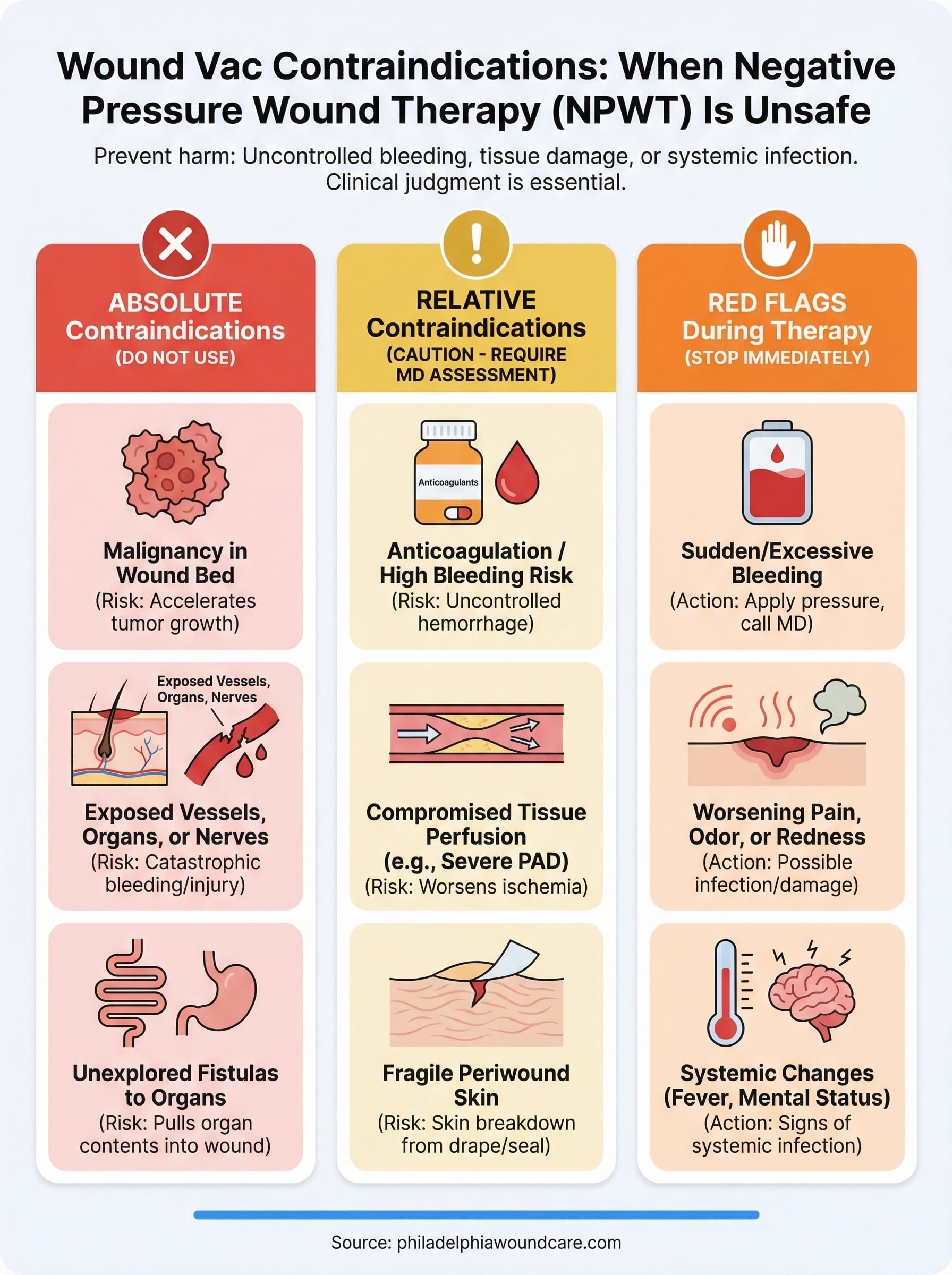
Active cancer tissue within or directly adjacent to the wound is a firm stop. Applying negative pressure to malignant tissue can stimulate angiogenesis and cell proliferation, which are the same biological mechanisms that support healing in healthy wounds but that directly accelerate tumor growth in cancerous ones. Your physician must confirm the wound bed is free of malignancy before ordering any NPWT device.
Exposed vessels, organs, and nerves
When a wound exposes major blood vessels, nerves, or anastomotic sites, placing a wound vac over that area creates an immediate hemorrhage and tissue injury risk. The suction draws on whatever it contacts. If that tissue is a vessel wall or a surgical anastomosis, the result can be catastrophic bleeding or wound dehiscence.
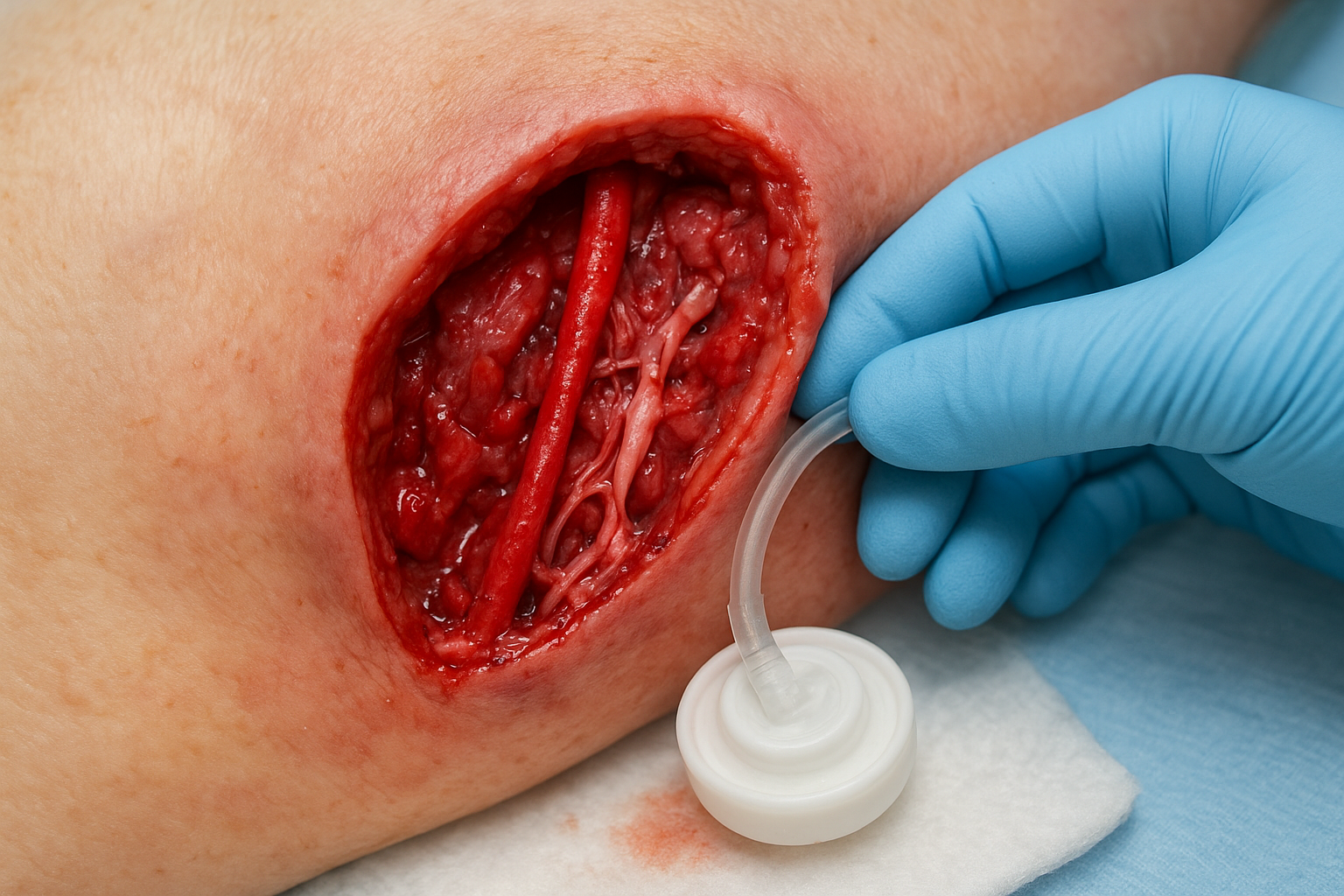
Wounds that communicate with body organs or unexplored fistulas carry the same absolute restriction. Suction applied to a fistulous tract connecting to the bowel, bladder, or pleural cavity can pull organ contents into the wound or create dangerous pressure gradients inside the body cavity. This is one of the most critical wound vac contraindications your clinical team must rule out before applying the device.
Relative contraindications and high-risk situations
Relative contraindications require clinical judgment rather than an outright ban on therapy. These are situations where NPWT may be appropriate, but only after your physician has weighed the specific risks against the expected benefit and put monitoring safeguards in place. Treating any of the following scenarios as low-risk is a mistake that can turn a manageable wound into a medical emergency.
Relative wound vac contraindications demand closer follow-up, shorter dressing change intervals, and a clear escalation plan before therapy begins.
Anticoagulation and bleeding risk
Patients on anticoagulant medications present an elevated bleeding risk when NPWT is applied. The suction draws fluid from the wound bed continuously, and if the tissue is friable or the wound contacts a small vessel, uncontrolled bleeding can develop between dressing changes before anyone catches it. Your care team needs to review current INR levels and medication dosing before approving therapy in this population. Common anticoagulants that raise this concern include:
- Warfarin
- Heparin (IV or subcutaneous)
- Apixaban, rivaroxaban, and other direct oral anticoagulants
Compromised tissue perfusion and fragile skin
Wounds in patients with severe peripheral arterial disease or significantly reduced tissue perfusion represent another high-risk category. When blood flow to the wound site is already inadequate, the additional mechanical stress of negative pressure can worsen ischemia rather than support healing. Your physician should confirm adequate arterial circulation through ankle-brachial index testing or vascular imaging before initiating NPWT in any patient with a known peripheral vascular history.
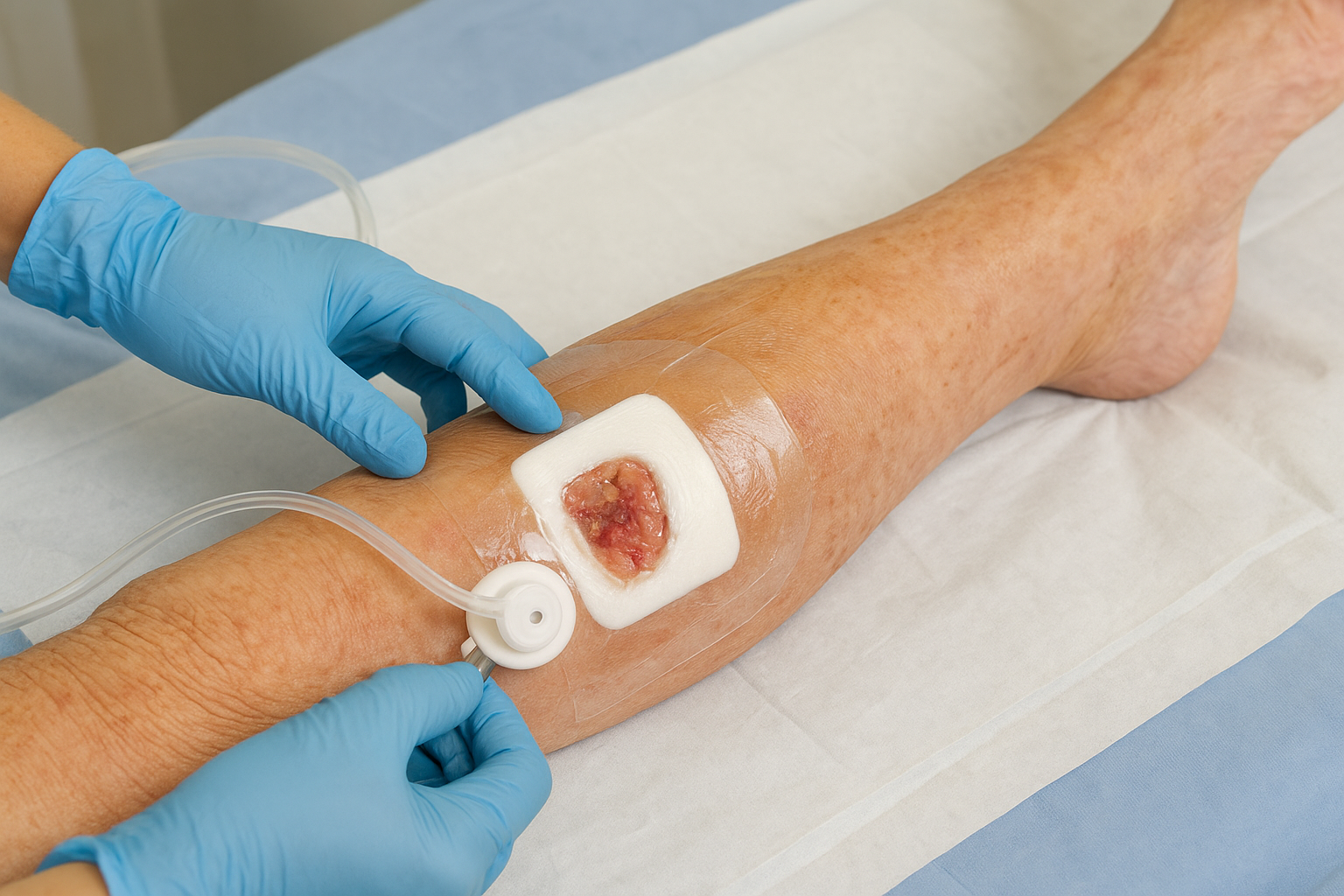
Fragile periwound skin also creates real problems. If the surrounding skin cannot hold the adhesive drape without breaking down, you lose the airtight seal and introduce new injury sites. This is especially common in elderly patients with thin, papery skin, where the drape itself becomes a source of trauma.
Red flags during therapy and when to stop
Even when NPWT starts appropriately, complications can develop after the device is already running. Knowing the warning signs that demand immediate action is just as important as understanding wound vac contraindications before therapy begins. Your care team needs a clear escalation protocol for recognizing when the wound vac is causing harm rather than supporting the healing process.
Signs that demand immediate device removal
Some changes at the wound site signal that therapy must stop right away. Sudden or excessive bleeding filling the collection canister rapidly or saturating the dressing is the most urgent red flag your team will encounter. Remove the device immediately, apply direct pressure to the wound, and contact the treating physician without delay.
Any active bleeding at the wound site that cannot be controlled is grounds for stopping NPWT therapy immediately, regardless of where the patient is in the treatment cycle.
Increasing wound pain, a foul odor, or spreading periwound redness during therapy are additional signals that something has gone wrong. These findings suggest a worsening wound infection or localized tissue damage being driven by the suction pressure itself rather than external contamination.
Systemic warning signs to watch for
Beyond the wound itself, watch carefully for systemic signs of deterioration in your patient. A new fever during NPWT, sudden changes in mental status, or declining vital signs can indicate the wound is functioning as an active source of systemic infection, one that ongoing suction may be accelerating rather than resolving.
Discontinue therapy and notify the physician promptly when you observe any of these systemic changes. Timely escalation protects your patient and prevents a localized wound complication from progressing into a life-threatening event that is far harder to reverse.
Key takeaways and getting help
Understanding wound vac contraindications is not optional for anyone involved in wound management decisions. The absolute limits, including malignancy in the wound bed, exposed vessels, and unresolved fistulas, remove NPWT from the table entirely. Relative contraindications, such as anticoagulation use, poor tissue perfusion, and fragile periwound skin, require careful physician review before therapy starts. Equally important is recognizing red flags during treatment so your care team can act before a manageable complication becomes a serious emergency.
Every patient deserves a thorough clinical evaluation before a wound vac is ordered, and that evaluation should always happen under physician oversight. If your patient or loved one has a complex wound that is not healing, or if you are unsure whether NPWT is safe given their medical history, professional assessment is the right next step. Contact our team directly through our mobile wound care services in Philadelphia to get that process started.