

Systagenix Wound Management: Products, Uses, Where To Buy
Choosing the right wound dressing can directly affect how quickly and effectively a chronic wound heals. Systagenix wound management products, including well-known lines like Adaptic, Promogran, and Tielle, have been a go-to choice for clinicians treating diabetic ulcers, pressure injuries, and surgical wounds for years. But if you’re a patient, caregiver, or facility manager trying to figure out what these products actually do and where to get them, the information isn’t always easy to pin down.
At Philadelphia Wound Care, our physician-led mobile practice regularly selects and applies advanced wound dressings at the bedside, in private homes, skilled nursing facilities, and hospice settings across the Philadelphia area. We work with these types of products daily, so we understand how each one fits into a broader treatment plan tailored to the patient’s specific wound.
This article breaks down the Systagenix product catalog, explains what each dressing is designed for, and points you toward reliable purchasing options. Whether you’re a clinician restocking supplies or a family caregiver trying to understand what’s being used on your loved one’s wound, you’ll find practical, straightforward answers below.
Why Systagenix wound management matters
Wound dressings are not interchangeable. A dressing that works well on a surgical incision can actually delay healing when applied to a diabetic foot ulcer. Systagenix wound management products are clinically designed to address this problem by targeting specific wound types with the appropriate moisture balance, antimicrobial action, or tissue contact surface.
The cost of getting wound care wrong
When a wound receives the wrong dressing, healing stalls and infection risk climbs. What could have been a short recovery turns into months of complications, additional physician visits, and in severe cases, hospitalization or amputation. For elderly patients or those with underlying conditions like diabetes or vascular disease, the margin for error is narrow.
Choosing the wrong wound dressing does not just slow healing; it can introduce new problems that require separate treatment entirely.
Chronic wounds cost the U.S. healthcare system an estimated $28 billion per year, according to published clinical literature, with a significant portion of that burden tied to avoidable complications. Using a clinically validated product line from the start reduces that risk considerably.
Why clinicians trust established wound care brands
Clinicians who treat wounds regularly rely on product lines with documented performance data across diverse patient populations. Systagenix, now part of Acelity and subsequently 3M, built its reputation over decades of clinical use in hospitals, wound care clinics, and home health settings. That history matters when you are managing a wound that has not responded to basic treatment.
Knowing why these products exist and what problems they solve helps you have more informed conversations with your care team and make better decisions for the patient in your care.
Systagenix product line overview and key features
Systagenix wound management covers several distinct product families, each built around a specific clinical problem. Understanding the differences between these lines helps you and your care team select the right dressing for the right wound at the right time.
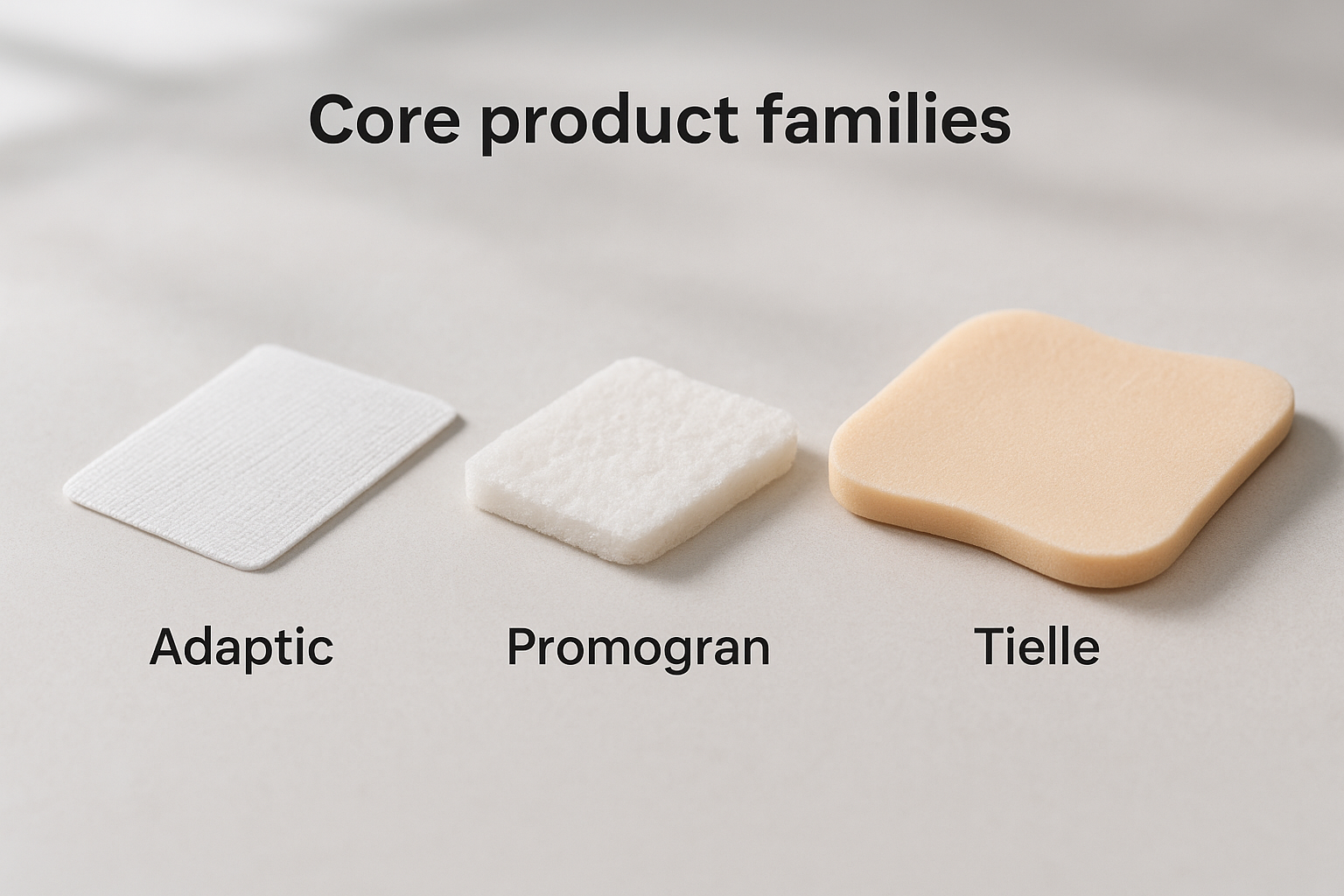
Core product families
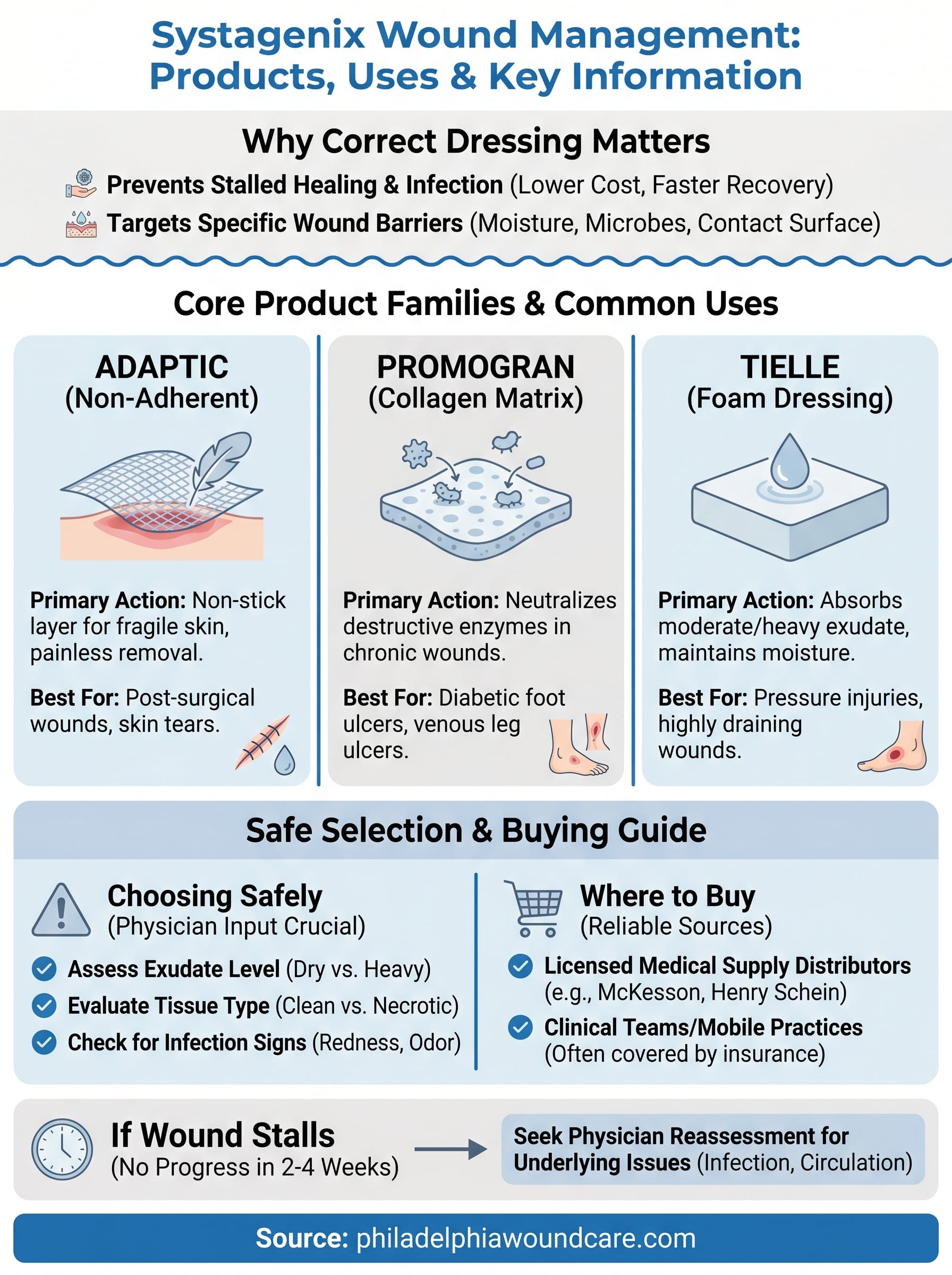
Three products define the bulk of what Systagenix offers. Adaptic is a non-adherent contact layer dressing designed to sit directly against wound tissue without sticking, which makes dressing changes less painful and less traumatic to fragile skin. Promogran is an oxidized regenerated cellulose and collagen matrix that works by inactivating destructive enzymes in chronic wounds, helping the wound shift into an active healing state. Tielle is a foam-based dressing built for moderate to heavily exuding wounds, absorbing excess fluid while maintaining the moist environment that supports tissue repair.
What sets these products apart
Most basic dressings simply cover a wound. Systagenix products are designed to actively interact with wound biology, not just protect the surface.
That distinction matters most for patients dealing with stalled wounds where passive coverage has already failed to produce results.
Each product targets a specific barrier to healing, whether that barrier is adherence, enzyme activity, or fluid management, giving clinicians a more precise tool for each stage of recovery.
Common uses by wound type and care setting
Systagenix wound management products are used across a wide range of clinical environments, from post-surgical follow-up to long-term chronic wound management. Understanding which product fits which wound type helps you have a more informed conversation with your care team and avoid delays in treatment.
Matching dressings to wound type
Different wounds create different healing barriers, and selecting the right product depends on the stage and type of wound you are treating.
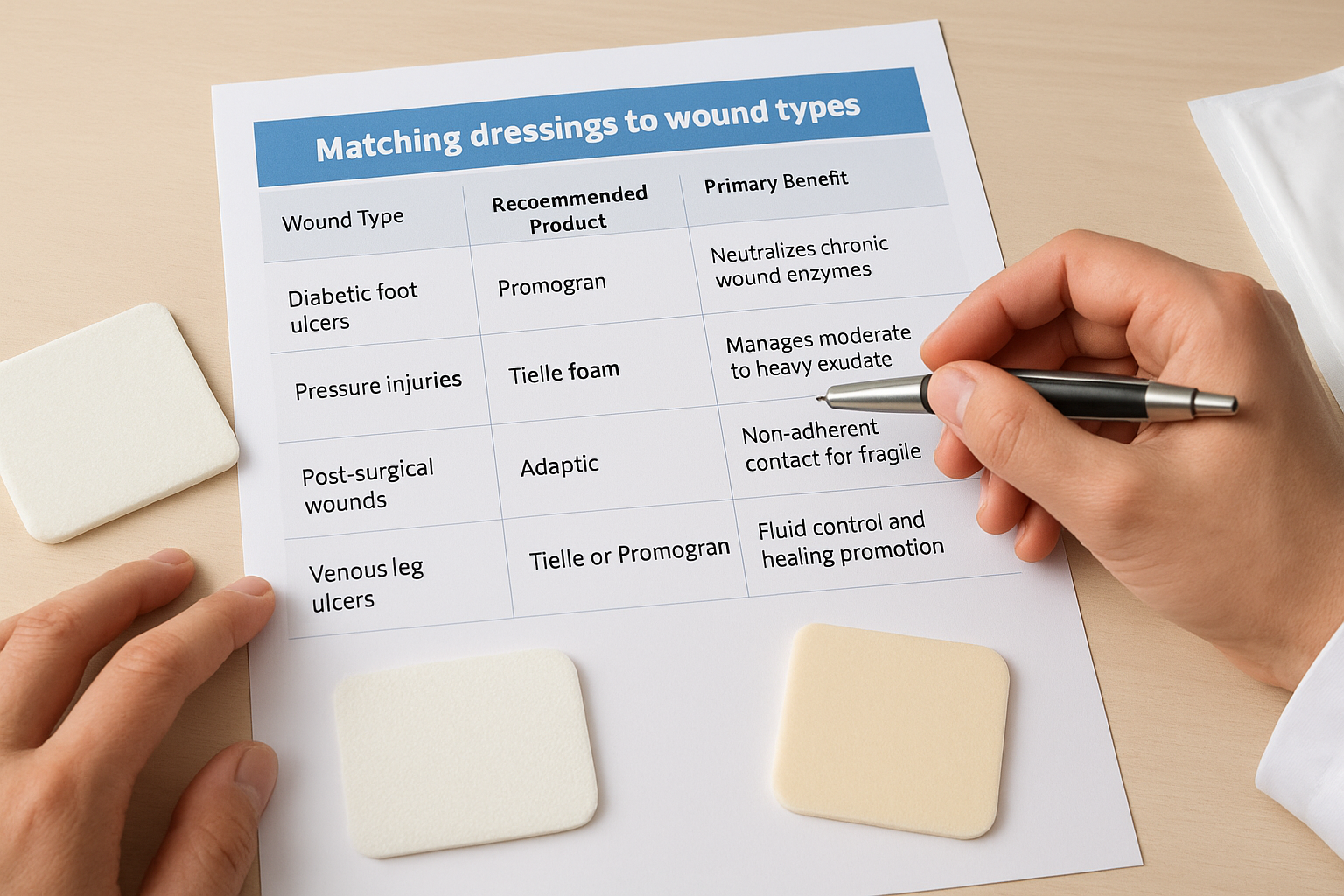
| Wound Type | Recommended Product | Primary Benefit |
|---|---|---|
| Diabetic foot ulcers | Promogran | Neutralizes chronic wound enzymes |
| Pressure injuries | Tielle foam | Manages moderate to heavy exudate |
| Post-surgical wounds | Adaptic | Non-adherent contact for fragile tissue |
| Venous leg ulcers | Tielle or Promogran | Fluid control and healing promotion |
Care settings where these products are used
These dressings are applied regularly in skilled nursing facilities, private homes, and hospice care. In a mobile wound care practice, a physician assesses the wound at your bedside and selects the appropriate dressing based on wound depth, exudate level, and tissue quality.
The care setting shapes which product format works best, since some dressings require secondary coverage or specific application conditions.
Your physician will also factor in dressing change frequency and your mobility level when choosing between options, since certain products stay in place for multiple days while others require daily attention.
How to choose the right Systagenix dressing safely
Choosing the right Systagenix wound management product starts with an accurate wound assessment. Before you select any dressing, you need to evaluate wound depth, the amount of fluid the wound is producing, and whether infection is present. Skipping this step risks applying a product that works against your healing goals rather than supporting them.
Never select a wound dressing based on packaging alone; wound characteristics change over time and require regular reassessment.
Key factors to evaluate before selecting a dressing
Three factors drive every safe dressing selection: exudate level, tissue type, and wound location. A heavily draining wound needs a high-absorbency product like Tielle, while a dry or minimally exuding wound responds better to Promogran or Adaptic. Your physician should also confirm whether the wound shows any signs of infection or necrotic tissue before applying any advanced dressing, since certain products require a clean wound bed to work effectively.
When to involve a physician before applying
Self-managing a wound without professional input carries real clinical risks. If you are a caregiver applying a dressing at home, consult your physician before switching products, especially when the wound appears deeper, more inflamed, or shows new discoloration. A trained clinician can reassess the wound and confirm the right product for the current stage of healing.
Where to buy Systagenix dressings and supplies
Finding Systagenix wound management products through the right channel matters, because counterfeit or improperly stored medical dressings can compromise wound outcomes. Your safest options are licensed medical supply distributors and healthcare procurement platforms that source directly from verified manufacturers.
Purchasing wound care products through unverified third-party sellers introduces real risk, since improper storage conditions can degrade dressing performance before the package even opens.
Online medical supply platforms
Several established online medical supply retailers carry Systagenix products, including Adaptic, Promogran, and Tielle lines. Amazon Business stocks many of these dressings and restricts certain listings to verified healthcare buyers, which adds a layer of sourcing reliability. You can also find bulk purchasing options through platforms like McKesson Medical-Surgical or Henry Schein, both of which serve licensed healthcare providers and facilities directly.
Ordering through your clinical team
If you are a patient or family caregiver, the most reliable path is to have your physician or wound care specialist source the dressing directly. Mobile wound care practices often supply dressings as part of the visit, billing your Medicare or commercial insurance accordingly, which removes the burden of sourcing and storing products on your own.
Next steps if a wound is not healing
Even the best systagenix wound management products cannot substitute for professional clinical oversight when a wound stops responding to treatment. If you have been applying dressings consistently but see no measurable improvement after two to four weeks, that is a clear signal to escalate care rather than continue with the same approach.
Stalled wounds often indicate an underlying problem, such as infection, poor circulation, or inadequate moisture balance, that a dressing alone cannot resolve. Your wound needs reassessment by a physician who can evaluate tissue quality, rule out infection, and adjust the treatment plan based on current wound conditions.
Philadelphia Wound Care provides physician-led mobile evaluations directly at your bedside, in private homes, skilled nursing facilities, and hospice settings across the Philadelphia area. You do not need to travel to access expert wound care from a specialist. Request a mobile wound care visit and get a physician to your door within 24 hours.