

Helistat Collagen Sponge: Uses, Indications, And Safety
When a surgeon needs to control bleeding quickly during a procedure, the choice of hemostatic agent matters. Helistat collagen sponge is one of the most widely used absorbable hemostats in surgical and dental settings, valued for its ability to promote rapid platelet aggregation at the wound site.
Understanding how products like Helistat work is especially relevant for patients recovering from surgery, many of whom we treat through our mobile wound care practice here in Philadelphia. At Philadelphia Wound Care, our physician-led team manages post-surgical wounds at the bedside, and we regularly encounter healing sites where collagen-based hemostats were applied during the original procedure. Knowing what was placed in or on a wound helps us tailor our treatment approach during recovery.
This article breaks down what Helistat collagen sponge is, how it’s used clinically, its approved indications, and the safety considerations both clinicians and patients should be aware of. Whether you’re a healthcare professional evaluating hemostatic options or a patient trying to understand what was used during your procedure, you’ll find the key details here.
What Helistat collagen sponge is
Helistat collagen sponge is a sterile, absorbable hemostatic agent made from purified bovine corium collagen. Produced in a porous sponge format, it is designed for direct placement at a bleeding site during surgical or dental procedures, where it physically supports the body’s natural clotting cascade. Because it is fully absorbable, the clinician does not need to retrieve it after the procedure ends, which reduces handling time and the risk of disturbing the clot.
The material behind the product
The primary ingredient is Type I collagen, sourced and purified from bovine (cattle) hide. Collagen of this type has a long track record in medical devices because of its biocompatibility and predictable rate of absorption. The body gradually breaks it down through normal enzymatic activity, and in most cases, absorption is complete within weeks of placement without triggering a significant inflammatory response.
Type I collagen’s ability to directly activate platelets is what separates collagen-based hemostats from simple mechanical pressure approaches.
Physical characteristics and regulatory status
The sponge structure is compressible and porous, which allows it to conform to irregular surgical cavities and wound beds rather than sitting flat against tissue. When you press it against a bleeding surface, it maintains contact and does not shift, which is essential for effective platelet aggregation and fibrin mesh formation. The FDA classifies Helistat as a Class II medical device under 510(k) clearance, meaning it has demonstrated substantial equivalence to a legally marketed predicate device and meets specific performance controls before reaching clinical use.
Why clinicians use it for hemostasis
Bleeding control is one of the most critical tasks in any surgical or dental procedure, and if you work in a clinical setting, you reach for absorbable hemostatic agents when sutures or direct pressure alone fall short. Helistat collagen sponge fits this role well because it works with the body’s own clotting mechanism rather than relying on external chemicals or synthetic materials.
Clinical advantages over other hemostatic options
When you weigh hemostatic options, the absorbable nature of collagen-based products eliminates a retrieval step, which reduces procedure time and lowers the chance of disrupting an early clot. Collagen activates platelets directly and rapidly, shortening the window between application and effective hemostasis. This matters most when your patient may be on anticoagulants or presents with impaired clotting function, where uncontrolled bleeding carries significant added risk.
Collagen’s direct platelet activation makes it more reliable than passive mechanical pressure in complex or deep wound cavities.
Both general surgeons and oral surgeons report consistent performance across different tissue types and wound geometries. You can apply it in open surgical fields as well as confined intraoral spaces, which reflects the practical versatility that procedural teams value in a hemostatic agent.
How Helistat works to stop bleeding
When you place Helistat collagen sponge against a bleeding surface, the collagen fibers in the sponge make direct contact with circulating platelets in the blood. This contact triggers platelet adhesion and aggregation, which is the first critical step in forming a stable clot. The sponge acts as a structured scaffold that concentrates platelet activity exactly where you need it, rather than relying on systemic clotting factors to reach the site on their own.
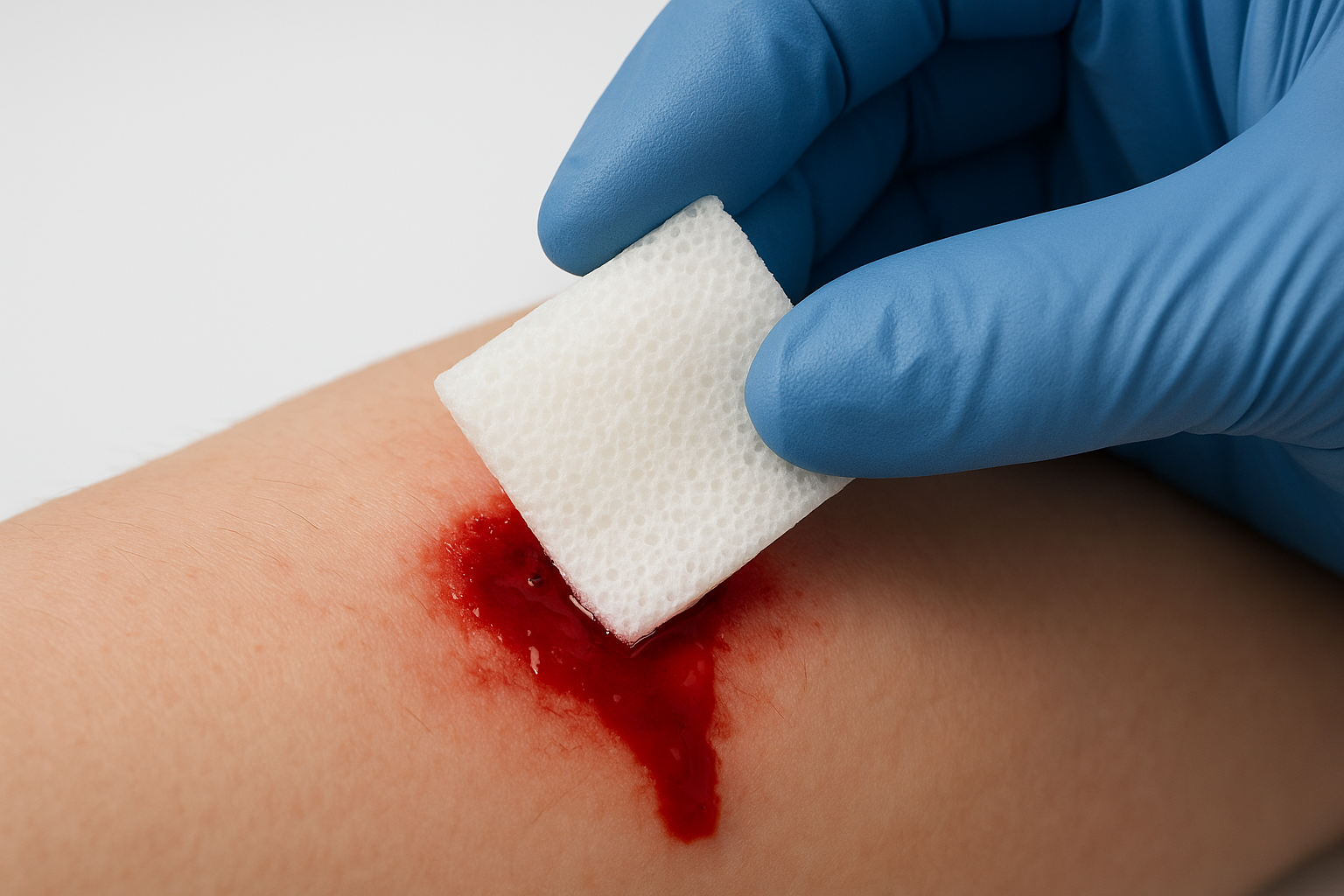
The collagen matrix does not introduce external clotting factors; it accelerates the body’s own hemostatic response by providing a physical surface for platelet binding.
From platelet plug to fibrin clot
Once platelets bind to the collagen matrix, they release chemical signals that recruit additional platelets to the site. This amplification builds a growing platelet plug, which then triggers the coagulation cascade downstream. The cascade converts fibrinogen into fibrin, laying down a mesh of threads that reinforce the platelet plug into a firm, durable clot.
Your patient’s own clotting health influences how quickly fibrin formation completes, but the structural support the sponge provides stays consistent regardless of wound geometry or depth. As hemostasis concludes, the body’s natural enzymes gradually break down the sponge, eliminating any retrieval step.
How clinicians apply Helistat in procedures
You apply Helistat collagen sponge directly to the bleeding surface using dry gloved hands or smooth forceps, pressing it firmly against the tissue and holding it there for several minutes. Moisture from the blood activates the collagen’s contact with platelets, so sustained pressure matters as much as proper placement. Lifting the sponge too early before hemostasis is complete disrupts the developing platelet plug and forces you to restart the process.
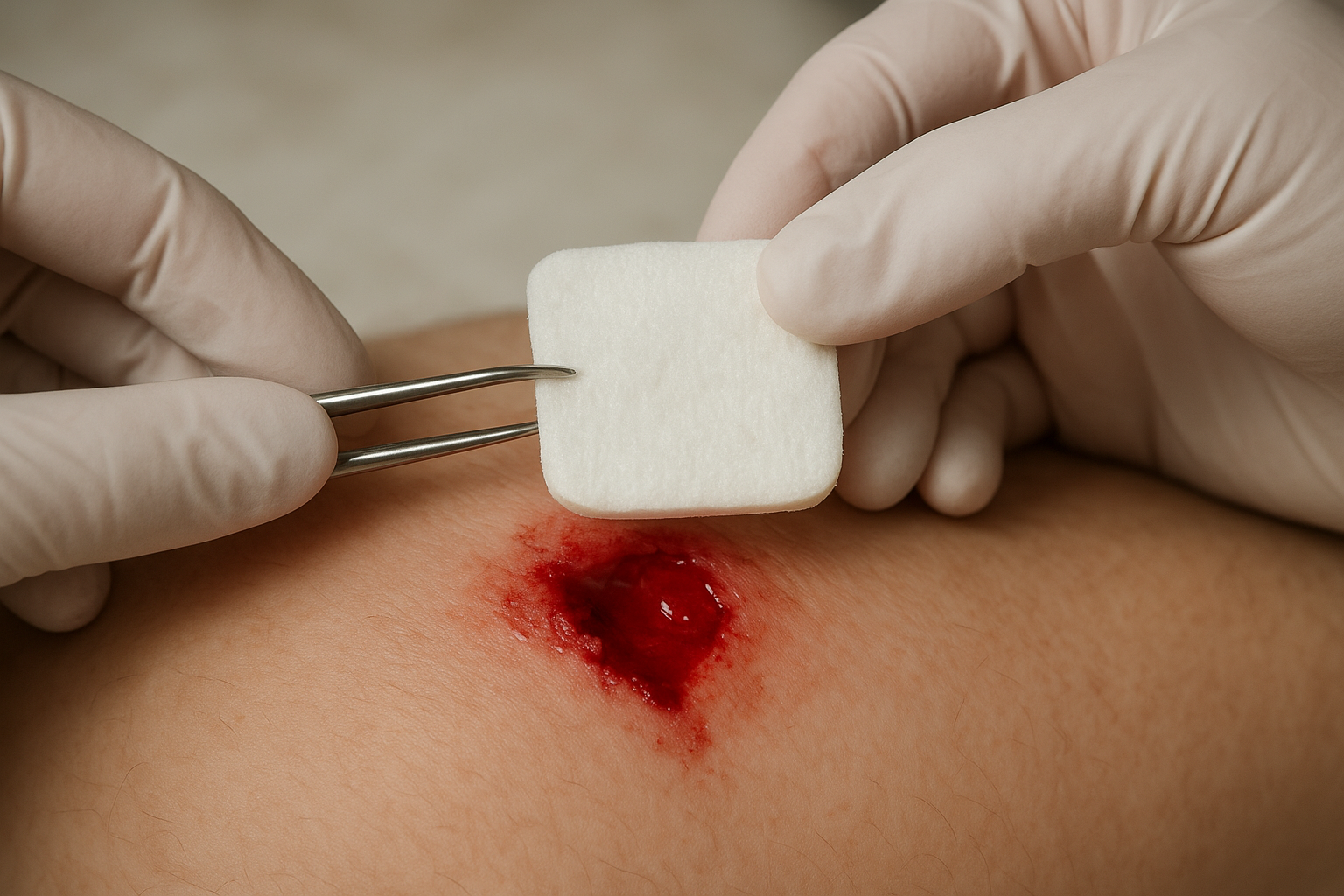
Sizing and preparation before placement
Before you place the sponge, cut it to match the dimensions of the bleeding site. This step ensures complete surface contact and prevents excess material from bunching at the wound edges. You do not need to pre-moisten the sponge; blood provides all the moisture needed to initiate the hemostatic response effectively.
Trimming Helistat to fit the wound before placement improves contact quality and reduces the risk of disrupting an early clot.
Removal or retention after hemostasis
Once bleeding stops, you have two options depending on the procedure and wound type:
- Leave it in place: The sponge absorbs naturally through enzymatic breakdown and does not require retrieval, reducing handling at the wound site.
- Remove before closure: Wet it with sterile saline first to loosen the material without disturbing the clot that has already formed.
Safety, precautions, and when to avoid it
Helistat collagen sponge carries a strong safety profile when used correctly, but several conditions require careful consideration before you reach for it. Because the collagen is bovine-derived, patients with a known sensitivity to bovine materials are not candidates for this product. You should confirm this allergy history before the procedure begins, not after placement.
Skipping a bovine sensitivity check before applying any collagen-based hemostat puts your patient at unnecessary risk.
Contraindications to know before placement
You must not apply Helistat in infected or contaminated wound sites, as placing an absorbable material in an infected field can trap bacteria and worsen the infection rather than support healing. Similarly, closing a wound over the sponge is contraindicated unless hemostasis is confirmed and the site is clean, because retained material in an unsecured wound bed increases the risk of complications.
Precautions during use
Avoid packing the sponge too tightly into confined cavities such as bone or neural spaces, as the material swells when it absorbs blood and can exert unwanted pressure on surrounding structures. You should also use only the amount needed to cover the bleeding site, trimming excess material before placement to reduce the volume of absorbable material left behind.
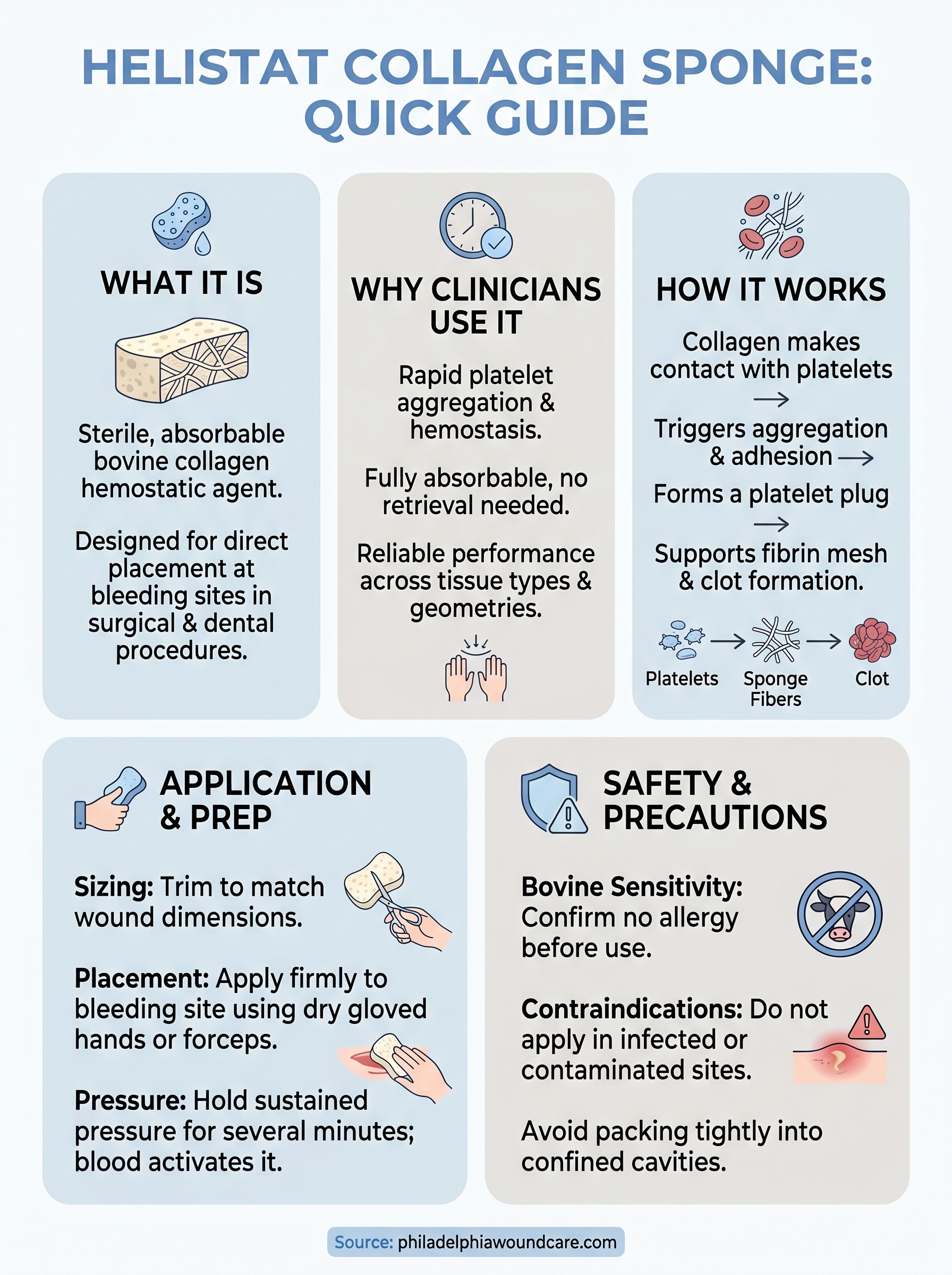
Next steps
Helistat collagen sponge gives clinicians a reliable, absorbable option for managing intraoperative and post-procedural bleeding across surgical and dental settings. Its collagen matrix activates platelets directly, supports fibrin clot formation, and breaks down naturally without requiring retrieval in most cases. Using it correctly means confirming bovine sensitivity beforehand, trimming it to fit the wound, applying firm sustained pressure, and avoiding placement in infected sites or tightly confined cavities.
For patients recovering from surgery in the Philadelphia area, what happens after a procedure is just as important as what happened during it. Post-surgical wound healing requires the same level of clinical attention, and that care should come to you rather than requiring difficult travel to a clinic. If you or someone you care for is managing a surgical wound at home or in a facility, our physician-led team is ready to help. Contact us to learn more about our mobile wound care services in Philadelphia.