

Telewound Care Services: How They Work And Who They Help
Not every wound heals on schedule. For patients managing diabetic ulcers, pressure injuries, or post-surgical complications, getting timely access to a wound care specialist can be the difference between recovery and a dangerous setback. Telewound care services have emerged as a practical solution to that access problem, connecting patients with clinical expertise through remote monitoring, virtual consultations, and digital assessment tools without requiring a trip to a clinic or hospital.
At Philadelphia Wound Care, we’ve built our entire practice around eliminating barriers to specialist-level wound management. Our physician-led mobile model already brings advanced wound treatments directly to patients at home, in skilled nursing facilities, and in hospice settings across the Philadelphia area. Telewound care fits naturally into that mission, extending the reach of clinical oversight to moments between in-person visits when wounds need to be tracked and treatment plans adjusted.
But what exactly do these services include? How does a wound get properly evaluated through a screen? And who benefits most from this approach? This article breaks down how telewound care works in practice, from the technology platforms involved to the clinical workflows that keep remote assessments accurate and reliable. Whether you’re a patient or caregiver exploring your options, or a facility administrator looking to strengthen your wound care protocols, you’ll find a clear picture of what these services offer and where they fit into a broader treatment plan.
Why telewound care services matter
Chronic wounds affect roughly 6.5 million people in the United States each year, and that number keeps rising as the population ages and diabetes rates climb. The problem isn’t only the wounds themselves. It’s the gap between when a wound changes and when a specialist actually sees it. That gap is where complications develop, infections take hold, and otherwise manageable wounds turn into medical emergencies requiring hospitalization.
The access gap in wound care
Getting to a wound care clinic is harder than it sounds for most patients dealing with serious wounds. Many are elderly, use wheelchairs or mobility aids, or live in areas where specialist clinics are scarce or far away. Even patients in a city like Philadelphia may face transportation barriers, recovery limitations after surgery, or the physical reality that moving a fragile wound increases pain and infection risk. You shouldn’t have to choose between protecting a wound and getting it evaluated, but that is the choice many patients face under a traditional, clinic-only model.
Skilled nursing facilities and assisted living communities face a version of the same problem. A resident develops a new pressure injury, or a post-surgical wound starts showing signs of deterioration. The facility staff identifies the concern, but arranging a specialist visit can take days during which the wound may worsen significantly. Telewound care services fill that window by enabling a clinician to assess the wound remotely and direct immediate adjustments to the care plan before the situation escalates.
The time between noticing a wound change and receiving expert guidance is often where the most preventable damage occurs.
How delayed care makes wounds worse
Wounds don’t wait. A diabetic foot ulcer that looks stable on Monday can develop a serious infection by Thursday if circulation is poor and surrounding tissue is breaking down. Pressure injuries can advance an entire stage within 24 to 48 hours in patients with limited mobility and impaired sensation. Every day without proper clinical guidance is a day the wound progresses without any expert course correction.
The financial cost of that delay adds up quickly. Wound complications drive a significant share of hospital readmissions in post-acute care settings, and treating an infected or deteriorating wound costs substantially more than maintaining one that is healing on track. Regular remote monitoring and timely virtual consultations reduce that risk by keeping clinical oversight consistent rather than episodic.
What remote oversight actually changes
Regular remote oversight shifts wound care from a reactive model to a proactive one. Instead of waiting for a scheduled in-person appointment, a clinician can review wound photographs, assess measurement data, and flag early warning signs before they escalate into urgent problems. Treatment adjustments happen faster, dressings get updated sooner, and the caregivers managing your wound day-to-day receive clearer, more current guidance based on what they are actually observing.
For family caregivers, this kind of access provides something that is hard to put a value on: confidence that a clinical expert is watching. Caring for a wound at home without specialist support is stressful and often isolating. Knowing that a physician can review your wound images within hours and confirm whether what you are seeing is expected, or flag that it is not, changes the experience of caregiving significantly. Telewound care services do not replace hands-on treatment, but they make the time between those treatments safer, more structured, and better managed for everyone involved.
What counts as telewound care services
The term gets used loosely, so it helps to understand exactly what falls under the telewound care services umbrella and what does not. At its core, telewound care refers to clinical wound management activities performed remotely, using technology to transmit patient information, wound images, and treatment data to a qualified clinician who then provides evaluation, guidance, or direct care decisions. It is not a single tool or platform. It is a structured set of clinical workflows that extend specialist oversight beyond the physical walls of a clinic.
Remote wound assessment and monitoring
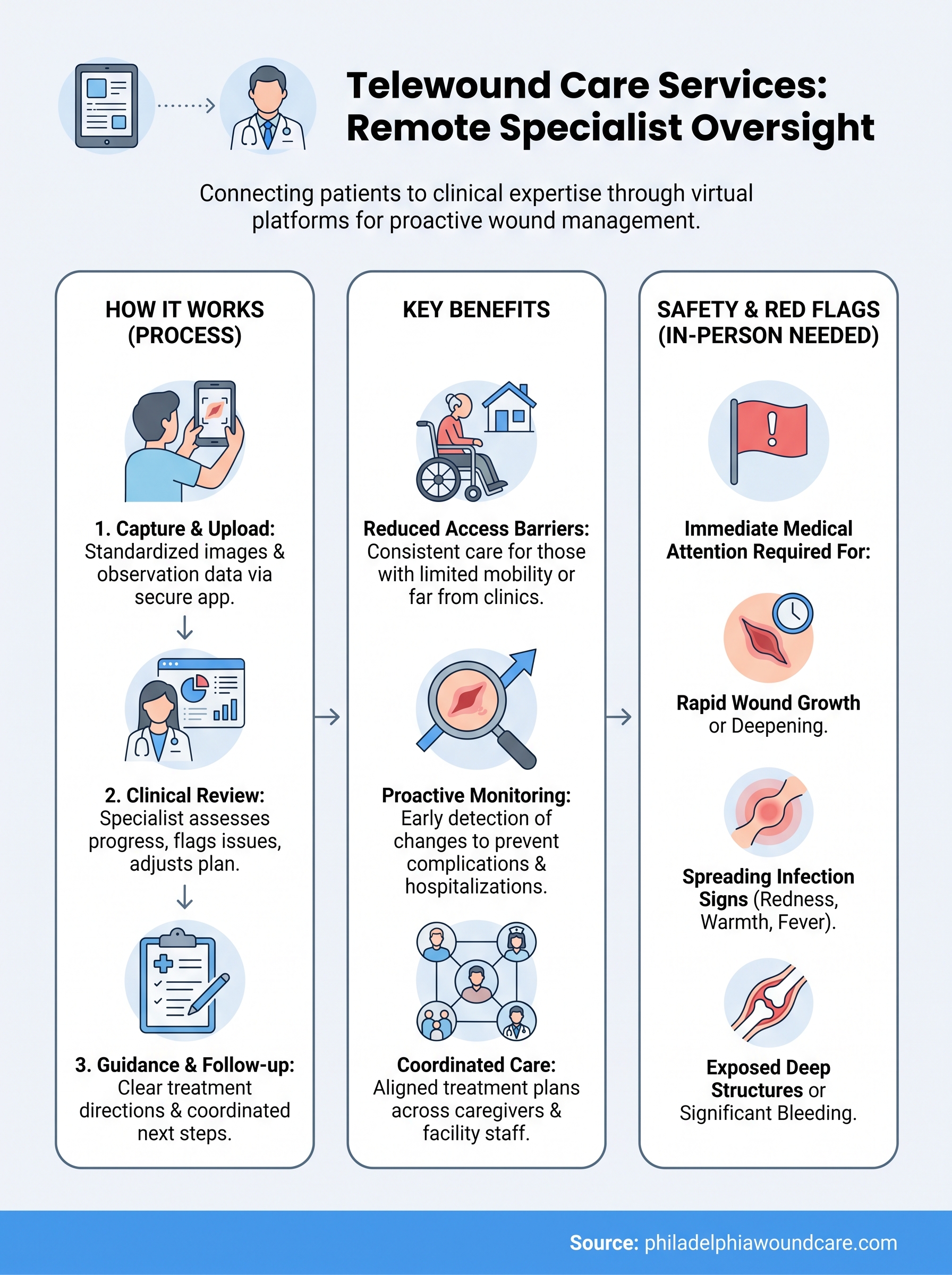
Remote assessment is the foundation of telewound care. A caregiver, nurse, or patient captures standardized photographs of the wound at regular intervals, often using a smartphone or a dedicated imaging device with built-in measurement capabilities. Those images are uploaded to a secure clinical platform where a physician or wound care specialist reviews them, tracks changes in wound dimensions, and evaluates tissue quality, drainage, and signs of infection.
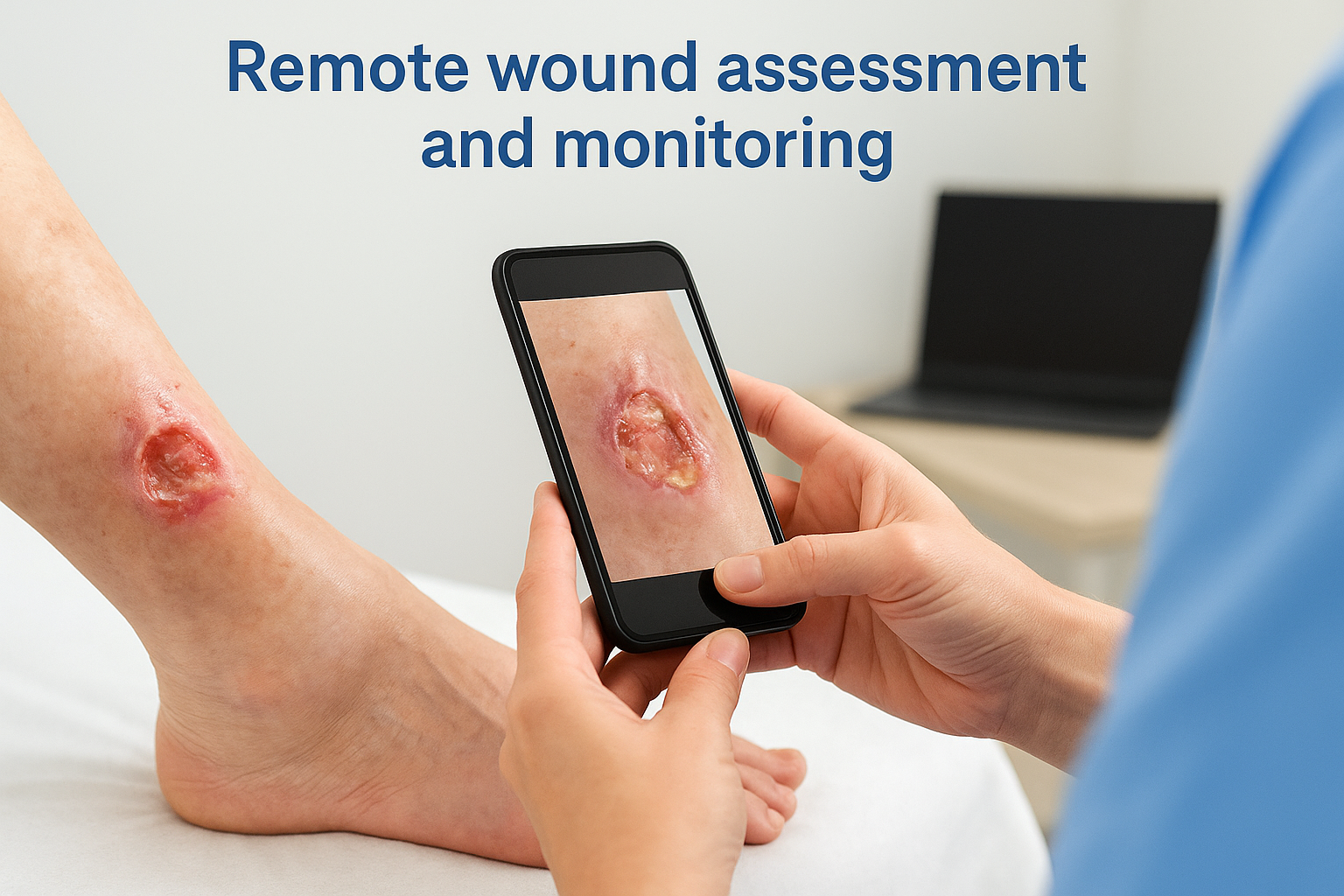
Consistent, standardized image capture is what separates useful remote monitoring from a blurry photograph sent through a text message.
Many platforms add structured data collection alongside the images, prompting caregivers to record odor, pain levels, surrounding skin condition, and dressing status. This additional context gives the reviewing clinician a more complete picture and reduces the risk of misinterpretation based on images alone.
Virtual consultations and care coordination
Beyond passive monitoring, telewound care includes live video consultations between a clinician and either the patient, a family caregiver, or a facility nurse. During these sessions, the clinician can walk through dressing changes in real time, answer questions about wound progression, and update treatment orders based on what they observe on screen. This format works well for patients whose wounds are stable but still require routine clinical oversight between scheduled in-person visits.
Care coordination functions are also part of the service model. A telewound clinician may communicate directly with a referring physician, update facility care plans, or coordinate supply orders for specialized dressings and therapies. These activities keep the entire care team aligned without requiring everyone to be physically present at the same time.
What does not qualify
Sending a wound photo through a personal messaging app without clinical review does not qualify. Neither does a general telehealth appointment with a primary care physician who lacks wound care training. Telewound care requires a qualified wound specialist reviewing standardized clinical data through a secure, compliant platform and responding with documented clinical guidance.
Who telewound care helps most
Telewound care services reach a specific kind of patient: someone who needs consistent specialist-level oversight but faces real obstacles to getting it in a traditional clinic setting. That description fits more people than you might expect, spanning several distinct patient groups and care environments. Understanding who benefits most helps you decide whether this model makes sense for your situation or for someone you are supporting.
Elderly patients and those with limited mobility
Older adults make up the largest share of patients managing chronic wounds, and they also face the most significant barriers to in-person clinic visits. Reduced mobility, transportation challenges, and the physical risk of moving a fragile wound all work against regular clinic attendance. For patients who use wheelchairs, walkers, or rely on others for transportation, a remote monitoring visit removes the logistical burden entirely and keeps specialist oversight consistent.
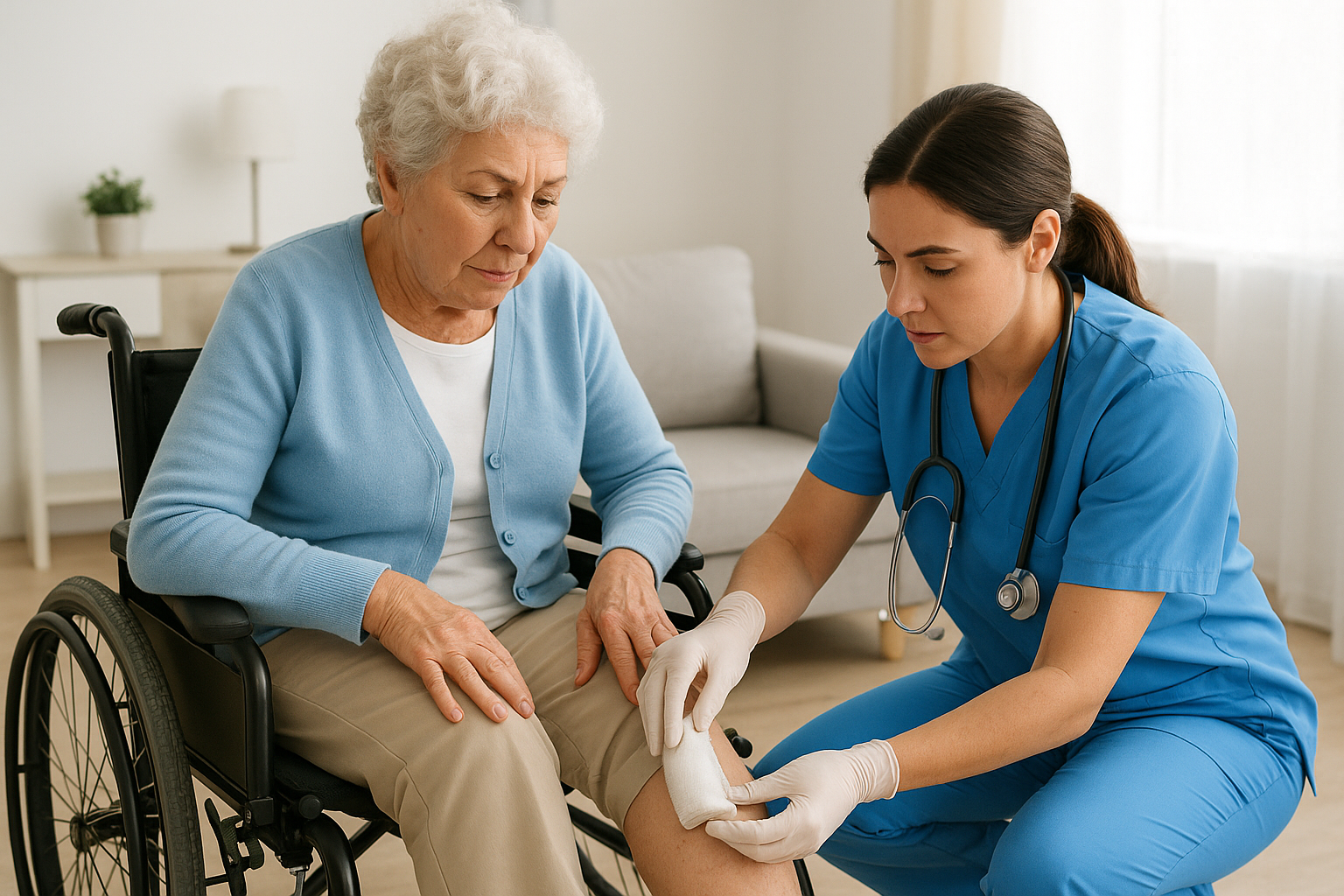
Regular remote check-ins mean that an elderly patient does not have to miss a wound assessment simply because no one is available to drive them across town.
Patients recovering from surgery or hospitalization also fall into this group. Post-acute recovery often limits travel, and the wound healing period is precisely when close monitoring matters most.
People managing chronic conditions like diabetes
Diabetic patients carry a significantly elevated risk of developing foot ulcers, and those ulcers are prone to rapid deterioration without expert monitoring and timely intervention. The combination of peripheral neuropathy and poor circulation means changes can progress quickly and without obvious pain signals to alert the patient. Remote wound assessment allows a clinician to track measurements and tissue quality on a regular schedule, catching early signs of infection or breakdown before they require emergency care.
Patients with vascular disease, obesity-related complications, or autoimmune conditions that affect healing follow a similar pattern. Their wounds require ongoing management rather than occasional check-ins, and telewound care provides a structure for that continuity.
Residents in skilled nursing and assisted living facilities
Facility residents benefit because on-site nursing staff often lacks advanced wound care training, and arranging an in-person specialist visit can take days. Telewound care closes that gap by connecting facility nurses directly with a wound specialist who reviews images, updates the care plan, and provides clear clinical direction between scheduled visits.
Family caregivers managing wounds at home
If you are a family caregiver changing dressings, tracking wound size, and making judgment calls without clinical backup, remote access to a wound specialist changes your situation significantly. Documented guidance and timely responses reduce the uncertainty that makes home wound care so stressful.
How telewound care visits work step by step
A telewound care visit follows a structured clinical workflow that looks different from a general telehealth call. Rather than simply connecting a patient with any available provider through video, telewound care services involve a defined sequence of steps designed to give the reviewing clinician enough standardized, documented information to make sound treatment decisions from a distance. Understanding each stage helps you prepare and get the most out of every remote interaction.
Before the visit: scheduling and image capture
The process starts before any images get taken. A care coordinator or intake team confirms the visit, verifies insurance, and collects relevant clinical history including current wound status, dressing materials in use, and any symptoms that have changed since the last assessment. Providing accurate intake information at this stage gives the reviewing clinician essential context before they evaluate a single image, which directly improves the precision of their assessment.
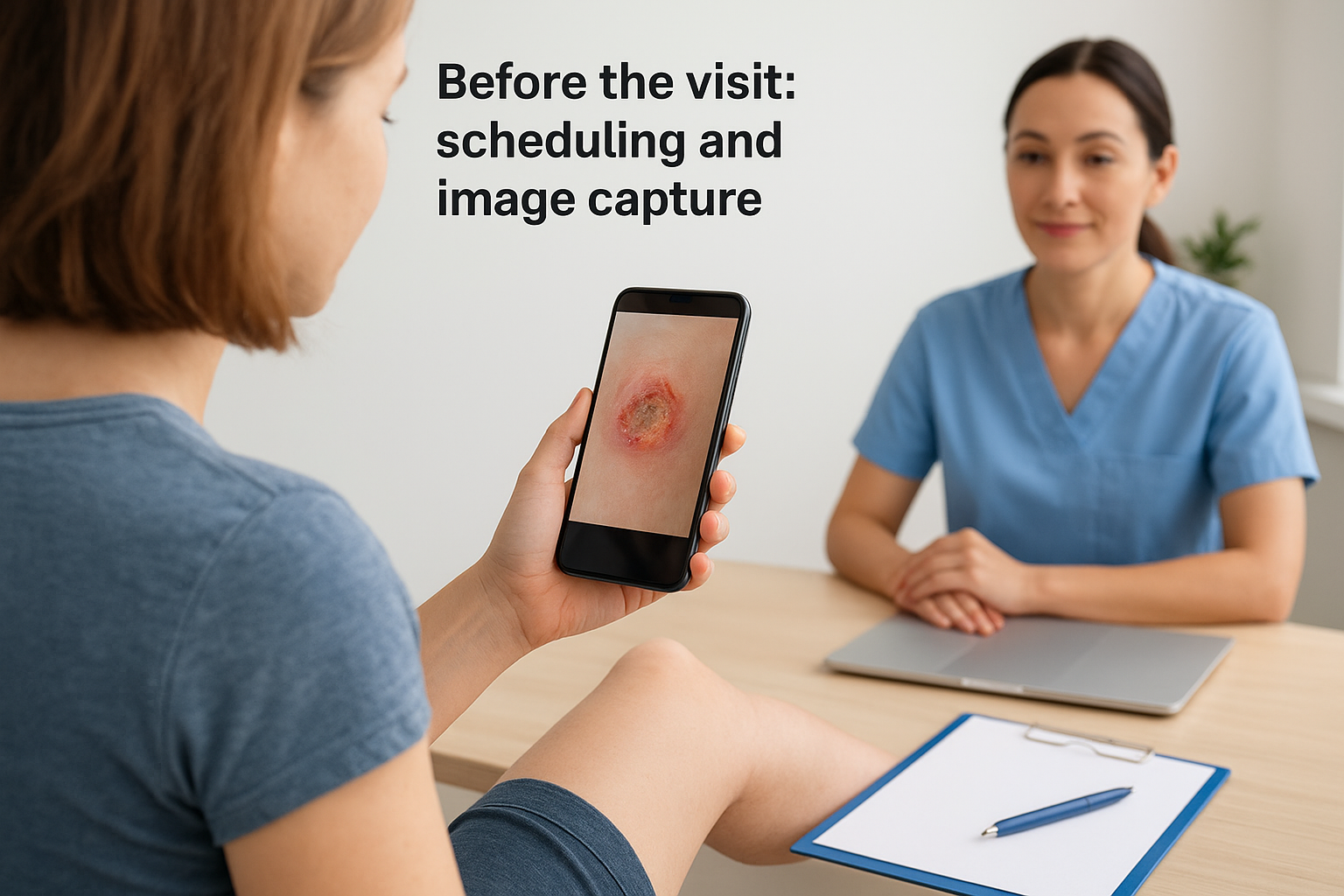
Once intake is complete, you or an on-site nurse captures standardized photographs of the wound using a smartphone or an imaging device with built-in measurement guidance. Most platforms walk you through required angles and distances to ensure consistency across visits. Alongside the images, you complete a structured observation form that documents pain level, drainage volume and color, odor, and the condition of the surrounding skin. Both the images and the form upload to a secure, HIPAA-compliant platform where the clinician accesses them for review.
Consistent image angles and thorough observation notes are what allow a clinician to measure real wound progression accurately across multiple remote visits.
During review and after: treatment decisions and follow-up
The wound care specialist reviews your uploaded images and observation data against previous assessments, tracking changes in wound dimensions, tissue composition, and any signs of deterioration. Based on that comparison, the clinician updates the treatment plan, which may involve adjusting dressing protocols, ordering specialized supplies, flagging early infection indicators, or scheduling an urgent in-person visit if the wound shows warning signs that cannot be safely managed remotely. The updated plan gets documented and distributed to you, any caregivers involved, and other providers on the care team.
After the review, you receive clear written guidance explaining what the clinician found and what actions to take before the next check-in. If the session included a live video consultation, the clinician walks through the updated plan with you or the facility nurse directly, answering questions in real time. The final step in every visit is confirming the next monitoring window so follow-up stays on schedule and no critical observation period gets missed between appointments.
What technology and equipment you need
The good news is that telewound care services do not require expensive or specialized hardware in most cases. The barrier to entry is lower than most patients and caregivers expect. What matters more than the equipment itself is how consistently and correctly you use it, since the quality of your remote wound data directly affects the accuracy of the clinical review.
A smartphone or tablet with a camera
Your most important tool is a modern smartphone or tablet with a rear-facing camera capable of capturing clear, well-lit photographs. Most devices made in the last four years meet that standard without any additional hardware. The clinician reviewing your wound images needs to see tissue color, wound edges, drainage, and surrounding skin condition clearly, so lighting and camera stability matter. A phone stand or a second person to hold the device steady during image capture improves consistency significantly.
Blurry or poorly lit wound images force the reviewing clinician to make assumptions, which reduces the precision of every treatment decision that follows.
Some platforms offer optional clip-on measurement tools or ruler guides that attach to your phone and help standardize the captured image dimensions across multiple visits. These are worth using if your platform supports them, especially for wounds that require precise tracking over time.
A secure clinical platform
Your provider will connect you to a HIPAA-compliant platform for uploading images, submitting observation notes, and receiving updated care instructions. These platforms are typically browser-based or available as a mobile app, so installation is straightforward. You do not need technical experience to use them. Most platforms include guided prompts that walk you through each upload step and flag incomplete entries before you submit, which reduces the chance of missing critical information.
Reliable internet access
You need a stable internet connection to upload wound images and complete your remote visit without delays. A standard home broadband connection or a 4G mobile data connection handles most platform requirements without issue. If you are supporting a patient in a skilled nursing facility, confirm that the facility’s network allows access to the clinical platform your provider uses, since some facilities restrict certain applications on their internal networks. A basic connectivity check before your first visit saves time and prevents disruption during a scheduled review.
Safety, red flags, and when to go in person
Telewound care services work well for monitoring, routine follow-up, and treatment adjustments, but they are not a substitute for hands-on clinical intervention in every situation. Knowing when remote oversight is appropriate and when you need a clinician physically present can protect you or the person you care for from a serious medical complication. Remote wound management is a tool with real clinical value and clear limits that every patient and caregiver should understand before relying on it.
Signs that need immediate in-person attention
Some wound changes require a clinician to examine, debride, or treat tissue directly, and no video call or photograph substitutes for that. If you observe any of the following during a routine wound check, do not wait for a scheduled remote visit and contact your provider or emergency services immediately.
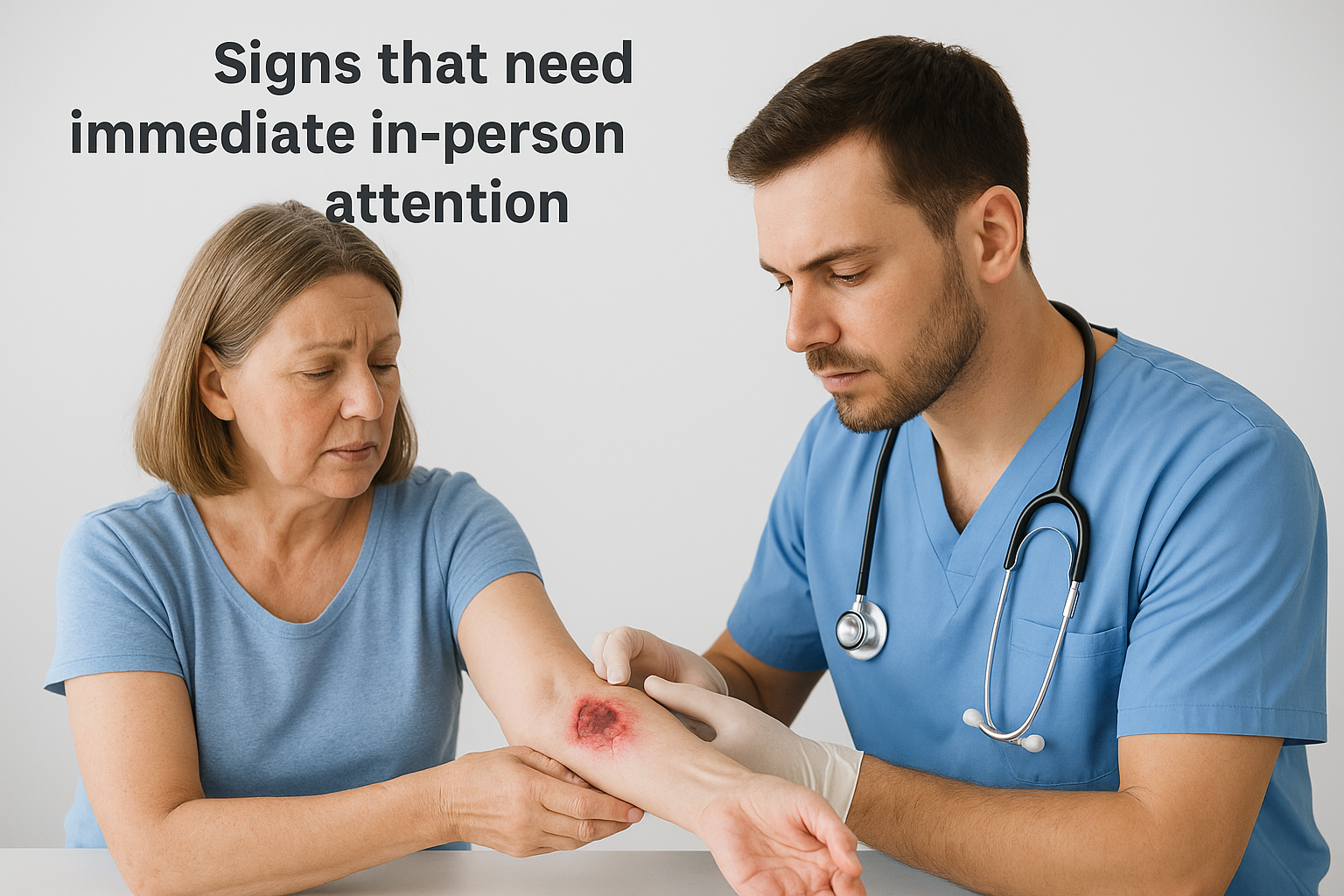
- Rapid increase in wound size or sudden deepening of the wound bed within 24 to 48 hours
- Redness, warmth, or swelling spreading into the surrounding skin, which can indicate progressing infection
- Fever above 101 degrees Fahrenheit paired with increased wound drainage or foul odor
- Exposed bone, tendon, or joint structure visible at the wound base
- Significant bleeding that does not stop with direct pressure within 10 minutes
- Black or darkening tissue appearing at the wound margins that was not there at the previous assessment
A wound that changes dramatically between remote check-ins is telling you something that a photograph alone cannot fully communicate to a clinician.
What remote monitoring can and cannot do
Remote monitoring gives a clinician consistent visual data and structured observation notes across multiple time points, which is genuinely useful for tracking slow-moving changes in wound dimensions, tissue quality, and healing progress. It catches early trends before they become emergencies, and it keeps caregivers and facility staff aligned with a current treatment plan. That is real clinical value.
What remote monitoring cannot do is replace the information a clinician gains through direct physical examination. Touch, pressure assessment, probing wound depth, and tissue manipulation all inform treatment decisions in ways that images do not capture. If your wound has features that raise questions about tissue viability, deep structure involvement, or rapidly spreading infection, an in-person visit provides the clinical information needed to make safe treatment decisions. Remote and in-person care work best as a coordinated system, with each format handling the clinical tasks it is actually equipped to perform.
Privacy, documentation, and clinical standards
Telewound care services operate within a strict legal and clinical framework, and understanding that framework helps you engage with these services with confidence. Every wound image you upload, every observation note you submit, and every treatment update you receive is subject to federal privacy law and professional clinical standards that govern how your information gets stored, accessed, and used. This is not a loosely regulated space.
How your data is protected
Any legitimate telewound care platform handles your health information under the Health Insurance Portability and Accountability Act (HIPAA), which sets binding rules for how providers collect, transmit, and store protected health information. Wound images, clinical notes, and treatment records all qualify as protected health information under that definition. Your provider is required to use encrypted transmission and secure storage systems that restrict access to authorized clinical personnel only.
Sharing wound images through a personal messaging app or an unsecured email address does not meet HIPAA requirements, regardless of how convenient it feels in the moment.
When you enroll with a telewound care provider, you should receive a Notice of Privacy Practices explaining your rights and how your data gets used. Read it. You have the right to request access to your records, ask for corrections, and understand who can view your clinical information. If a platform cannot produce a clear privacy policy or avoids answering direct questions about data handling, that is a serious warning sign about the quality of the service overall.
Clinical documentation requirements
Remote wound management follows the same clinical documentation standards as in-person care, meaning every visit must produce a documented assessment, a treatment plan update, and a record of the clinician’s clinical reasoning. A properly documented remote visit includes wound measurements, tissue descriptions, drainage characteristics, and the rationale behind any changes to dressing protocols or referral decisions. That documentation becomes part of your permanent medical record.
Thorough documentation also matters for insurance purposes. Medicare and most commercial insurers require specific documentation to reimburse telewound care visits, and incomplete records can result in denied claims that leave you responsible for the cost. Confirm that your provider documents each visit according to current billing and coding requirements, including the correct telehealth procedure codes and any required clinical notes. Consistent, complete records protect you financially and ensure that every clinician who touches your care has an accurate picture of your wound history.
How to choose a telewound care provider near you
Not every remote wound management service delivers the same level of clinical oversight, and the differences matter for your health outcomes. When you evaluate telewound care services in your area, focus on the qualifications behind the screen rather than the technology in front of it. A well-designed platform run by an underqualified provider produces less reliable care than a simpler setup run by a trained specialist.
Look for physician-led oversight
The single most important factor in choosing a telewound care provider is who actually reviews your wound data and makes treatment decisions. Many services route your images to a general nurse or a non-specialized practitioner. That level of review is not equipped to manage complex wounds involving exposed structures, vascular compromise, or failing tissue grafts. You want a provider where a licensed physician with wound care training holds clinical responsibility for your case.
Physician oversight is not a premium upgrade in wound care. It is the baseline standard for managing wounds that have not responded to routine treatment.
Ask directly whether a physician reviews every remote assessment or whether your case gets handled by support staff unless something is flagged as urgent. The answer tells you a great deal about how seriously the provider treats clinical accountability.
Confirm insurance coverage and documentation practices
Before scheduling your first visit, verify that the provider accepts your specific insurance plan and bills correctly for remote wound management services. Medicare Part B covers certain telemedicine and wound care services, but coverage depends on accurate procedure coding and complete clinical documentation. Ask the provider whether they handle prior authorizations and billing directly, or whether that responsibility falls to you.
Request a clear explanation of what documentation you receive after each visit. You should get a written summary of the wound assessment, any changes to your treatment plan, and the clinical reasoning behind those changes. Providers who cannot describe their documentation process clearly are worth avoiding.
Verify coordination with your existing care team
Your telewound care provider should function as part of your broader clinical team, not as a separate service operating in isolation. Ask whether the provider communicates directly with your primary care physician, any referring specialists, or the nursing staff at your facility. Fragmented care is one of the leading causes of wound deterioration, so you want a provider who treats coordination as a core part of the service rather than an afterthought. A provider willing to join a care conference or update your existing medical records is a provider worth trusting.
Next steps for remote wound help
If a wound in your care is not healing on schedule, or if regular clinic visits have become difficult to manage, telewound care services give you a structured path to consistent specialist oversight without the logistical burden of traveling to a clinic. The right provider combines physician-led clinical review with clear documentation, insurance coordination, and direct communication with your existing care team, so nothing falls through the gap between appointments.
At Philadelphia Wound Care, we bring specialist-level wound management directly to patients at home, in skilled nursing facilities, and in assisted living communities across the Philadelphia area. Whether you need ongoing remote monitoring or a full mobile evaluation, our team is equipped to assess your situation and build a care plan around your specific needs. Reach out today to learn how we can help by visiting our mobile wound care services page and taking the first step toward better wound outcomes.