
Wound Care Technology Platform: What It Is And How It Works
Measuring a wound by hand, scribbling notes on paper charts, and hoping the next clinician can interpret your documentation, that’s still the reality in many practices. A wound care technology platform replaces that fragmented process with digital tools that standardize how wounds are assessed, measured, and tracked over time. For providers managing complex cases across multiple care settings, these platforms can mean the difference between catching a stalled wound early and missing it entirely.
At Philadelphia Wound Care, we deliver physician-led treatment directly to patients in homes, skilled nursing facilities, and hospice settings across the Philadelphia region. That mobile model depends on accurate documentation and clear communication between our team, referring physicians, and facility staff. Technology platforms designed for wound management are a core part of how modern practices coordinate that kind of multi-site care.
This article breaks down what a wound care technology platform actually is, how it functions in clinical workflows, and what features matter most when evaluating one. Whether you’re a facility administrator, a referring physician, or a caregiver trying to understand how your loved one’s progress is being tracked, you’ll walk away with a practical understanding of how these systems work, and why they’re becoming standard in wound care delivery.
What a wound care technology platform is
A wound care technology platform is a specialized software system built to manage every step of wound care digitally, from the first clinical assessment through discharge or closure. Unlike general-purpose medical software, these platforms are purpose-built for wound management. They capture wound images, calculate measurements automatically using AI or structured imaging, store longitudinal data, and generate documentation that both clinicians and payers can use immediately. Think of it as the operational backbone for any provider managing multiple complex wound cases across different care settings.
A platform that centralizes wound data across multiple care settings gives every clinician involved in a case access to the same accurate, up-to-date information, which directly reduces the risk of treatment errors.
The core components
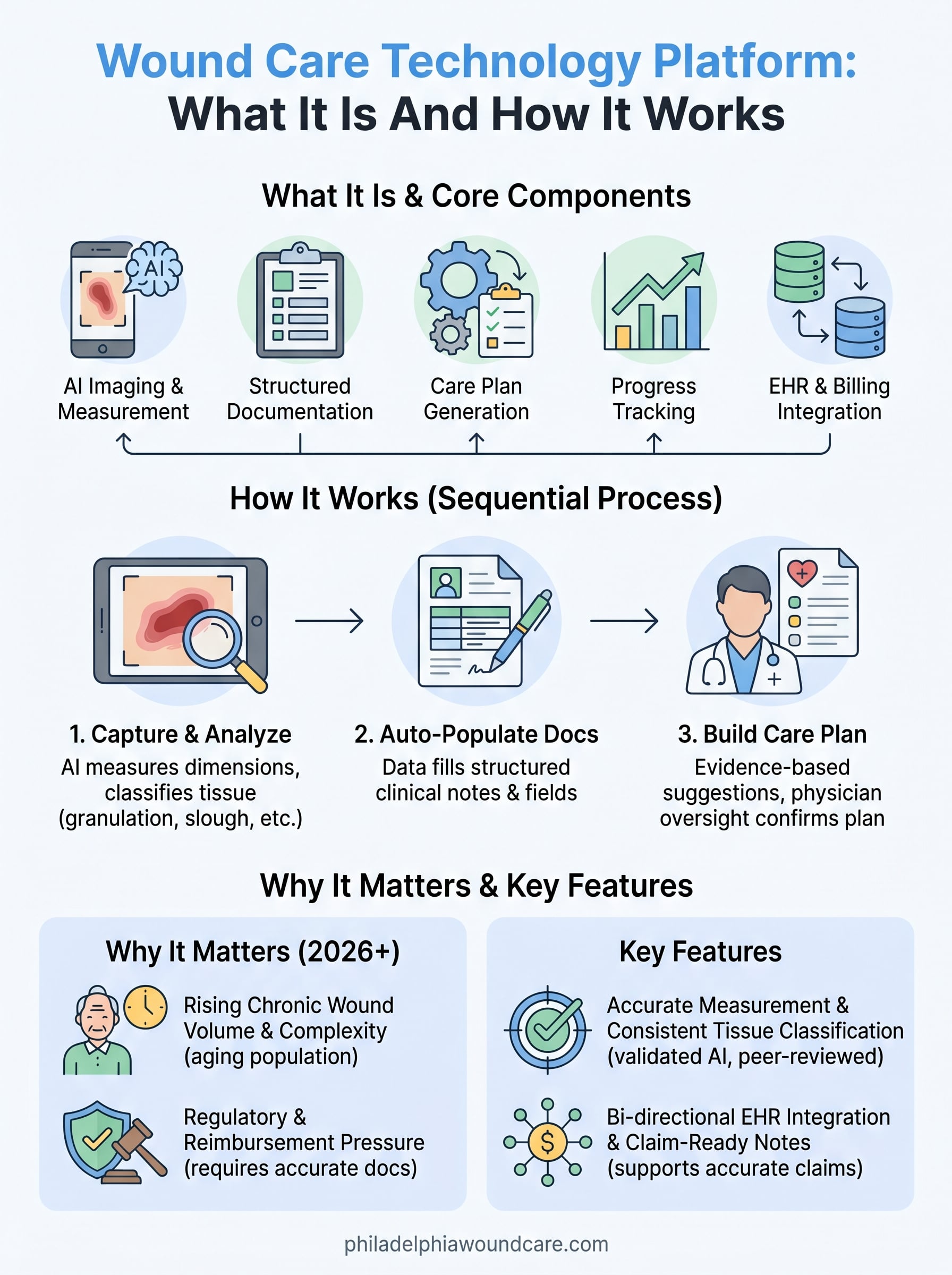
Most platforms share a predictable set of building blocks, even if the execution varies by vendor. Wound imaging tools sit at the center: providers use a smartphone or tablet camera, and the platform applies AI analysis to measure wound dimensions like length, width, depth, and surface area without a physical ruler. Documentation modules then pull those measurements into structured clinical notes, auto-populating fields that would otherwise require manual entry. Reporting tools compile that data into trend charts so you can see at a glance whether a wound is responding to treatment or stalling.
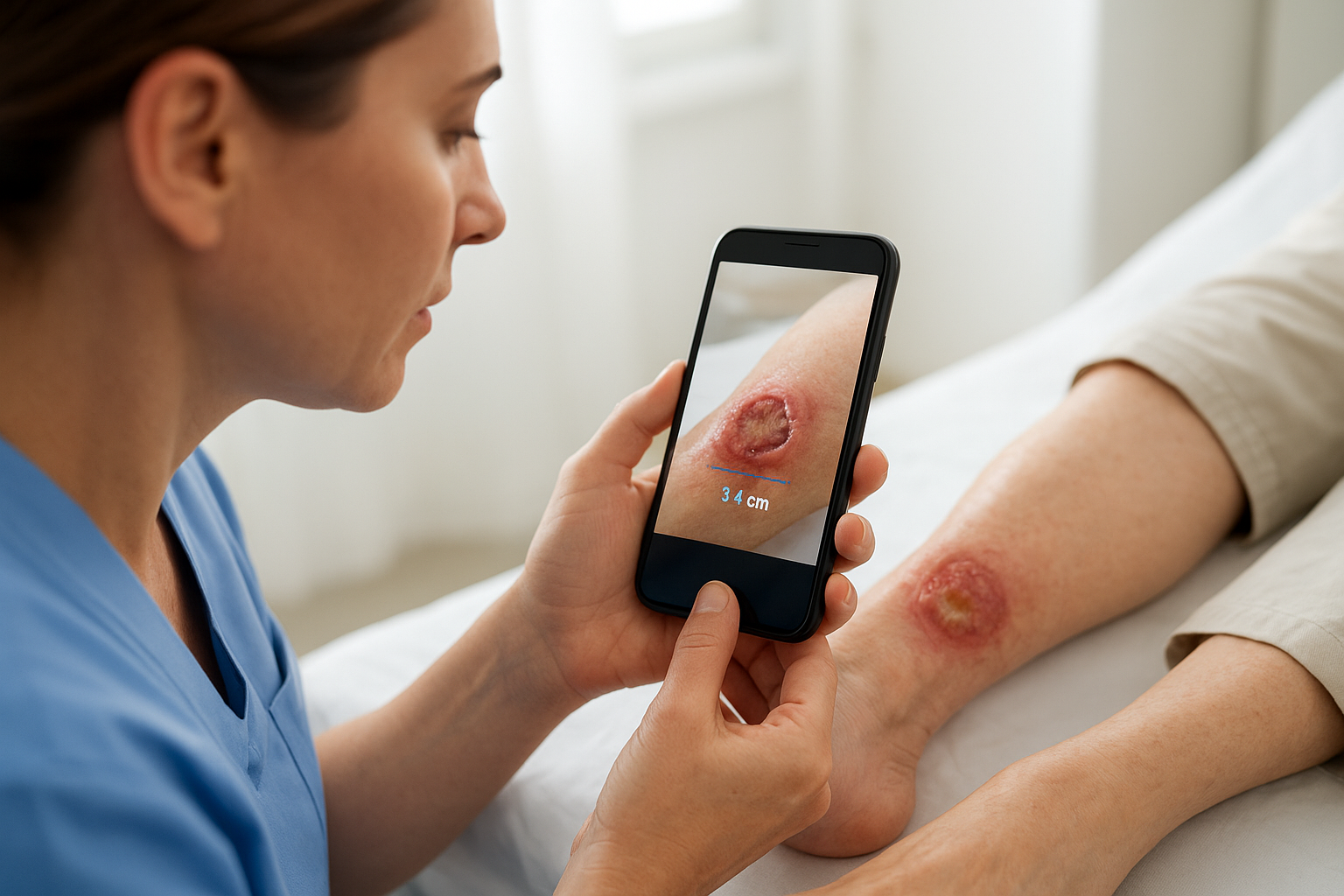
Here are the core components you will typically find in a full platform:
- Imaging and AI measurement – automated calculation of wound size from a photo
- Clinical documentation – structured note templates tied directly to wound data
- Care plan generation – protocol-driven recommendations based on wound type and stage
- Progress tracking – longitudinal views that show healing trends over time
- EHR integration – bi-directional data sharing with the patient’s broader medical record
- Billing support – documentation formatted to support accurate insurance claims
How it differs from standard EHR software
Your standard electronic health record (EHR) system stores patient information broadly, but it was not designed to handle the specific demands of wound management. A wound care platform treats the wound itself as the primary clinical object, organizing all data around it rather than around a general patient visit.
Structured wound-specific fields, AI measurement tools, and tissue-type classification systems are built in from the start, not added on later. The result is documentation that is faster to create, more consistent across providers, and far more useful for tracking a wound’s progress over weeks or months of treatment.
Why wound care platforms matter in 2026
Chronic wound cases are rising steadily, and the clinical systems built to handle them have not kept pace. As patient complexity increases and care teams become more distributed across homes, facilities, and outpatient settings, the gap between what paper-based workflows can manage and what patients actually need continues to widen. A wound care technology platform closes that gap directly.
The burden of an aging patient population
The United States population aged 65 and older is the largest it has ever been, and that demographic carries a disproportionate share of chronic wound diagnoses, including diabetic foot ulcers, pressure injuries, and venous leg ulcers. According to data from the Centers for Disease Control and Prevention, more than 37 million Americans live with diabetes, a condition that drives a significant portion of complex wound cases.
Managing this volume of cases without a structured digital system puts both patient outcomes and clinical capacity under serious strain.
More patients in more locations means more documentation, more handoffs, and more room for error. Platforms that standardize wound assessment across care settings give every clinician on a case access to the same verified data, regardless of where treatment is happening.
Regulatory and reimbursement pressure
Payers, including Medicare, are placing greater scrutiny on wound care documentation to verify that treatment plans are medically necessary and clinically justified. Incomplete or inconsistent records create billing delays, claim denials, and compliance risk for your practice. A wound care technology platform generates structured, time-stamped documentation that aligns directly with payer requirements and audit standards, reducing the administrative burden on your clinical team while protecting reimbursement. Getting your documentation process right in 2026 is not optional. It is foundational to operating a sustainable wound care practice.
How a platform works from photo to care plan
A wound care technology platform follows a structured, sequential process that begins the moment a clinician opens the app at the patient’s side. Understanding each step helps you see where the technology adds value and where your clinical judgment still drives decisions.
Capturing and analyzing the image
The process starts with a smartphone or tablet camera. The clinician positions the device over the wound, and the platform uses AI-powered imaging analysis to capture a calibrated photo without a physical ruler. The software then automatically processes the image to extract key clinical data:
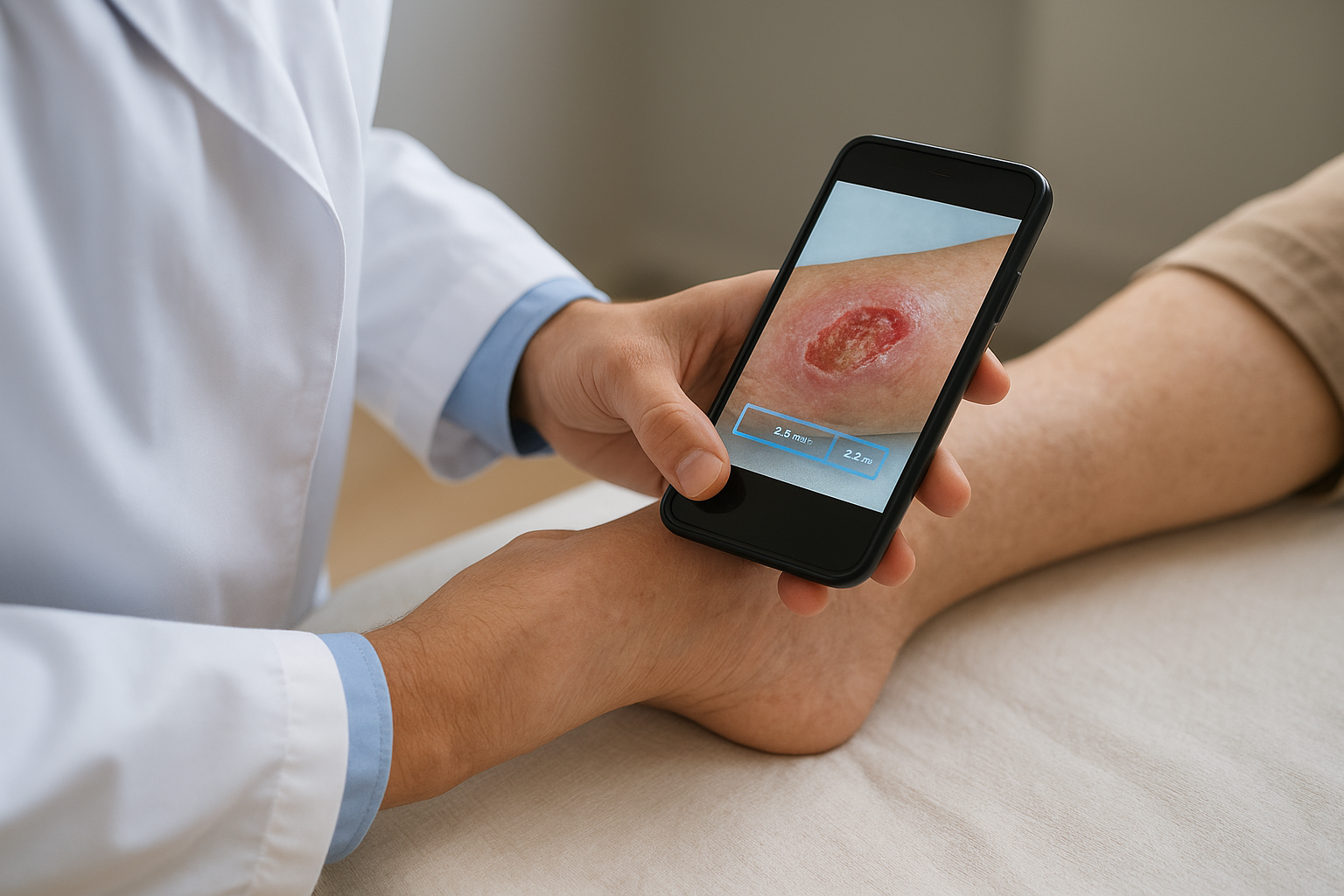
- Wound dimensions – length, width, depth, and surface area
- Tissue classification – granulation, slough, eschar, or necrotic tissue
- Periwound condition – surrounding skin changes and signs of infection
That structured output feeds directly into the documentation layer, which means no manual transcription is required at this stage.
Automated measurement removes the variability that comes from different clinicians measuring the same wound differently, which means your longitudinal data is far more reliable over the course of treatment.
Building the documentation and care plan
Once the imaging step is complete, the platform populates a structured clinical note with the wound measurements, tissue classification, and any changes recorded since the previous visit. You review and confirm the data rather than typing it from scratch, which cuts documentation time significantly. The platform then cross-references those wound characteristics against evidence-based protocols to suggest a care plan, covering dressing type, debridement approach, and treatment frequency.
Your clinical team still makes the final call on every recommendation. The platform surfaces options based on wound data; your physician applies clinical context and patient history to confirm or adjust the plan. That combination of data-driven analysis and physician oversight is what makes these tools effective in complex, high-acuity cases.
Features that separate a good platform from the rest
Not every wound care technology platform delivers the same level of clinical utility. Some tools handle imaging well but produce documentation that does not hold up under payer review. Others generate clean reports but offer no practical integration with the EHR systems your facility already runs. Knowing which features actually matter helps you avoid investing time in a platform that creates more work than it saves.
Measurement accuracy and tissue classification
The core value of any wound platform is accurate, reproducible measurement. Look for AI imaging tools that have been validated against manual measurement in peer-reviewed settings, not just vendor claims. The platform should also classify wound tissue types consistently, distinguishing between granulation, slough, eschar, and necrotic tissue across multiple visits so your longitudinal data reflects true healing rather than clinician-to-clinician variation.
Consistent tissue classification across visits is what makes your trend data meaningful. Without it, you cannot tell whether a wound is genuinely improving or just measured differently.
EHR integration and billing readiness
A platform that does not talk to your existing EHR system will create a parallel documentation burden rather than reducing one. Confirm that the platform supports bi-directional data exchange using standard health data protocols so wound records flow into the broader patient chart automatically. Billing readiness matters just as much: your documentation needs to meet Medicare and commercial payer standards at the point of care, not after a separate review step. Platforms that generate claim-ready notes with time-stamped images and structured wound data reduce your denial rate without adding administrative time to your clinical workflow.
How to implement a platform without disrupting care
Rolling out a new system in an active clinical environment carries real risk if you approach it without a plan. A wound care technology platform works best when you introduce it alongside your existing workflow rather than trying to replace everything at once. Start with a [small pilot group](https://web.developer-zannatul.com/wound-care-clinical-support/), ideally two or three clinicians who are already comfortable with mobile devices, and let them run the platform in parallel with your current documentation process for the first two to four weeks.
A phased rollout gives your team time to surface problems before they affect patient care across your full caseload.
Train to the workflow, not the software
Most implementation failures trace back to training that focuses on platform features rather than clinical workflow integration. Walk your team through exactly how the platform fits each step they already take: opening a visit, capturing wound images, confirming measurements, and closing a note. Scenario-based training using real case types your practice sees regularly, such as diabetic foot ulcers or post-surgical wounds, produces faster adoption than generic software demos.
Pair each new user with a designated platform lead on your team, someone who completed the pilot and can answer questions in the field without escalating every issue to your vendor.
Set clear data standards from day one
Consistent documentation only happens if your team follows the same input conventions from the start. Define which wound measurements are required at every visit, how tissue types should be classified, and which fields trigger a billing flag before anyone sees a live patient. Building those standards into your onboarding checklist prevents the data inconsistencies that undermine your trend reporting and create compliance risk down the line.
Next steps for picking the right platform
Choosing a wound care technology platform comes down to matching the tool’s capabilities to your actual clinical environment. Before you request a demo, list the specific problems you need to solve: inconsistent measurements, slow documentation, billing denials, or poor care coordination across sites. That list becomes your evaluation filter, and any platform that does not address each item clearly is not the right fit, regardless of how polished the interface looks.
Request a structured pilot with your own case types rather than a vendor-curated demo. Run the platform on active wounds your team already manages, and measure documentation time, data consistency, and EHR integration against your current workflow. If a platform improves all three, it is worth the investment.
For patients in the Philadelphia region who need expert wound care delivered directly to them, our team brings physician-led treatment to homes, facilities, and hospice settings. Request mobile wound care services in Philadelphia to get started.